Study Guide
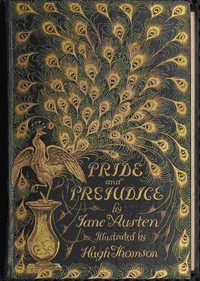
Pride and Prejudice
by Jane Austen
"Pride and Prejudice," set in rural England during the early 19th century, revolves around the Bennet family, particularly the spirited Elizabeth, as they navigate societal expectations, love, and marriage. When the wealthy bachelor Mr. Bingley arrives in their neighborhood, the Bennet sisters become objects of intense matrimonial speculation. Elizabeth, however, finds herself clashing with the proud and aloof Mr. Darcy, Bingley's close friend. Their initial animosity stems from Darcy's perceived arrogance and his interference in the budding romance between Bingley and Elizabeth's sister, Jane. As the story unfolds, Elizabeth confronts her own prejudices and misjudgments, while Darcy grapples with his pride and social constraints. Misunderstandings, societal pressures, and family scandals threaten to keep them apart. Lydia, Elizabeth's youngest sister, elopes with the charming but unreliable Mr. Wickham, leading to a crisis that forces Darcy to intervene. Ultimately, Elizabeth and Darcy must overcome their personal flaws and social obstacles to recognize their true feelings for each other, paving the way for a love that transcends social class and personal pride. The novel celebrates the triumph of genuine affection and individual growth over societal expectations and superficial judgments.
About the Work
Historical Context
Jane Austen (1775-1817) was an English novelist whose works offer insightful social commentary on the landed gentry in England during the Regency era. Austen's own life, spent largely within the confines of her family and community, provided her with a keen understanding of the social dynamics, expectations, and limitations placed upon women in that time. The social landscape of Austen's England was one of strict class distinctions and limited opportunities for women, whose primary goal was often seen as securing a advantageous marriage. "Pride and Prejudice," initially drafted in 1796 as "First Impressions" and later published in 1813, quickly gained popularity and has remained a beloved classic ever since. While Austen's novels were initially appreciated for their realism and gentle humor, they have since been recognized for their complex character development, nuanced exploration of social issues, and timeless themes. The novel's literary significance lies in its masterful use of free indirect discourse, allowing readers access to characters' thoughts and feelings, and its witty social commentary that continues to resonate with audiences today. It cemented Austen's place as a major figure in English literature, and continues to be widely read and adapted, demonstrating its enduring appeal and relevance.
Writing Style
"Pride and Prejudice" is narrated primarily through the lens of Elizabeth Bennet, employing a third-person limited point of view. This allows the reader access to Elizabeth's thoughts, feelings, and biases, creating a close connection and allowing for a deeper understanding of her evolving perceptions. Austen masterfully utilizes free indirect discourse, seamlessly blending Elizabeth's internal voice with the narrator's, providing insight into her character while maintaining a degree of narrative distance. The tone is generally satirical and witty, with a focus on social commentary and character flaws, presented with light irony rather than harsh criticism. Austen's language is characterized by its elegance, precision, and subtle wit, reflecting the refined society she portrays. Dialogue plays a crucial role in revealing character and advancing the plot, with conversations often serving as battlegrounds for social maneuvering and intellectual sparring. Stylistic elements include carefully crafted sentences, attention to detail in descriptions of settings and characters, and the use of irony and satire to expose the follies and pretensions of the upper class. Her narrative techniques create a balanced and engaging reading experience, blending humor, romance, and social observation to offer a complex and enduring portrait of 19th-century English society.
Themes, Motifs & Symbols
Themes
Love and Marriage
The novel explores the complexities of love and marriage in a society where economic and social considerations often outweigh genuine affection. Characters grapple with the tension between marrying for love versus marrying for security and social advancement.
Pride and Prejudice
The title highlights the central themes of the novel. Characters are often blinded by their own pride, which leads to misjudgments and misunderstandings. Similarly, prejudice based on social class and reputation influences their perceptions and actions.
Social Class and Status
The rigid social hierarchy of 19th-century England dictates many of the characters' choices and limits their opportunities. The novel examines the impact of class distinctions on relationships, marriage prospects, and individual freedom.
Reputation and Social Expectations
The novel underscores the importance of reputation and adherence to social conventions, particularly for women. A woman's reputation could be easily damaged by scandal, limiting her marriage prospects and social standing.
Individual vs. Society
Characters often struggle to reconcile their personal desires and values with the expectations and pressures of society. The novel celebrates those who, like Elizabeth, challenge social norms and prioritize their own happiness and integrity.
Motifs
Journeys and Travel
Characters gain perspective and experience personal growth through travel and exposure to new environments. Journeys often serve as catalysts for change and self-discovery.
Letters and Correspondence
Letters serve as a primary mode of communication, conveying important information, revealing characters' thoughts and feelings, and influencing the course of events.
Social Gatherings
Balls, dinner parties, and social calls provide opportunities for characters to interact, display their social standing, and engage in courtship rituals. These events also serve as settings for social commentary and the unfolding of key plot points.
Gossip and Rumor
Gossip and rumors often drive the plot, creating misunderstandings, shaping reputations, and influencing characters' decisions.
Symbols
Pemberley
Represents Darcy's wealth, power, and refined taste, but also his potential for benevolence and generosity.
The Letter
Represents the power of written communication to reveal truth, challenge perceptions, and alter the course of relationships.
The Landscape
The natural landscape of Derbyshire and Hertfordshire reflects the characters' emotions and states of mind, offering moments of solace, reflection, and connection.
The Portraits
Portraits symbolize family history, lineage, and societal expectations, reflecting the importance of social standing and reputation.
Chapter Summaries
61 chaptersKey Quotes
"It is a truth universally acknowledged, that a single man in possession of a good fortune, must be in want of a wife."
"I declare after all there is no enjoyment like reading! How much sooner one tires of anything than of a book!"
"I could easily forgive his pride, if he had not mortified mine."
"There is, I believe, in every disposition a tendency to some particular evil, a natural defect, which not even the best education can overcome."
"Happiness in marriage is entirely a matter of chance."
"Till this moment, I never knew myself."
"Vanity and pride are different things, though the words are often used synonymously. A person may be proud without being vain. Pride relates more to our opinion of ourselves, vanity to what we would have others think of us."
"I have been used to consider poetry as the 'food' of love."
"My courage always rises at every attempt to intimidate me."
"You taught me a lesson, hard indeed at first, but most advantageous. By you, I was properly humbled."
"There is, I believe, in every disposition a tendency to some particular evil, a natural defect, which not even the best education can overcome."
"I cannot forget the follies and vices of others so soon as I ought, nor their offenses against myself. My feelings are not puffed about with every attempt to move them."
"I have no right to give _my_ opinion as to his being agreeable or otherwise. I am not qualified to form one. I have known him too long and too well to be a fair judge. It is impossible for _me_ to be impartial."
Discussion Questions
How does Jane Austen use irony to critique social norms and expectations in Pride and Prejudice?
In what ways does Elizabeth Bennet challenge or conform to the societal expectations placed upon women in the early 19th century?
How does the setting of rural England contribute to the themes and atmosphere of the novel?
Discuss the role of female relationships in shaping the characters and plot of Pride and Prejudice.
Analyze the character of Mr. Collins and his function in the novel's social commentary.
Explore the theme of deception in Pride and Prejudice. How do characters deceive themselves and others, and what are the consequences?
Compare and contrast the characters of Elizabeth Bennet and Jane Bennet. How do their differing personalities and values shape their experiences and choices?
How does Austen use letters as a narrative device to reveal character and advance the plot?
Discuss the significance of the novel's title. How do pride and prejudice operate as both individual flaws and societal forces?
Analyze the evolving relationship between Elizabeth Bennet and Fitzwilliam Darcy. What are the key turning points in their journey from animosity to love?
How does the conclusion of Pride and Prejudice resolve the central conflicts and offer a vision of social harmony?
Discuss the role of money and economic security in shaping characters' decisions about love and marriage.
Explore the theme of female education and its impact on the characters' social mobility and personal fulfillment.
Analyze the character of Lydia Bennet. What does she represent in the novel, and what is the significance of her elopement?
Ready to discuss with the characters?
Start a Conversation