Study Guide
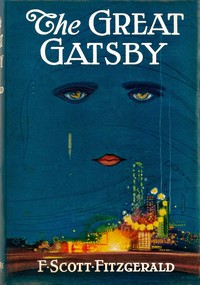
The Great Gatsby
by F. Scott (Francis Scott) Fitzgerald
F. Scott Fitzgerald's "The Great Gatsby" is a tragic love story set in the Roaring Twenties on Long Island, New York. Narrated by Nick Carraway, a young Midwesterner who moves to West Egg to learn the bond business, the novel explores themes of wealth, class, love, and the elusive American Dream. Nick becomes entangled in the lives of his wealthy neighbors, including the enigmatic Jay Gatsby, a self-made millionaire known for his lavish parties, and the aristocratic couple Tom and Daisy Buchanan, who reside in the more refined East Egg. Gatsby's relentless pursuit of Daisy, his former love, forms the core of the narrative, revealing the corruption and moral decay beneath the glittering facade of the Jazz Age. Gatsby's dream of reuniting with Daisy is ultimately shattered by the realities of the past and the irreconcilable differences in their social standings. Tom's infidelity and Daisy's inability to leave her privileged life lead to a series of tragic events, culminating in Myrtle Wilson's accidental death, for which Gatsby takes the blame. The novel critiques the superficiality and materialism of the wealthy elite, exposing their destructive tendencies and the unattainable nature of the American Dream. Gatsby's unwavering idealism and tragic demise serve as a cautionary tale about the destructive power of illusion and the impossibility of recapturing the past. The novel's enduring significance lies in its masterful depiction of the American experience, its exploration of universal themes, and its poignant portrayal of human relationships. Fitzgerald's lyrical prose and sharp social commentary continue to resonate with readers, making "The Great Gatsby" a timeless classic of American literature.
About the Work
Historical Context
F. Scott Fitzgerald, born in 1896, was a prominent figure of the Lost Generation, a group of writers who came of age during World War I and expressed disillusionment with American society. "The Great Gatsby," published in 1925, reflects the social and cultural climate of the Roaring Twenties, a period characterized by economic prosperity, consumerism, and moral laxity. The novel captures the excesses of the Jazz Age, the rise of organized crime, and the widening gap between the old aristocracy and the nouveau riche. Fitzgerald himself lived a life mirroring the themes of his novel, indulging in lavish parties and grappling with financial instability and marital issues. Initially, "The Great Gatsby" received mixed reviews and modest sales. Some critics praised Fitzgerald's prose and insightful social commentary, while others found the novel lacking in substance. However, its popularity grew steadily over the years, and it is now widely regarded as a masterpiece of American literature. The novel's exploration of the American Dream, its critique of social class, and its poignant portrayal of love and loss have resonated with generations of readers. "The Great Gatsby" is considered a seminal work of the Jazz Age and a powerful commentary on the complexities of the human condition. "The Great Gatsby" holds immense literary significance due to its innovative narrative techniques, its rich symbolism, and its enduring thematic relevance. Fitzgerald's use of first-person narration allows readers to intimately experience the story through Nick Carraway's perspective. The novel's motifs and symbols, such as the green light, the valley of ashes, and Gatsby's mansion, contribute to its profound exploration of the American Dream, social stratification, and the allure of the past. Its influence can be seen in countless works of literature and film that have followed, cementing its place as a cornerstone of American culture.
Writing Style
"The Great Gatsby" is distinguished by its lyrical prose, vivid imagery, and sophisticated narrative techniques. Fitzgerald employs a first-person limited point of view, with Nick Carraway as the narrator. This perspective allows readers to experience the story through Nick's evolving understanding of Gatsby and the other characters, creating a sense of intimacy and distance simultaneously. Nick's voice is often introspective and reflective, offering astute observations about the social dynamics and moral ambiguities of the Jazz Age. For example, Nick's famous line, "Whenever you feel like criticizing anyone, just remember that all the people in this world haven't had the advantages that you've had," establishes his initial sense of tolerance, which is later challenged by the events of the novel. Fitzgerald's tone shifts between admiration and disillusionment, capturing the allure and the emptiness of the wealthy elite. His language is rich in metaphor and simile, creating a sensory experience for the reader. The descriptions of Gatsby's parties, for instance, are characterized by vibrant imagery and hyperbole, conveying the extravagance and superficiality of the gatherings. Consider the description of Gatsby's car: "It was a rich cream color, bright with nickel, swollen here and there in its monstrous length with triumphant hat-boxes and supper-boxes and tool-boxes, and terraced with a labyrinth of windshields that mirrored a dozen suns." This level of descriptive language is prevalent throughout the book. The novel's stylistic elements contribute to its thematic depth and emotional resonance. Fitzgerald uses symbolism and motif to reinforce key themes and create a sense of recurring patterns. His strategic deployment of imagery heightens the novel's atmospheric quality and provides insight into the characters' inner lives. This strategic writing helps to elevate the book beyond a simple story to a highly symbolic and deeply meaningful work of art.
Themes, Motifs & Symbols
Themes
The American Dream
The novel explores the elusive and often corrupt nature of the American Dream, questioning whether it is truly attainable or merely a destructive illusion. Gatsby's pursuit of wealth and social status is driven by his desire to win back Daisy, representing his idealized vision of the past.
Wealth and Class
Fitzgerald examines the social stratification of the Roaring Twenties, contrasting the established wealth of the East Egg aristocracy with the nouveau riche of West Egg. The novel critiques the superficiality and moral decay associated with both groups.
Love and Illusion
The novel explores the destructive power of illusion and the idealized nature of love. Gatsby's romantic vision of Daisy is based on a distorted memory of the past, preventing him from seeing her for who she truly is.
The Past and the Future
The characters are haunted by their pasts, longing to recapture lost moments and relive idealized memories. Gatsby's obsession with the past prevents him from fully embracing the present or the future.
Social Decay and Morality
Beneath the shimmering surface of the Roaring Twenties, Fitzgerald reveals a society riddled with moral decay, infidelity, and reckless behavior. The pursuit of wealth and pleasure leads to destructive choices and tragic outcomes.
Motifs
Geography
The settings of East Egg, West Egg, and the valley of ashes serve as symbolic representations of social class and moral decay. East Egg represents the established aristocracy, West Egg symbolizes the nouveau riche, and the valley of ashes embodies the moral and social decay of the pursuit of wealth.
Parties
Gatsby's lavish parties serve as a recurring motif, representing the extravagance and superficiality of the Jazz Age. They are also a means for Gatsby to attract Daisy's attention and showcase his wealth.
The Weather
Weather often reflects the emotional states and conflicts of the characters. Hot weather is associated with tension and conflict, while cooler weather suggests resolution or calm.
Time
The motif of time appears repeatedly in the novel and is used to represent the difficulty of recapturing the past and the elusive nature of the future.
Symbols
The Green Light
The green light at the end of Daisy's dock symbolizes Gatsby's unattainable dream and the seductive allure of the past. It represents his longing for Daisy and his idealized vision of their relationship.
The Valley of Ashes
The valley of ashes represents the moral and social decay of the pursuit of wealth and the dark side of the American Dream. It is a desolate wasteland between West Egg and New York City, symbolizing the consequences of unchecked industrialization and the loss of traditional values.
Gatsby's Mansion
Gatsby's mansion symbolizes his wealth, ambition, and the emptiness of his material possessions. It is a grand facade built to impress Daisy and create the illusion of success.
The Eyes of Doctor T. J. Eckleburg
The billboard with the Eyes of Doctor T. J. Eckleburg symbolizes moral decay and the loss of spiritual values in the pursuit of wealth. The faded eyes suggest a sense of judgment and the watchful presence of a higher power.
Character Analysis
Daisy Buchanan
supportingDaisy is a beautiful and captivating woman, known for her charming voice and captivating presence. She is married to Tom Buchanan and is the object of Gatsby's affection.
George Wilson
supportingGeorge is Myrtle's husband, a meek and spiritless mechanic who runs a garage in the valley of ashes. He is a hardworking and honest man, but he is easily dominated and lacks self-confidence.
Jay Gatsby
protagonistGatsby is a fabulously wealthy man living in West Egg, known for throwing extravagant parties. He has a mysterious past and a magnetic presence, characterized by a hopeful and romantic nature.
Jordan Baker
supportingJordan is a professional golfer and a friend of Daisy Buchanan. She is cynical, self-reliant, and incurably dishonest.
Meyer Wolfshiem
supportingWolfshiem is a shady businessman and Gatsby's associate. He is a gambler with connections to organized crime.
Myrtle Wilson
supportingMyrtle is George Wilson's wife and Tom Buchanan's mistress. She is a sensual and vital woman who dreams of a better life.
Nick Carraway
protagonist, narratorNick is the narrator of the story, a young Midwesterner who moves to West Egg to work in the bond business. He is observant, tolerant, and initially drawn to Gatsby's charisma.
Tom Buchanan
antagonistTom is Daisy's wealthy and powerful husband, a man of imposing physical stature and arrogant demeanor. He is openly adulterous and embodies the callousness of the old-money class.
Chapter Summaries
9 chaptersKey Quotes
""Whenever you feel like criticizing anyone, just remember that all the people in this world haven't had the advantages that you've had.""
""There was something gorgeous about him, some heightened sensitivity to the promises of life...""
""Can't repeat the past?' he cried incredulously. 'Why of course you can!'""
""Her voice is full of money,' he said suddenly. That was it. I'd never understood before. It was full of money—that was the inexhaustible charm that rose and fell in it...""
""You're worth the whole damn bunch put together.""
""So we beat on, boats against the current, borne back ceaselessly into the past.""
""I hope she'll be a fool—that's the best thing a girl can be in this world, a beautiful little fool.""
""It was one of those rare smiles with a quality of eternal reassurance in it, that you may come across four or five times in life.""
""There are only the pursued, the pursuing, the busy and the tired.""
""You can't repeat the past.""
""Let us learn to show our friendship for a man when he is alive and not after he is dead,""
""And so with the sunshine and the great bursts of leaves growing on the trees, just as things grow in fast movies, I had that familiar conviction that life was beginning over again with the summer.""
Discussion Questions
How does Fitzgerald use setting to convey the social and moral landscape of the Roaring Twenties?
What role does Nick Carraway play as the narrator of the story? How does his perspective shape the reader's understanding of Gatsby and the other characters?
To what extent is Gatsby a victim of his own illusions? Could he have achieved his dream if he had been more realistic?
How does Fitzgerald portray the female characters in the novel? Are Daisy and Jordan simply victims of their circumstances, or do they bear some responsibility for their actions?
What is the significance of the green light at the end of Daisy's dock? How does its meaning evolve throughout the novel?
How does Gatsby's background and self-made identity contribute to his outsider status? Does he ever truly belong in the world of the wealthy elite?
Explore the relationship between love and money in the novel. Does wealth corrupt love, or does it simply reveal its true nature?
How does Fitzgerald use symbolism and motif to reinforce the novel's themes and create a sense of recurring patterns?
What is the role of violence in the novel? How does it contribute to the sense of tragedy and moral decay?
To what extent does Fitzgerald critique the American Dream in "The Great Gatsby"? Is the novel a condemnation of American society, or is it a more nuanced exploration of human nature?
How does the ending of the novel affect your understanding of Gatsby's character and his dream?
What are the pros and cons of Nick Carraway's reliability as a narrator?
Why did Daisy choose Tom over Gatsby?
Ready to discuss with the characters?
Start a Conversation