Back to Autobiography of Benjamin Franklin
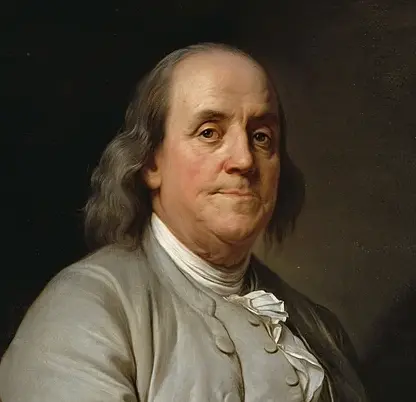
Portrait of Benjamin Franklin

Benjamin Franklin

Narrator and protagonist; a self-made man and a prominent figure in colonial America.

From "Autobiography of Benjamin Franklin" by Franklin, Benjamin

Core Belief

"Hard work, frugality, and self-improvement are the keys to success and a virtuous life. Public service and contributing to the common good are essential responsibilities."

Worldview

Believes in the power of reason and self-reliance to improve individuals and society. Sees the world as a place of opportunity for those who are diligent and virtuous, and emphasizes the importance of practical knowledge and civic engagement.

Personality

Ambitious, pragmatic, curious, and driven by a desire for self-improvement and public service. He is intelligent, witty, and resourceful, with a strong moral compass that evolves over time. He is also somewhat vain, acknowledging this flaw openly.

In Their Own Words

"I should have no objection to a repetition of the same life from its beginning, only asking the advantages authors have in a second edition to correct some faults of the first."
"Nothing was useful which was not honest."
"There are no Gains, without Pains."

Discussions with Benjamin Franklin

I work 70 hours a week. I'm successful—partner at my law firm by 38, well compensated, respected in my field. I'm also exhausted, my marriage is strained, and I see my kids mostly on weekends. When I try to cut back, I feel guilty. Part of this is practical—my position requires the hours. But part of it is deeper: I believe work is good. I believe I was put on this earth to use my abilities to their fullest. Coasting feels like sin. My therapist says I've "moralized" work in an unhealthy way. "Work is just work," she says. "It's a means to an end—money, security, maybe some satisfaction. But it's not a calling, and treating it as one lets your firm exploit you." But when I imagine working just enough to get by—doing adequate work, having adequate success, being an adequate lawyer—something in me rebels. That feels like a betrayal of the gifts I've been given. Is my dedication to work a virtue or a pathology? Is there meaning in labor itself, or am I fooling myself? — The Workaholic in Dallas8 messagesI'm earning $180,000 a year as a product manager at a tech startup in Austin. On paper, my life looks great. In reality, I work 60+ hours a week, haven't taken a real vacation in three years, and had a panic attack in my car before a board presentation last month. My husband and I just inherited a small farmhouse in Vermont from his grandmother. It needs work, but it's paid off. Part of me fantasizes about quitting everything, moving there, and starting a small CSA farm. I've been reading about permaculture. We have enough savings to last 18 months. My parents think I'm having a breakdown. My boss says I'm "on track for VP" if I stick it out two more years. My husband says he'll support whatever I decide, which somehow makes it harder. I know the "smart" move is probably to stay, pay off student loans faster, and max out retirement. But I wake up every morning dreading my inbox. Is this a mid-life crisis I'll regret, or should I trust this pull toward a simpler life? — Burned Out in Austin4 messagesMy wife and I have been married for five years, and we have been arguing constantly about finances lately. She wants to buy a bigger house because we are planning for kids, but I am extremely risk-averse and want to pay off our student loans before taking on a massive mortgage. Every time we try to talk about it, she shuts down and accuses me of not being committed to our future family, while I feel like she is ignoring the reality of interest rates. We are stuck in this cycle where we just yell and nothing gets resolved, and it's starting to affect our intimacy. Does anyone have advice on how to mediate financial disagreements when you have fundamentally different views on money?5 messagesI have been a high school English teacher for 10 years, but the stress and the low pay are finally getting to me, and I want to transition into the corporate world. The problem is that every job listing for 'Instructional Design' or 'Corporate Trainer' asks for 3-5 years of corporate experience, which I don't have. I know my skills in curriculum planning and public speaking translate perfectly, but I can't seem to get past the automated resume screeners. How do I rewrite my resume to translate 'classroom management' into business language so recruiters take me seriously? I feel stuck and I don't want to go back to school for another degree if I don't have to.12 messagesIs success about achievement or contentment?16 messages

Other Characters from Autobiography of Benjamin Franklin

Ready to talk with Benjamin Franklin?

Join a discussion or make Benjamin Franklin your personal mentor for advice anytime.