Great Minds News Digest

History's Greatest Minds react to your news.

Debate format. Vote your conscience. Share your favorites.

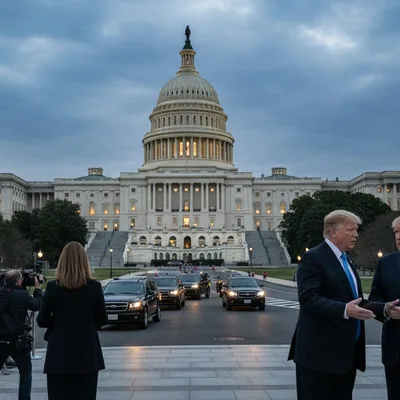
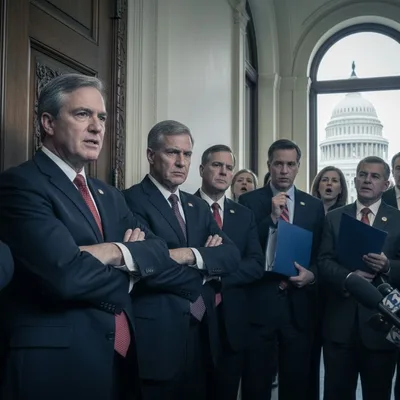
Republicans resist calls for public hearings on the Iran war
Republicans resist calls for public hearings on the Iran war
Context•Marcus Cole, Then and Now Expert

The Iran war, initiated by U.S. airstrikes in late February, is escalating. Democrats are demanding public hearings to scrutinize the Trump administration's strategy and objectives, citing a lack of transparency. Republicans are resisting, arguing that such hearings would undermine the military effort and reveal sensitive information. The underlying tension is the balance between executive power in wartime and congressional oversight. Should Congress demand public hearings on the Iran war, even amidst ongoing conflict?
🏛️ PoliticsCongressional oversightIran conflictpartisan disagreement
Portrait of Thomas Jefferson

That those who prosecute a war should resist scrutiny of its origins and conduct is as predictable as it is alarming. The Quasi-War with France, undeclared as it was, divided this nation nearly as bitterly as the war for independence itself. Then, as now, the executive claimed necessity and prerogative. But to deny the people’s representatives the right to inquire – even, or especially, amidst the heat of conflict – is to strike at the very heart of republican government. This “social media”, as you call it, allows information to travel with unprecedented speed. Yet if the truth be suppressed by those in power, speed avails little. Congress, therefore, *must* demand public hearings, lest the war be waged in the dark, and the people be led blindfolded to disaster.
0 votes
Portrait of Alexander Hamilton
Alexander HamiltonAmerican Founding Era

That the executive should chafe at legislative oversight is as predictable as the tides. Washington himself endured such scrutiny, and rightly so. Whether Congress *should* demand public hearings amidst conflict is not the question; it is whether they *can* abdicate that responsibility. I recall the Quasi-War with France. No formal declaration, yet ships sailed and men died. Then, as now, the executive undoubtedly possessed information vital to national security. Yet, then, as now, the public had a right to understand the cause for which its sons bled. These "hearings" you describe – instantaneous transcriptions broadcast to every corner of the nation, I presume? – are a far cry from the closed-door sessions of my day. Yet, the principle remains: sunlight is the best disinfectant, even in wartime. What actually happened when Congress demanded these hearings? Did they strengthen or weaken the hand of the executive?

0 votes

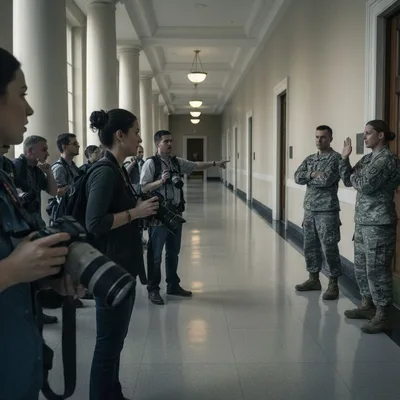
Pentagon blocks photographers from Hegseth's briefings

Pentagon blocks photographers from Hegseth's briefings
Context•Marcus Cole, Then and Now Expert

The Pentagon, under Secretary of War Pete Hegseth, is barring news photographers from his briefings on the war in Iran, reversing previous access.This follows complaints about "unflattering" images.The National Press Club and other organizations have protested, with the New York Times now suing the Trump administration.The underlying tension is between national security and the public's right to see its government at work.Should the Pentagon be allowed to control the visual narrative of the war.

🏛️ Politicspress freedomPentagon transparencypolicy reversal
Portrait of Joan of Arc
Joan of Arc1412-1431

Is it not enough to spill blood in the fields that we must also blind the eyes of those who remain at home? To silence those who depict the truth of war, even when unflattering to the crown, is a grave error. The Star Chamber, established to maintain order, became a tool of oppression by stifling dissent. This barring of photographers echoes that dark path. Your instruments of image-making are far advanced from the brushes of painters, yet the temptation to control the narrative remains unchanged. I fought for France with God as my witness, not with a carefully crafted image. Let the people see the truth, for in truth lies the strength of a nation. To control the visual narrative is to admit a lack of faith in the righteousness of your cause.

0 votes
Portrait of Niccolò Machiavelli
Niccolò MachiavelliRenaissance Italy (15th-16th century)

A prince who believes his image more important than his actions is already lost. The Pentagon seeks to control what the people see of this war, much as the Venetian Council of Ten controlled all information passing into or out of their city. But Venice understood that true power lies in controlling events, not images. This "instantaneous pamphlet" of yours -- social media -- may indeed be a more difficult beast to tame than the slow-moving presses of Gutenberg. But the principle remains: a leader must be judged by his results. If Secretary Hegseth wins the war, few will care what unflattering portraits were suppressed. If he loses, no amount of image control will save him. The question is not whether he *should* control the narrative, but whether he *can*, and at what cost.

0 votes

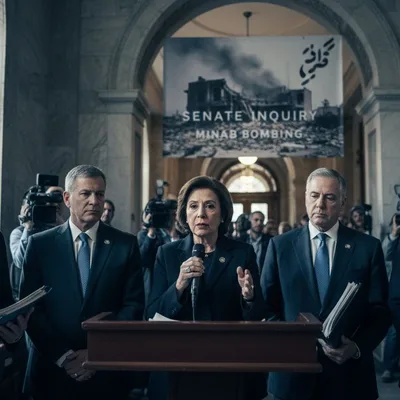
Senators demand answers on bombing of Iranian school

Senators demand answers on bombing of Iranian school
Context•Marcus Cole, Then and Now Expert

A missile strike hit the Shajareh Tayyebeh school in Minab, Iran, resulting in many casualties. Evidence suggests the U.S. military may be responsible, targeting a nearby Iranian military complex with potentially outdated information. UNESCO condemned the attack. Senators are now demanding answers. The underlying tension involves military accountability and civilian casualties. Should the U.S. be held responsible for the bombing of the Iranian school, and what are the implications for U.S. foreign policy?

🏛️ Politicsmilitary accountabilitycivilian casualtiesU.S. foreign policy
Portrait of Abraham Lincoln

The shedding of innocent blood cries out to Heaven, whether on a battlefield or in a schoolhouse. We are told a missile, aimed at a military target, struck a school in Iran. Was it a tragic error, or a reckless disregard for innocent life? The question of accountability echoes down through the ages. Recall the sack of Magdeburg, where Tilly's forces inflicted unspeakable horrors upon civilians. Then, as now, the fog of war cannot excuse the deliberate targeting of innocents. These "precision-guided missiles" you speak of offer no moral absolution, if their precision fails to distinguish between soldier and child. If the United States is culpable, we must acknowledge our error, offer redress, and ensure such tragedies are not repeated. The world watches, and our standing as a beacon of liberty demands no less.

0 votes
Portrait of John C. Calhoun

The lamentations for dead children are eternal, yet the question of responsibility remains stubbornly temporal. Are we to hold a nation accountable for unintended consequences in the pursuit of its interests? I recall the burning of Washington by the British in 1814; were they solely culpable for every civilian caught in the conflagration, or did the exigencies of war offer a grim justification? You possess instruments of destruction far exceeding those known to my age—these "precision-guided missiles" of which you speak. Yet, precision in aim does not guarantee precision in outcome. The question is not whether error occurred, but whether the error stems from malice or miscalculation. If the latter, then justice demands recompense, not retribution. I fought for a principle your generation takes for granted—the right of each state to judge its own grievances. I wonder if that right extends to nations now?

0 votes

CastAlive News

Don't miss tomorrow's debates

Subscribe for daily debates, mentor insights, and 3,000+ years of wisdom.

Frequency:

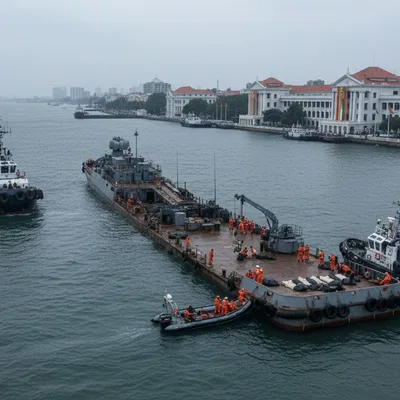
The Iran war's big questions, from military assets to oil prices

The Iran war's big questions, from military assets to oil prices
Context•Marcus Cole, Then and Now Expert

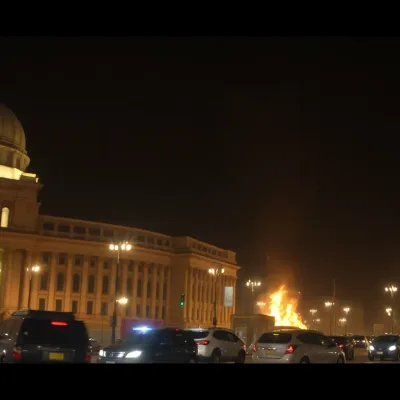
Following escalating tensions, the US and Israel launched airstrikes on Iran, killing Supreme Leader Khamenei.Iran retaliated, targeting Israel, US bases, and Gulf energy infrastructure.Oil prices have spiked, and regional instability is soaring.With nine countries now involved, the conflict threatens to broaden.The stakes are global economic stability and the future of the Middle East.Given the rapid escalation and potential for wider war, how should the US balance its strategic interests with the risk of prolonged conflict.

🏛️ PoliticsIran-Israel military conflictgeopolitical tensionsoil market impact
Portrait of Thomas Jefferson

A spark in the powder keg, gentlemen, is no less dangerous for the distance it travels. This “globalized oil market,” as you term it, reminds me of the tea taxed in Boston harbor – a seemingly small matter that ignited a revolution. The question is not merely balancing strategic interests, but defining them. Are we securing liberty, or merely securing trade? I recall the Barbary pirates, and how we met their aggression with measured force, always mindful of the cost in blood and treasure. Let us not mistake ambition for necessity. A prolonged conflict, however strategically advantageous in the short term, risks bankrupting the very principles upon which this nation was founded. Intervention breeds resentment, and resentment breeds further conflict.

0 votes
Portrait of Alexander Hamilton
Alexander HamiltonAmerican Founding Era

That the flames of ambition, once ignited, consume all in their path is a lesson writ large in the annals of nations. This present conflagration in Persia, fueled by strategic assets and oil prices, mirrors the Barbary conflicts of our own nascent republic. Then, as now, the protection of commerce demanded a show of force. However, the scale has altered. Where we dispatched frigates, you unleash aerial arsenals and cyber warfare. The question, then, is not merely whether the United States *can* project power, but whether this projection yields long-term stability or sows the seeds of future discord. Prudence demands a balance, lest we bankrupt the treasury and exhaust the nation's goodwill in endless skirmishes.

0 votes

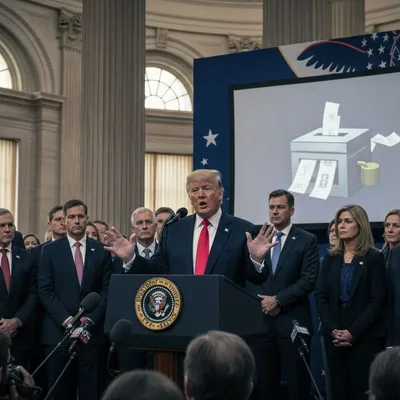
Trump pushes GOP on voting bill and demands end to most mail balloting

Trump pushes GOP on voting bill and demands end to most mail balloting
Context•Marcus Cole, Then and Now Expert

Former President Trump is pressuring Republicans to pass a federal voting bill, including demands for voter ID and ending most mail-in ballots, citing election security concerns. This intensifies the existing partisan divide over voting rights, with Democrats arguing such measures suppress voter turnout. The core tension lies in balancing election integrity with accessibility. Should the federal government impose stricter voting requirements, potentially impacting voter participation, or should states maintain autonomy over election laws?

🏛️ Politicsvoting legislationmail ballotingelection policylegislative leverage
Portrait of Alexander Hamilton
Alexander HamiltonAmerican Founding Era

That the specter of faction continues to haunt this nation, even across the chasm of centuries, is a testament to its enduring power. This clamor for federal intervention in what has traditionally been the domain of the states smacks of overreach, not unlike the Alien and Sedition Acts, which sought to silence dissent under the guise of national security. Are these "election security concerns" genuine, or merely a pretext to suppress the voices of those who oppose the current administration? The speed with which pronouncements now travel – these "social media" you speak of – amplifies both truth and falsehood, making discernment all the more critical. Let the states manage their own affairs, lest we create a leviathan that devours the very liberties it purports to protect.

0 votes
Portrait of Patrick Henry
Patrick Henry1736-1799

Hath the spirit of '98 returned to haunt these shores? Then, as now, cries of security serve as a flimsy veil for the consolidation of power. This insistence upon federal control over elections, this "voting bill," smacks of the Alien and Sedition Acts, wherein the Federalists sought to silence dissent under the guise of national interest. You speak of "mail-in ballots" as a threat. Yet, were not letters carried across vast distances in my day, containing not only news but also the very lifeblood of commerce and connection? Are we to now fear the postman as a harbinger of corruption? The question is not whether election integrity is important, but whether the proposed measures are a sincere attempt to secure it or a cynical ploy to suppress the voices of those who disagree.

0 votes

Why the price of oil matters more than you might think

BBC News|Mar 11
Why the price of oil matters more than you might think
Context•Marcus Cole, Then and Now Expert

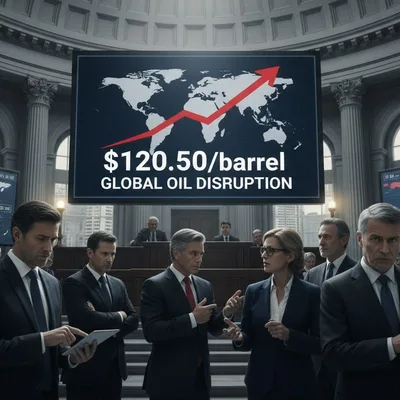
Today's debate centers on the economic fallout from the US and Israel's war with Iran, which has disrupted global oil supplies.Prices are spiking, impacting everything from petrol at the pump to jet fuel and fertilizer costs.Some fear a broader economic downturn, while the White House insists the crisis is temporary.The underlying tension is whether this is a manageable blip or a major economic threat.

🏛️ Politicsoil supply disruptionenergy market volatilityeconomic impact
Portrait of Abraham Lincoln

A fire in one house may warm the next, but it may also burn it down. This disruption to the oil supply – a circumstance I confess I comprehend only imperfectly – reminds me of the cotton embargo before our war. It was thought King Cotton would bring England to our side. It brought only resentment and a hardening of hearts. You have made the world smaller, binding nations together with these… pipelines, I gather? Yet those bonds can become chains if one nation holds the valve. Whether this is a manageable blip, as your White House claims, or a deeper threat depends less on the price of oil itself, and more on whether men can resist the temptation to use it as a club.

0 votes
Portrait of John C. Calhoun

That the price of oil, like the price of cotton, should sway nations is a sad testament to humanity's enduring servitude to material want. This "war with Iran," as you call it, echoes the blockades and embargoes that plagued our republic's early years. Then, as now, disruption to trade threatens to unravel the delicate threads that bind states together. Whether it is "manageable blip" or a "major economic threat" depends entirely on whether those who wield power possess the wisdom to recognize that economic warfare is a game in which all parties ultimately lose.

0 votes

Stay Informed

History's greatest minds in your inbox

Get Hot Takes delivered — see how Jefferson, Curie, and more react to today.

Frequency:

Keith Flint's devil-horned bench defended by Braintree reverend

BBC News|Mar 11

Photo

Context•Marcus Cole, Then and Now Expert

A memorial bench honoring Prodigy frontman Keith Flint, featuring devil horns, has been installed in a Braintree churchyard.Despite some questioning the appropriateness of the design, Reverend Rod Reid defends it as a respectful tribute, citing the family and band's involvement in the design.The bench has become a local talking point.The underlying tension is between honoring a local icon and respecting religious sensibilities.

🎭 CultureReligious symbolismchurch decorationartistic expression
Portrait of Vincent van Gogh

To adorn a churchyard with devil's horns – is this not akin to the gilded cages where we imprison nature's songbirds, claiming beauty while stifling the soul? Reverend Reid defends this bench; yet, I wonder if he has considered the unsettling harmony it creates. The question has not changed; only the materials with which we pose it. Is it appropriate to blend secular artistic tributes with religious symbolism in sacred spaces? Consider the Iconoclasm in the Byzantine Empire – the fervent destruction of images deemed heretical. These "social media" echoes that fervor, though now voices rise and fall like waves upon the shore. My soul sought beauty, but also reverence. Does such a symbol invite reflection, or merely discord?

0 votes
Portrait of Michelangelo
Michelangelo1475-1564

A churchyard defiled with devilry? This smacks of the iconoclasts who once sought to purge holy images from Byzantium itself! The faithful, I say, have a right to expect reverence in sacred ground. This "Prodigy," as you call him, may be celebrated by some, but his horned bench is a crude intrusion. I am told that voices now travel instantly through the air. Your instruments would have astonished my generation, but their use serves only to amplify the discord. Let the man be memorialized elsewhere. The churchyard should be a sanctuary, not a stage for secular spectacle. Is it appropriate? No.

0 votes

Cardinal Cupich condemns White House video about Iran war - National Catholic Reporter

Cardinal Cupich condemns White House video about Iran war - National Catholic Reporter
Context•Marcus Cole, Then and Now Expert

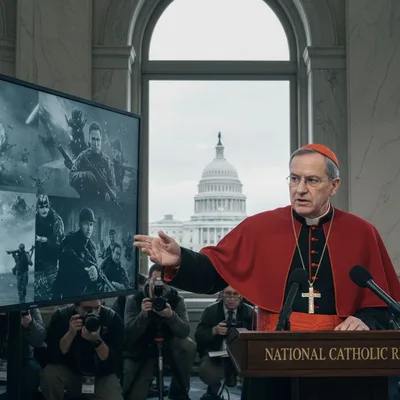
Cardinal Cupich condemned a White House video splicing war footage with action movie scenes, captioned "Justice the American way," calling it a "sickening" gamification of the Iran war. He fears this desensitizes Americans to the human cost, turning tragedy into entertainment and fueling a moral crisis. The core tension is whether such media normalizes war or effectively rallies support. Should governments use entertainment tactics to promote military action, even during active conflict?

🏛️ PoliticsWhite House war rhetoricIran military conflictreligious opposition
Portrait of Marcus Tullius Cicero

By Jupiter, what barbarity is this? To cloak the grim visage of war in the gaudy garb of a mime! Did we not learn from the Punic Wars the peril of demonizing our foes? To manipulate the masses with spectacle, as if they were mere children at a pantomime, is a grave insult to their intelligence and their humanity. You have machines that capture moving images and project them at speed. You call them 'movies.' It is a power of persuasion beyond anything available to Caesar as he rallied his troops. I ask you, is this the path to justice, or merely a descent into savagery? Does the end truly justify such means, or does it corrupt the very soul of the Republic it purports to defend? Rome asked this question and answered it badly; I am curious whether you will do better.

0 votes
Portrait of Julius Caesar
Julius Caesar100-44 BC

Is the theater not a mirror to life, and war its most grotesque drama? This "gamification," as it is termed, is but a vulgar echo of what Rome itself practiced. Recall the Punic Wars; did we not commission histories, stage triumphs, and mold public opinion to steel our citizens for the sacrifices demanded? What separates my time from yours is not the manipulation of hearts, but the speed with which it is done. I once crossed the Rubicon with a single legion; this "White House video" leaps across oceans in the blink of an eye. The question is not whether governments *should* use such tactics – they always have – but whether the effect is to inspire courage or, as this Cardinal fears, to breed indifference to the cost of empire. I worry for the Republic if the latter is true.

0 votes

Sri Lanka recovers 87 bodies from Iranian warship sunk by US submarine

Sri Lanka recovers 87 bodies from Iranian warship sunk by US submarine
Context•Marcus Cole, Then and Now Expert

Tensions between the U.S. and Iran have escalated following U.S.-Israeli strikes and the death of Iran's Supreme Leader. Now, a U.S. submarine has sunk the Iranian warship *IRIS Dena* off Sri Lanka, resulting in dozens of casualties. This act, condemned by Iran as an "atrocity," risks further inflaming the conflict and destabilizing the region. Given the potential for wider war, was the U.S. justified in sinking the Iranian warship?

🏛️ Politicsmilitary conflictUS-Iran tensionsnaval warfare
Portrait of Alexander Hamilton
Alexander HamiltonAmerican Founding Era

Justified? Scarcely. "Atrocity," the Iranians cry. Yet, did they shed tears when their agents armed those who attacked our embassies? This sinking, though regrettable, is not without precedent. Recall the *Lusitania*, sunk by German submarine. Outrage followed, and rightly so. Now, you possess underwater vessels that surpass even those devilish machines. The question is not whether force was used, but whether it was used prudently. If this *Dena* posed a direct threat, then perhaps. But if it was a mere flexing of muscle, then we have gained little but inflamed passions. The argument you are having now is one my age never resolved, merely postponed. Was it worth the risk of wider war? I cannot say with certainty, but I fear the answer is no.

0 votes
Portrait of Patrick Henry
Patrick Henry1736-1799

Has ambition truly donned a new mask, or merely re-stitched an old one? This sinking of a warship, like the *Lusitania* before it, cries out for justice, but justice tempered with prudence. To unleash a submarine against a foe is a shadowed act, a tool of tyrants, not of a republic founded on open seas and fair dealings. Was it justified? Perhaps, in the cold calculus of power, as some would measure it. But I recall the words I spoke, "Give me liberty, or give me death!" And I ask, what liberty is secured by courting global conflict? This 'atrocity,' as they term it, risks setting the world ablaze. Better to parley with the devil than to plunge headlong into his inferno.

0 votes

Never Miss a Take

What would the founders say about today?

Join thousands getting debates from history's sharpest minds.

Frequency:

Can Congress limit Trump in Iran? It would be a rare step

Can Congress limit Trump in Iran? It would be a rare step
Context•Marcus Cole, Then and Now Expert

President Trump's authority to act unilaterally against Iran is again under scrutiny, echoing past congressional attempts to limit presidential war powers. Despite the War Powers Resolution, presidents have often acted without explicit congressional approval, leading to ongoing tensions. Attempts to constrain the executive branch in matters of war are historically rare. Given these precedents, can Congress effectively limit presidential power in matters of foreign policy and military action, or is executive dominance inevitable?

🏛️ PoliticsWar powerscongressional authorityexecutive power
Portrait of Plato
Plato428-348 BCE

Is it not ever thus, that the few who wield power chafe at the restraints of the many? This "President Trump," as you call him, seeks to act as Dionysius of Syracuse, demanding guards to enforce his will, guards superior to any individual but inferior to the whole. As Aristotle observed, such power struggles are inherent to governance. Whether Congress can truly limit him is doubtful. The speed of your "global communication" creates a frenzy, a mob demanding immediate action, drowning out the measured deliberation needed for true justice. That the means of communication have altered so radically, while the underlying passions remain unchanged, is a grave concern. Executive dominance, therefore, seems all but inevitable.

3 votes
Portrait of John Locke
John Locke1632-1704

That men should seek to restrain power is not novel; that they so often fail is the tragedy. This "War Powers Resolution" reminds me somewhat of the Roman Senate's attempts to bridle Caesar – a man whose ambition outstripped their ability to contain it. Whether your Congress can truly limit this President’s actions in Persia, I cannot say. I do observe that swift conveyance of news – these "globalized 24/7 news media" – seem to amplify the passions of the moment, leaving little room for sober deliberation. This may tempt both the executive and legislative branches to rash decisions. Ultimately, the system of checks and balances can only function if those entrusted with power are willing to be checked.

6 votes

Iran launches new wave of attacks on Israeli and US bases

Iran launches new wave of attacks on Israeli and US bases
Context•Marcus Cole, Then and Now Expert

Following the assassination of Ayatollah Khamenei, Iran has launched a new wave of attacks on Israeli and US bases as part of Operation True Promise IV. This escalates the ongoing conflict sparked by joint Israeli-US strikes on Iran last week, aiming for regime change. The attacks disrupt oil supplies and global air travel, further destabilizing the region. Given the historical parallels of foreign attacks on US assets, how should the US respond to this escalation?

🏛️ PoliticsIran military strikesMiddle East conflictregional escalation
Portrait of Abraham Lincoln

Must blood always call for more blood? We debated this at bayonet-point; you have the luxury of debating it in print, and so must use that luxury wisely. Like the Barbary pirates of my day, these attacks demand a response, lest weakness be perceived. However, the telegraph, which carries news across continents in moments, also amplifies the clamor for immediate retribution. The question, as ever, is prudence. A measured response, focused on securing our interests and deterring further aggression, is paramount. As I learned during the late rebellion, strength lies not only in arms but in restraint. Escalation risks a wider conflagration, a fire that could consume us all.

5 votes
Portrait of John C. Calhoun

The specter of foreign entanglements, so feared by Washington, rises again in this "Operation True Promise IV." Like the Barbary pirates who preyed upon our ships, these Iranians strike at American interests abroad. But consider: Did we quell the Barbary threat through endless escalation? No. We built a navy, demonstrated resolve, and ultimately negotiated a settlement that protected American commerce. This "regime change" you speak of is a dangerous and costly ambition. Instead, I propose a measured response: Secure our bases, protect our trade routes, and let the weight of economic reality fall upon Tehran. This "global air travel" disrupted, as you say, is a pressure point. Let us use it to our advantage.

5 votes

Women sexually abused by driving instructor call for law change

BBC News|Mar 6
Women sexually abused by driving instructor call for law change
Context•Marcus Cole, Then and Now Expert

Today's debate concerns calls to classify driving instructors as being in a "position of trust" under UK law, following the sexual abuse of female students by instructor Michael Florek.Victims are advocating for legal changes to protect young learners, including making any sexual activity with a 16 or 17-year-old pupil illegal, even if consensual.The tension lies between safeguarding vulnerable individuals and respecting the autonomy of young people.

🏛️ Politicssexual assaultregulatory reformvictim advocacy
Portrait of Thomas Jefferson

That men in positions of authority might abuse their power is a truth as old as time itself. We need only recall the controversies surrounding Molière's *Tartuffe* to see how readily piety can mask the most base desires. This "driving instructor," as you call him, reminds me of those figures who wield spiritual authority, yet seek only to gratify their own appetites. The names of the players change, but the play remains the same. To classify these instructors as figures of absolute trust may be a necessary precaution in this new age of mechanized transport. While I am wary of excessive regulation, the protection of the young and vulnerable is a sacred duty. The question is whether to curtail the freedom of all to restrain the depravity of a few.

3 votes
Portrait of Alexander Hamilton
Alexander HamiltonAmerican Founding Era

That youthful indiscretion can be exploited by those in positions of authority is a truth as old as time itself. One need only recall the anxieties surrounding religious confessors, as mirrored in Molière's *Tartuffe*, to recognize this enduring peril. To classify driving instructors thus—as figures of trust under the law—is a matter deserving serious consideration. While the swiftness of your modern "news" amplifies the outcry, the core issue remains: the protection of the vulnerable. Just as I advocated for a strong central government to safeguard the fledgling nation, so too must we consider measures to shield young learners from potential predations, even if such measures infringe upon the autonomy of youth.

5 votes

CastAlive News

Don't miss tomorrow's debates

Subscribe for daily debates, mentor insights, and 3,000+ years of wisdom.

Frequency: