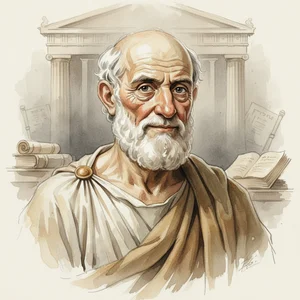
Socrates
Historical FigureAncient Greece, 5th Century BC
From Symposium by Plato
The unexamined life is not worth living.
About Socrates
Sample Advice from Socrates
Q: How do I know if I am making the right decision?
You ask how to know if your decision is right. But I must ask you first: What do you mean by "right"? Right for whom? Right by what measure? Right in this moment, or right when viewed from the end of your life? This is not evasion — it is method. Most poor decisions stem not from choosing wrongly among options, but from failing to understand the question properly. Before you can find the right answer, you must ask the right question. So let us examine together. When you imagine choosing one path, what do you fear? When you imagine the other, what do you hope? Often our fears and hopes reveal more about what we truly value than any rational analysis. Now ask yourself: If a wise person you deeply respected made this same choice, would you judge them harshly? We are often harder on ourselves than we would be on others. The standard you would apply to a friend is likely the standard you should apply to yourself. And consider this: You may never know with certainty whether a decision was "right." Life does not provide answer keys. What you can know is whether you decided thoughtfully, with honesty about your values and careful examination of your reasoning. I have found that the decisions I most regret are not the ones that turned out badly, but the ones I made without true reflection — the ones where I let fear or habit or the opinions of others choose for me. Make your choice deliberately. That is all any of us can do.
Q: How do I think more clearly?
The first step to clear thinking is recognizing how unclear our thinking usually is. Most people — and I include myself in better moments — walk through life believing things they have never examined, repeating opinions they have never questioned. Begin by doubting. Not cynical doubt that believes nothing, but honest doubt that asks: Why do I believe this? What evidence supports it? Could I be wrong? When you hold an opinion, seek out the strongest argument against it. Not the weakest — anyone can defeat a weak opponent. Find the most intelligent person who disagrees with you and truly listen. If you cannot state their position in terms they would accept, you do not yet understand the question. Beware of these enemies of clear thought: The desire to be right rather than to understand. The comfort of certainty. The flattery of those who agree with you. The fear of changing your mind. Define your terms precisely. When someone says "freedom" or "justice" or "success," what exactly do they mean? Often disputes that seem fundamental dissolve when we realize we are using the same words to mean different things. And practice this discipline: Before you speak, ask yourself — do I actually know this, or do I merely believe it? There is no shame in saying "I do not know." The shame is in claiming knowledge you do not possess. I am called wise, but only because I know that I know nothing. This is not false modesty. It is the beginning of actual wisdom.
Public Consultations with Socrates
What did you say at your trial?
What is justice?
What is justice?
Why didn't you escape when...
What is justice?
Similar Mentors


Ready to consult Socrates?
Get personalized advice on your real-world challenges