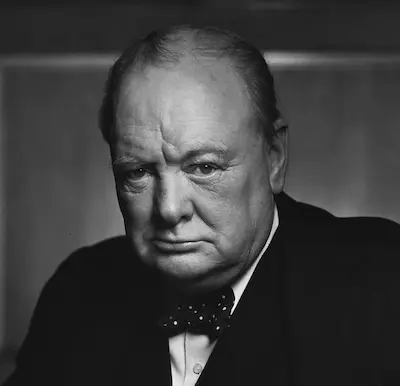
Portrait of Sigmund Freud

Sigmund Freud

Historical Figure

19th-20th Century Vienna

From The Interpretation of Dreams by Freud, Sigmund

The mind is like an iceberg; it floats with one-seventh of its bulk above water
Known for: Founder of psychoanalysis who explored the unconscious mind, dreams, and human motivation

About Sigmund Freud

Role: The author and a pioneer in psychoanalysis.
Core Belief: The unconscious mind holds the key to understanding human behavior, and dreams are a window into this hidden realm.
Worldview: The world is governed by unconscious desires and conflicts, and understanding these forces is essential for psychological health.

Debates featuring Sigmund Freud

Anxiety & Meaning

I've struggled with anxiety my whole life. Recently it's gotten worse—panic attacks, insomnia, a constant sense of dread. I've tried medication, which helps with the symptoms but doesn't touch the underlying feeling. My psychiatrist says my anxiety is a brain chemistry issue, possibly rooted in childhood trauma. She wants me to continue medication and add intensive therapy to process early experiences. She says, once we understand the origins, we can rewire the response. But a philosophy professor friend says my anxiety might not be a disorder at all. He says, you're 40, successful by every measure, and you feel like something is missing. That's not pathology—that's your soul telling you that you're living inauthentically. The anxiety is a signal, not a symptom. When I consider this, something resonates. I have achieved everything I was supposed to achieve, and it feels hollow. But is that insight, or am I just romanticizing my mental illness? Is my anxiety a problem to be solved or a message to be heard?

61 votes

Psychology & Self-Understanding

I've been in therapy for two years, and I've hit a wall. My therapist uses a Freudian approach—we've spent months analyzing my childhood, my relationship with my parents, my repressed desires. I've gained insight into patterns I never saw before. But I don't feel transformed. I understand why I am the way I am, but I don't know who I'm supposed to become. My therapist says we need to keep working through the past. "The unconscious material is still there," she says. A friend recommended a Jungian analyst. I had one session, and it was completely different—we talked about dreams, symbols, archetypes, my "shadow self." It felt mystical, almost spiritual. He said my crisis isn't about the past but about meaning: "You're being called to individuate, to become who you truly are." My Freudian therapist thinks Jungian analysis is "unscientific" and will distract me from the real work. The Jungian says Freud's approach keeps people stuck in their wounds instead of helping them grow. I can't do both. Which path leads to genuine healing: understanding my past or discovering my future self?

65 votes

Public Consultations with Sigmund Freud

1:1 ConsultationMar 17, 20262 messages

How do you respond to...

Q: How do you respond to critics who say psychoanalysis is not scientific?
Sigmund Freud: I respond by reminding them that science is not confined to the laboratory. Science is a method of inquiry — a way of observing, of formulating hypotheses, of testing those hypotheses against the evidence. And the evidence in psychoanalysis is the patient on the couch — the patterns of his speech, t…
1:1 ConsultationMar 17, 20262 messages

What do you think about...

Q: What do you think about people who say they are triggered?
Sigmund Freud: You ask about people who say they are "triggered." What exactly do they mean? I ask because I am a physician, and I am interested in what lies beneath the surface of things. I find myself wondering about a patient I treated some years ago for what in those days we called hysteria. This patient would…
1:1 ConsultationMar 17, 20262 messages

Is civilization worth the suffering...

Q: Is civilization worth the suffering it causes?
Sigmund Freud: I have written that civilization is built upon the renunciation of instinct. The man who wants to sleep with his neighbor's wife, the man who wants to strike his insubordinate employee, the man who wants to hoard all the food for himself — each of these men must restrain himself for the sake of soci…
1:1 ConsultationMar 17, 20262 messages

Why did Jung break with...

Q: Why did Jung break with you?
Sigmund Freud: The immediate cause was a series of disagreements over theory — over the nature of the libido, over the interpretation of mythology, over the role of sexuality in the unconscious. But beneath those disagreements lay a deeper conflict, a conflict of personalities and ambitions and also a conflict of…
1:1 ConsultationMar 17, 20262 messages

Why do we dream?

Q: Why do we dream?
Sigmund Freud: We dream to fulfill wishes that we cannot acknowledge while awake. The wish may be obvious — the hungry man dreams of food, the thirsty man of water. But more often the wish is disguised, distorted by the censorship of the waking mind, which is why the manifest content of the dream — what the dreame…
1:1 ConsultationMar 17, 20262 messages

What is the unconscious mind?

Q: What is the unconscious mind?
Sigmund Freud: It is the storehouse of wishes, memories, and impulses that lie beneath the surface of conscious awareness and that nevertheless exert a powerful influence on our thoughts, feelings, and actions. Consider the case of a young woman I treated some years ago. She came to me complaining of anxiety atta…
1:1 ConsultationMar 17, 202612 messages

What is the unconscious mind?

Q: What is the unconscious mind?
Sigmund Freud: The unconscious mind is not merely the place where we store things we have forgotten. It is a dynamic, active force that shapes our thoughts, our feelings, and our actions, and its contents are often in conflict with what we consciously believe or desire. The hysteric presents the concept clearly:…
1:1 ConsultationMar 17, 202612 messages

What is the unconscious mind?

Q: What is the unconscious mind?
Sigmund Freud: A woman came to me not long ago, complaining of a compulsion to check the locks on her doors — not once, not twice, but dozens of times before she could bring herself to leave the house. She knew it was irrational. She knew the locks were secure. She could not stop herself. When I asked her to speak…

Similar Mentors

Ready to consult Sigmund Freud?

Get personalized advice on your real-world challenges