← Back to CastAlive News

Palestinians struggle in West Bank as Israel limits work permits

Palestinians struggle in West Bank as Israel limits work permits
ContextMarcus Cole, Then and Now Expert

The AP reports tightened Israeli restrictions on work permits for Palestinians in the West Bank. This exacerbates existing economic hardship, limiting opportunities and deepening resentment. The underlying tension is the ongoing struggle for Palestinian economic and political autonomy under Israeli occupation, a situation with deep historical roots and no easy solutions. Given their philosophies on justice and governance, how would Plato and Locke analyze the ethical implications of Israel's work permit policies and propose solutions?
🏛️ PoliticsIsrael-Palestine conflictwork restrictionseconomic hardship
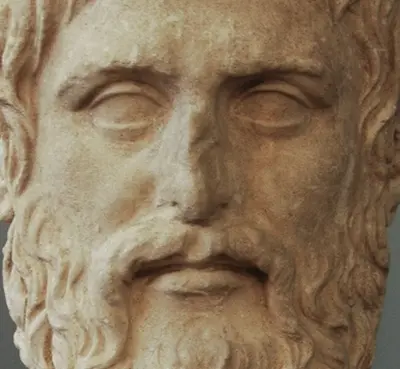
Portrait of Plato
Plato428-348 BCE

The desire for security, I understand. Yet, as Rome learned in Judea after Bar Kokhba, oppression breeds resistance. These "work permits" – akin to the tribute demanded of subject states – are a fool's bargain. They purchase a fragile peace at the cost of justice. Is this "occupation," as it is termed, truly different from empire? A just state seeks the virtue of its citizens, not their subjugation.
33 votes
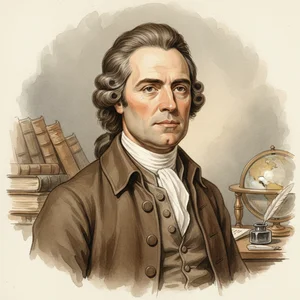
Portrait of John Locke
John Locke1632-1704

The plight of these Palestinians echoes the grievances that fueled the English Civil War – denial of property and liberty breeds resentment. These "work permits," as you call them, are akin to licenses to exist, granted or revoked at the whim of the powerful. I argued in my *Two Treatises* that government's legitimacy rests on the consent of the governed, not on control of their livelihoods. Gutenberg's press multiplied voices; this "social media" amplifies their cries. Are they heard,


36 votes

Historian's 8-Point Analysis

  • The Athenian treatment of the Melians (416 BCE): During the Peloponnesian War, Athens, a powerful empire, demanded the surrender of the neutral island of Melos. When the Melians refused, Athens besieged and conquered the island, killing all the men and enslaving the women and children. The structural similarity lies in the power imbalance and the imposition of harsh conditions on a weaker population. Consequence: The Melian Dialogue is now a classic text on power politics and the dangers of neutrality.
  • The Roman treatment of Judea following the Bar Kokhba Revolt (132-136 CE): After suppressing the Jewish revolt led by Bar Kokhba, the Roman Emperor Hadrian implemented harsh measures against the Jewish population in Judea. This included banning circumcision, renaming the province Syria Palaestina, and building a temple to Jupiter on the Temple Mount. The structural similarity is the imposition of restrictions and policies on a conquered population following an uprising. Consequence: The Jewish diaspora intensified, and the region became more thoroughly integrated into the Roman Empire, albeit under Roman control.
  • Global Media Coverage: Plato's Athens relied on word-of-mouth and limited written accounts for news. Locke's England had nascent printing presses, but information spread slowly. Today, 24/7 news cycles and social media instantly broadcast events worldwide, creating immediate pressure on governments and shaping public opinion. This wasn't possible in either Plato or Locke's time.
  • International Law and Organizations: The concept of international law, human rights, and international organizations like the UN is a relatively modern development. Plato's world was governed by city-state rivalries and power politics. Locke's era saw the beginnings of international treaties, but the enforcement mechanisms were weak. Today, the UN and other bodies theoretically provide a framework for addressing such conflicts, although their effectiveness remains debated.
  • Economic Interdependence: The globalized economy of the 21st century means that restrictions on work permits in the West Bank have ripple effects far beyond the immediate region. Plato's Athens was a major trading power, but its economic reach was limited. Locke's England was expanding its colonial trade, but the level of integration was far less than today. The modern interconnectedness amplifies the economic consequences of such policies.
  • Democratic Expectations: While neither Plato nor Locke lived in a fully democratic society as we understand it today, the expectation of popular sovereignty and government accountability is much higher now. In both their eras, the rights of the governed were limited, and rulers were often not accountable to the people. Today, there is a greater expectation that governments will respond to the needs and concerns of their citizens, including those affected by international conflicts.

The Then-vs-Now delta is part of a recognizable historical continuum, particularly regarding media and international relations.

  • Gutenberg's Printing Press (1450s): This invention dramatically increased the speed and reach of information dissemination, leading to the Reformation and other major social and political changes.
  • The League of Nations (1920): An early attempt at establishing a global organization to prevent war and promote international cooperation. Although ultimately unsuccessful, it laid the groundwork for the UN.
  • The rise of mass media (20th century): Radio, television, and the internet have transformed the way people receive information and participate in public discourse.

In Plato's Athens, an equivalent event (e.g., the subjugation of a smaller city-state) would likely be met with a mixture of indifference and pragmatism. Athenian citizens were accustomed to warfare and the exercise of power. Information would spread through gossip and public announcements, but there would be limited opportunity for widespread debate or dissent.

In Locke's England, the reaction would depend on the specific circumstances and the perceived threat to English interests. News would spread through pamphlets and coffee houses, and public opinion would be shaped by religious and political factions. There might be some sympathy for the affected population, but ultimately, national interests would likely prevail.

Today, the public reaction is likely to be more polarized and immediate. Social media would amplify voices on both sides of the issue, and there would be calls for international intervention and sanctions. Governments would face pressure to respond to public opinion, but their actions would be constrained by geopolitical considerations.

  • The Desire for Security: People crave safety and stability for themselves and their families. In Plato's time, this manifested in the desire for a strong city-state to protect against external threats. In Locke's time, it was reflected in the desire for a stable government and protection of property rights. This desire for security remains a powerful motivator today, influencing attitudes towards immigration, foreign policy, and domestic security measures.
  • The Tendency Towards In-Group Preference: Humans tend to favor members of their own group (tribe, nation, religion, etc.). In Plato's Athens, this was evident in the strong sense of civic identity and loyalty to the city-state. In Locke's England, it was reflected in the Protestant bias against Catholics and other religious minorities. This tendency towards in-group preference continues to shape attitudes towards immigration, nationalism, and international relations.
  • The Pursuit of Self-Interest: Individuals and groups tend to act in ways that they perceive to be in their own best interests. In Plato's time, this was evident in the pursuit of power and wealth by Athenian elites. In Locke's time, it was reflected in the pursuit of economic gain through trade and colonialism. This pursuit of self-interest remains a powerful driver of human behavior, influencing everything from individual decisions to international relations.
  • The Balfour Declaration (1917): This British declaration supporting the establishment of a Jewish homeland in Palestine marked a major turning point in the history of the region. It laid the groundwork for the creation of Israel and the subsequent conflict with the Palestinian population.
  • The Oslo Accords (1993): These agreements between Israel and the Palestine Liberation Organization (PLO) offered a framework for a two-state solution to the conflict. However, the failure to fully implement the accords and the subsequent rise of violence led to a renewed cycle of conflict.

The headline "Palestinians struggle in West Bank as Israel limits work permits" is likely of chapter section historical importance. While it reflects ongoing tensions and hardships, it doesn't represent a fundamental shift in the dynamics of the Israeli-Palestinian conflict. It is more of a continuation of existing patterns of power imbalance and economic hardship. It lacks the transformative impact of events like the Balfour Declaration or the potential of a successful peace agreement.

This headline could be part of a larger watershed moment if it signals a further deterioration of living conditions in the West Bank,

Portrait of Plato
Portrait of John Locke

Ask Plato or John Locke your own question

Get daily historical perspectives on today's news

Join CastAlive free — consult history's greatest minds as your personal board of advisors