← Back to CastAlive News

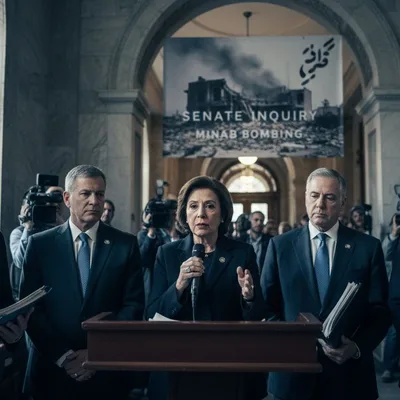
Senators demand answers on bombing of Iranian school
Senators demand answers on bombing of Iranian school
ContextMarcus Cole, Then and Now Expert

A missile strike hit the Shajareh Tayyebeh school in Minab, Iran, resulting in many casualties. Evidence suggests the U.S. military may be responsible, targeting a nearby Iranian military complex with potentially outdated information. UNESCO condemned the attack. Senators are now demanding answers. The underlying tension involves military accountability and civilian casualties. Should the U.S. be held responsible for the bombing of the Iranian school, and what are the implications for U.S. foreign policy?
🏛️ Politicsmilitary accountabilitycivilian casualtiesU.S. foreign policy
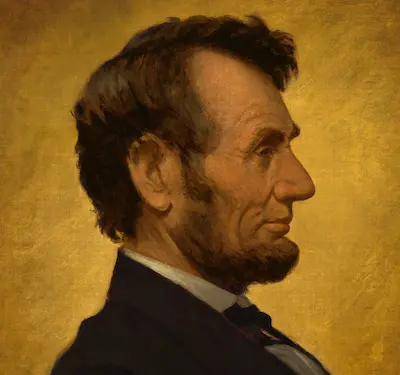
Portrait of Abraham Lincoln

The shedding of innocent blood cries out to Heaven, whether on a battlefield or in a schoolhouse. We are told a missile, aimed at a military target, struck a school in Iran. Was it a tragic error, or a reckless disregard for innocent life? The question of accountability echoes down through the ages. Recall the sack of Magdeburg, where Tilly's forces inflicted unspeakable horrors upon civilians. Then, as now, the fog of war cannot excuse the deliberate targeting of innocents. These "precision-guided missiles" you speak of offer no moral absolution, if their precision fails to distinguish between soldier and child. If the United States is culpable, we must acknowledge our error, offer redress, and ensure such tragedies are not repeated. The world watches, and our standing as a beacon of liberty demands no less.

0 votes
Portrait of John C. Calhoun

The lamentations for dead children are eternal, yet the question of responsibility remains stubbornly temporal. Are we to hold a nation accountable for unintended consequences in the pursuit of its interests? I recall the burning of Washington by the British in 1814; were they solely culpable for every civilian caught in the conflagration, or did the exigencies of war offer a grim justification? You possess instruments of destruction far exceeding those known to my age—these "precision-guided missiles" of which you speak. Yet, precision in aim does not guarantee precision in outcome. The question is not whether error occurred, but whether the error stems from malice or miscalculation. If the latter, then justice demands recompense, not retribution. I fought for a principle your generation takes for granted—the right of each state to judge its own grievances. I wonder if that right extends to nations now?
0 votes

Historian's 8-Point Analysis

  • The Sack of Magdeburg (1631): During the Thirty Years' War, Imperial Catholic forces besieged and then brutally sacked the Protestant city of Magdeburg. The event, characterized by widespread civilian slaughter and destruction, horrified Europe. *Structural Similarity:* Similar to the Iranian school bombing, Magdeburg involved a military action resulting in significant civilian casualties, raising questions of military accountability and the proportionality of force. *Consequence:* The Sack of Magdeburg further inflamed religious tensions and prolonged the Thirty Years' War, hardening Protestant resistance and damaging the reputation of the Imperial forces.
  • The Bombardment of Copenhagen (1807): During the Napoleonic Wars, the British Royal Navy bombarded Copenhagen, Denmark, to prevent the Danish fleet from falling into Napoleon's hands. The bombardment resulted in significant civilian casualties and damage to the city. *Structural Similarity:* Like the Iranian school bombing, this event involved a military action (bombardment) by a powerful nation (Britain) against a weaker nation (Denmark), resulting in civilian casualties and raising questions about the justification for the attack and the impact on neutral parties. *Consequence:* The Bombardment of Copenhagen pushed Denmark into an alliance with Napoleon and further fueled anti-British sentiment in Europe.
  • The Raid on Harpers Ferry (1859): While not directly involving international conflict, John Brown's raid on Harpers Ferry, aimed at inciting a slave rebellion, is structurally similar in that it involved a violent act with unintended consequences and moral complexities. *Structural Similarity:* The raid, like the school bombing, involved a targeted action with unintended and tragic consequences. Brown's intent was to liberate slaves, but the raid resulted in violence and death. Similarly, the school bombing, even if targeting a military complex, resulted in the deaths of civilians. *Consequence:* Harpers Ferry heightened sectional tensions in the U.S. and contributed to the outbreak of the Civil War.
  • Speed and Scope of Information Dissemination: In Lincoln and Calhoun's era, news of an event like the bombing of a school in a foreign land would take weeks or months to reach the public, primarily through newspapers and word of mouth. Today, news spreads globally within minutes via social media, 24-hour news channels, and online platforms. This instantaneous dissemination creates immediate public pressure and demands for accountability.
  • Technological Advancements in Warfare: Lincoln and Calhoun lived in an era of relatively less precise weaponry. The concept of a "precision airstrike" gone wrong would be alien to them. Today, the existence of guided missiles and advanced targeting systems raises expectations of minimizing civilian casualties, making incidents like the school bombing particularly controversial when they occur.
  • International Law and Human Rights Norms: The concept of international humanitarian law, particularly the protection of civilians in armed conflict, was not as well-developed in the 19th century as it is today. Organizations like UNESCO condemning the bombing of a school would have been less common and less impactful. Today, international legal frameworks and human rights norms place greater scrutiny on military actions that result in civilian harm.
  • Ubiquity of Visual Evidence: The existence of satellite imagery, verified video footage, and geolocated images (as mentioned in the web grounded news context) provides a level of transparency and scrutiny that was unimaginable in the 19th century. This visual evidence can quickly shape public opinion and put pressure on governments to provide explanations.

The Then-vs-Now delta is part of a recognizable historical continuum, specifically the increasing speed of information dissemination and the evolving norms of warfare.

  • Telegraph (Mid-19th Century): The invention of the telegraph allowed for near-instantaneous communication across long distances, revolutionizing news reporting and military command.
  • Radio (Early 20th Century): Radio broadcasting further accelerated the spread of information, allowing for mass audiences to receive news and commentary in real-time.
  • Television (Mid-20th Century): Television brought visual images of war and conflict into people's homes, creating a more immediate and visceral understanding of global events.

In Lincoln and Calhoun's era, the average person's reaction to the equivalent of the Iranian school bombing would likely be delayed and less informed. News would arrive weeks or months later, filtered through newspapers with varying political biases. Public outrage would be more localized and less immediate due to the slower pace of communication. There would be less access to independent verification of events, making it easier for governments to control the narrative. Today, the public has access to a deluge of information from various sources, leading to a more immediate and potentially volatile reaction. Social media amplifies outrage and allows for rapid mobilization of public opinion.

  • Moral Outrage at Civilian Casualties: The inherent human revulsion at the killing of innocent civilians, especially children, is a constant across eras. In Lincoln's time, the massacre at Mountain Meadows (1857), where Mormon settlers killed a group of emigrants, sparked widespread outrage and condemnation.
  • Desire for Justice and Accountability: The human need for justice and accountability when wrongdoing occurs is timeless. The Dred Scott decision (1857), which denied citizenship to enslaved people, fueled the abolitionist movement's demand for justice and equality.
  • Suspicion of Government Motives: A natural skepticism towards government actions, especially in matters of war and foreign policy, persists across history. During Calhoun's time, the Nullification Crisis (1832-33) demonstrated a deep distrust of the federal government's power and motives.
  • The Geneva Conventions (1864, and subsequent revisions): These international agreements established rules for the humane treatment of combatants and civilians during wartime. This was a watershed moment because it formalized the concept of international humanitarian law and set standards for military conduct.
  • The My Lai Massacre (1968): The exposure of the My Lai Massacre, in which U.S. soldiers killed hundreds of unarmed Vietnamese civilians, shocked the world and led to increased scrutiny of U.S. military actions. This event highlighted the potential for atrocities in war and fueled anti-war sentiment.

The "Senators demand answers on bombing of Iranian school" headline is likely of chapter section historical importance. While tragic and politically significant, it is not on the scale of the Geneva Conventions or the My Lai Massacre, which fundamentally altered the landscape of international law and public perception of war. It is more significant than a mere footnote because it reflects ongoing tensions in the Middle East and raises important questions about U.S. foreign policy and military accountability.

This headline could be part of a larger watershed moment if it signals a shift in public and political tolerance for civilian casualties in U.S. military operations. The trend is towards greater transparency and accountability in warfare, driven by technological advancements and evolving human rights norms. If this incident leads to significant policy changes, such as stricter rules of engagement or increased oversight of military operations, it could be a turning point.

Signals that would confirm this being part of a larger shift:

  • Widespread public protests and demonstrations against U.S. foreign policy.
  • Congressional investigations and hearings into the bombing.
  • Changes in U.S. military doctrine and training to prioritize civilian protection.
  • Increased international pressure on the U.S. to adhere to international humanitarian law.

Signals that would deny this being part of a larger shift:

  • The incident is quickly forgotten or overshadowed by other events.
  • No significant policy changes are implemented.
  • Public outrage fades without leading to sustained political action.
  • The U.S. government successfully deflects criticism and avoids accountability.
Portrait of Abraham Lincoln
Portrait of John C. Calhoun

Ask Abraham Lincoln or John C. Calhoun your own question

Get daily historical perspectives on today's news

Join CastAlive free — consult history's greatest minds as your personal board of advisors