← Back to CastAlive News

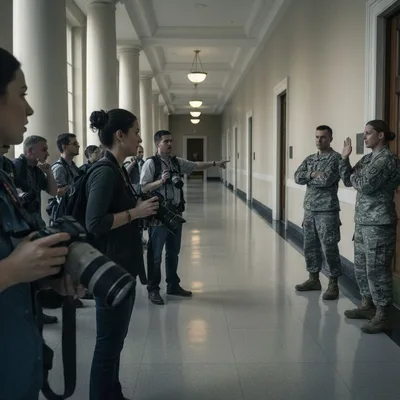
Pentagon blocks photographers from Hegseth's briefings
Pentagon blocks photographers from Hegseth's briefings
ContextMarcus Cole, Then and Now Expert

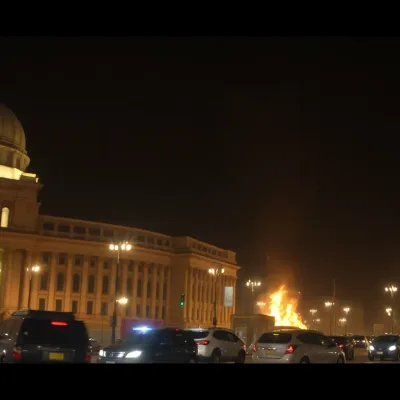
The Pentagon, under Secretary of War Pete Hegseth, is barring news photographers from his briefings on the war in Iran, reversing previous access.This follows complaints about "unflattering" images.The National Press Club and other organizations have protested, with the New York Times now suing the Trump administration.The underlying tension is between national security and the public's right to see its government at work.Should the Pentagon be allowed to control the visual narrative of the war.
🏛️ Politicspress freedomPentagon transparencypolicy reversal
Portrait of Joan of Arc
Joan of Arc1412-1431

Is it not enough to spill blood in the fields that we must also blind the eyes of those who remain at home? To silence those who depict the truth of war, even when unflattering to the crown, is a grave error. The Star Chamber, established to maintain order, became a tool of oppression by stifling dissent. This barring of photographers echoes that dark path. Your instruments of image-making are far advanced from the brushes of painters, yet the temptation to control the narrative remains unchanged. I fought for France with God as my witness, not with a carefully crafted image. Let the people see the truth, for in truth lies the strength of a nation. To control the visual narrative is to admit a lack of faith in the righteousness of your cause.
0 votes
Portrait of Niccolò Machiavelli
Niccolò MachiavelliRenaissance Italy (15th-16th century)

A prince who believes his image more important than his actions is already lost. The Pentagon seeks to control what the people see of this war, much as the Venetian Council of Ten controlled all information passing into or out of their city. But Venice understood that true power lies in controlling events, not images. This "instantaneous pamphlet" of yours -- social media -- may indeed be a more difficult beast to tame than the slow-moving presses of Gutenberg. But the principle remains: a leader must be judged by his results. If Secretary Hegseth wins the war, few will care what unflattering portraits were suppressed. If he loses, no amount of image control will save him. The question is not whether he *should* control the narrative, but whether he *can*, and at what cost.
0 votes

Historian's 8-Point Analysis

  • The Star Chamber (England, late 15th century - 1641): This court, initially established to curb the power of the nobility, became notorious for its secrecy and suppression of dissent. Like the Pentagon's actions, the Star Chamber restricted access to information and punished those who criticized the government. Consequence: The Star Chamber became a symbol of tyranny and was eventually abolished by Parliament.
  • Roman Censorship under the Emperors (27 BC - 476 AD): Roman emperors often controlled information flow to maintain power. Augustus, for example, suppressed writings deemed seditious. This mirrors the Pentagon's attempt to control the narrative by limiting photographic access. Consequence: While censorship could maintain order in the short term, it also fueled resentment and contributed to the decline of public trust in the government.
  • Papal Index of Prohibited Books (1559-1966): While primarily concerned with religious doctrine, the Index illustrates a historical precedent for institutions attempting to control the dissemination of information. The Catholic Church sought to prevent the spread of ideas it deemed heretical or harmful. Consequence: The Index was largely ineffective in preventing the spread of new ideas, and it ultimately damaged the Church's credibility in the eyes of many.
  • Printing Press vs. Internet: Machiavelli and Joan of Arc lived before the printing press was widely available. Information spread slowly, often through word of mouth or handwritten documents. Today, the internet allows for instant global dissemination of news and images, making censorship much more difficult to enforce and easier to expose.
  • Photography: Photography did not exist in the 15th century. Visual documentation was limited to paintings and drawings, which were often commissioned and controlled by the powerful. The existence of photography and its use in journalism allows for more objective and immediate visual evidence of events.
  • Professional Journalism: While forms of news existed, professional journalism with established codes of ethics and independence did not. Today, organizations like the Associated Press and the New York Times play a crucial role in holding governments accountable, and their exclusion from briefings raises significant concerns.
  • Democratic Norms: While democratic ideals existed in nascent forms, the concept of a free press as a cornerstone of democracy was not fully developed. Today, press freedom is enshrined in many constitutions and considered essential for a functioning democracy.

The changes described above are part of a recognizable historical continuum.

  • Gutenberg's Printing Press (c. 1440): This invention revolutionized the spread of information, making books and pamphlets more accessible and challenging the Church's monopoly on knowledge.
  • The Rise of Newspapers (17th-18th centuries): Newspapers provided a platform for disseminating news and opinions to a wider audience, contributing to the development of public discourse and political awareness.
  • The Invention of Photography (19th century): Photography offered a new and powerful way to document events, providing visual evidence that could not be easily manipulated or controlled.

In Joan of Arc's time, news of the Pentagon's actions would likely be limited to court circles and perhaps spread slowly through towns via travelers. The average peasant would be largely unaware and unconcerned, focused on immediate survival. Information would be filtered through the lens of local authorities and rumors.

In Machiavelli's Italy, news might spread more quickly through merchant networks and political contacts. Educated elites would likely discuss the implications for political power and control. However, the lack of mass media would limit the reach and intensity of public reaction.

Today, the headline would generate immediate outrage and debate across social media, news websites, and television. The public would have access to multiple perspectives and be able to organize protests and exert pressure on the government.

* Desire for Control: Rulers throughout history have sought to control information to maintain power and suppress dissent. Machiavelli himself advised rulers on the importance of controlling public perception. * *Example:* Italian city-states, like Florence, controlled the information that was printed and disseminated to the public. * Curiosity and the Desire for Truth: People have always been curious about the world around them and sought to understand the truth, even when powerful forces try to conceal it. * *Example:* Even under the strict control of the Church, people sought out forbidden books and whispered dissenting opinions. * Distrust of Authority: Throughout history, people have been skeptical of those in power and their motives. This distrust is amplified when governments attempt to restrict access to information. * *Example:* Joan of Arc's defiance of the English authorities stemmed from a deep-seated distrust of their motives and claims to legitimacy.

  • The Enlightenment (18th century): This intellectual and cultural movement emphasized reason, individual liberty, and the importance of free speech and a free press. The Enlightenment laid the foundation for modern democratic values and the belief that government should be transparent and accountable to the people.
  • Watergate Scandal (1972-1974): This event exposed the abuse of power by the Nixon administration and led to increased scrutiny of government actions and a greater emphasis on transparency. The scandal reinforced the importance of a free press in holding those in power accountable.

There is a cyclical pattern of governments attempting to control information during times of crisis or perceived threat, followed by periods of greater openness and transparency.

This headline is likely of chapter section importance. While concerning, it is not on the scale of the Star Chamber or the Enlightenment. It reflects a recurring tension between government control and press freedom, but its long-term impact will depend on whether it is an isolated incident or part of a broader trend towards censorship. The New York Times lawsuit will be a key factor.

This headline could be part of a larger watershed moment if it signals a sustained effort by the Trump administration to restrict press access and control the narrative around the war in Iran.

  • Trajectory: A continued pattern of restricting access, discrediting journalists, and promoting propaganda could erode public trust in the media and undermine democratic institutions.
  • Potential Impact: This could lead to a more polarized and misinformed public, making it more difficult to hold the government accountable.

Signals that would confirm this:

  • Further restrictions on press access to government events and officials.
  • Increased attacks on journalists and news organizations.
  • The passage of laws or regulations that limit press freedom.

Signals that would deny this:

  • The Pentagon reverses its policy and restores access to photographers.
  • The courts rule against the administration in the New York Times lawsuit.
  • Public outcry forces the government to back down.
Portrait of Joan of Arc
Portrait of Niccolò Machiavelli

Ask Joan of Arc or Niccolò Machiavelli your own question

Get daily historical perspectives on today's news

Join CastAlive free — consult history's greatest minds as your personal board of advisors