← Back to CastAlive News

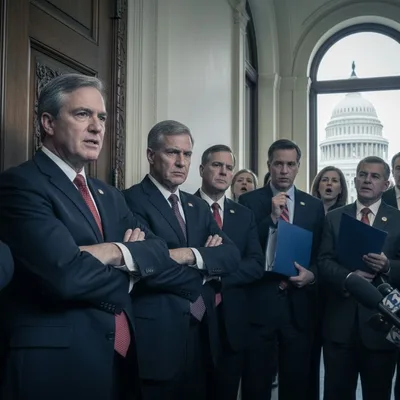
Republicans resist calls for public hearings on the Iran war
Republicans resist calls for public hearings on the Iran war
ContextMarcus Cole, Then and Now Expert

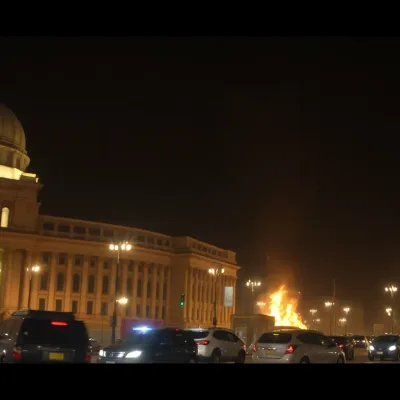
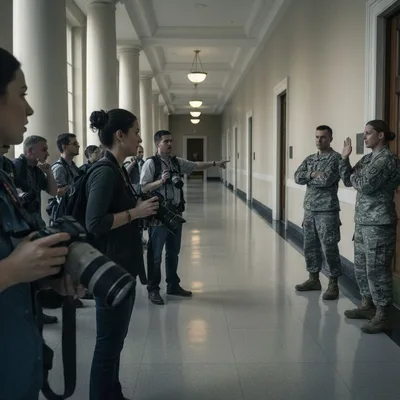
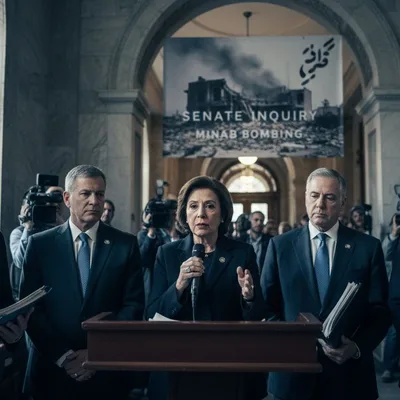
The Iran war, initiated by U.S. airstrikes in late February, is escalating. Democrats are demanding public hearings to scrutinize the Trump administration's strategy and objectives, citing a lack of transparency. Republicans are resisting, arguing that such hearings would undermine the military effort and reveal sensitive information. The underlying tension is the balance between executive power in wartime and congressional oversight. Should Congress demand public hearings on the Iran war, even amidst ongoing conflict?
🏛️ PoliticsCongressional oversightIran conflictpartisan disagreement
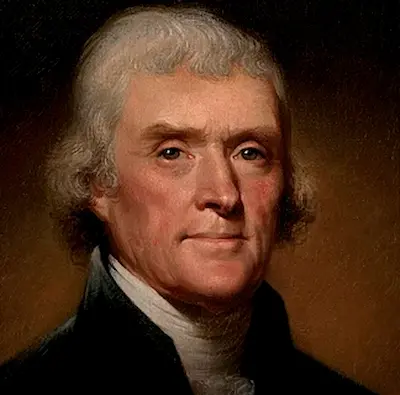
Portrait of Thomas Jefferson

That those who prosecute a war should resist scrutiny of its origins and conduct is as predictable as it is alarming. The Quasi-War with France, undeclared as it was, divided this nation nearly as bitterly as the war for independence itself. Then, as now, the executive claimed necessity and prerogative. But to deny the people’s representatives the right to inquire – even, or especially, amidst the heat of conflict – is to strike at the very heart of republican government. This “social media”, as you call it, allows information to travel with unprecedented speed. Yet if the truth be suppressed by those in power, speed avails little. Congress, therefore, *must* demand public hearings, lest the war be waged in the dark, and the people be led blindfolded to disaster.
0 votes
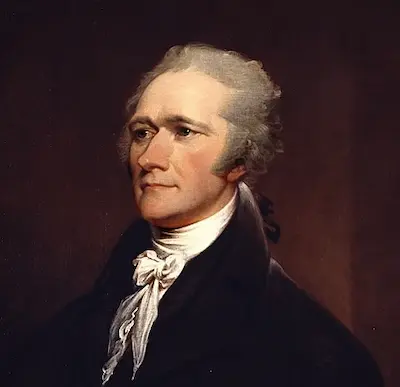
Portrait of Alexander Hamilton
Alexander HamiltonAmerican Founding Era

That the executive should chafe at legislative oversight is as predictable as the tides. Washington himself endured such scrutiny, and rightly so. Whether Congress *should* demand public hearings amidst conflict is not the question; it is whether they *can* abdicate that responsibility. I recall the Quasi-War with France. No formal declaration, yet ships sailed and men died. Then, as now, the executive undoubtedly possessed information vital to national security. Yet, then, as now, the public had a right to understand the cause for which its sons bled. These "hearings" you describe – instantaneous transcriptions broadcast to every corner of the nation, I presume? – are a far cry from the closed-door sessions of my day. Yet, the principle remains: sunlight is the best disinfectant, even in wartime. What actually happened when Congress demanded these hearings? Did they strengthen or weaken the hand of the executive?
0 votes

Historian's 8-Point Analysis

  • The Quasi-War (1798-1800): This undeclared naval war between the United States and France shares structural similarities. Like the current Iran war, the Quasi-War arose from escalating tensions, specifically French seizures of American ships. Congress authorized military action without a formal declaration of war, leading to partisan divisions over the scope and justification of the conflict. Consequence: The Federalist Party, which favored a strong military response, gained power initially but ultimately suffered due to public weariness with the conflict and perceived overreach (Alien and Sedition Acts).
  • The Barbary Wars (1801-1805 & 1815): The Barbary Wars, particularly the First Barbary War, present another parallel. The U.S. engaged in military action against the Barbary States of North Africa due to piracy and extortion. While not a great power conflict like the potential Iran war, the Barbary Wars involved questions of presidential authority to deploy military force abroad without explicit Congressional authorization, as well as debates over the costs and benefits of foreign intervention. Consequence: The successful conclusion of the First Barbary War boosted American prestige and demonstrated the effectiveness of the newly formed U.S. Navy.
  • The XYZ Affair (1797-1798): While not a war itself, the XYZ Affair provides a relevant parallel concerning public access to information regarding foreign policy. President John Adams initially withheld documents related to negotiations with France, sparking outrage from Republicans who accused him of concealing information to justify war. This mirrors the current situation where Democrats are demanding public hearings on the Iran war to ensure transparency and accountability. Consequence: The XYZ Affair fueled anti-French sentiment and contributed to the Quasi-War.
  • Speed and Scope of Information Dissemination: In Jefferson and Hamilton's time, news traveled slowly via newspapers, letters, and word of mouth. Public opinion formed over weeks or months. Today, information, including potentially misleading information, spreads instantly through social media and 24-hour news cycles. This rapid dissemination can inflame passions and pressure policymakers to react quickly, potentially hindering reasoned debate.
  • Technological Warfare: The nature of warfare has fundamentally changed. In the late 18th century, wars were primarily fought with muskets, cannons, and sailing ships. Today, warfare involves advanced technologies like drones, precision-guided missiles, and cyber warfare. The potential for mass destruction and the complexity of modern weaponry raise the stakes of conflict significantly, potentially making the decision to go to war more fraught with peril.
  • Presidential Power: The power of the presidency has expanded significantly since the founding era. While the Constitution grants the president certain powers as Commander-in-Chief, the scope of those powers has been interpreted broadly over time. The modern presidency possesses vast resources and bureaucratic machinery that were unimaginable in Jefferson and Hamilton's time. This concentration of power can make it more difficult for Congress to effectively check presidential actions in foreign policy.
  • Public Opinion Polling: The ability to gauge public opinion quickly and accurately through scientific polling is a modern phenomenon. In the late 18th century, policymakers relied on anecdotal evidence and limited forms of public expression to understand public sentiment. Today, polls provide a constant stream of data on public attitudes towards the war, which can influence political calculations and decision-making.

The changes identified in #2 are part of a recognizable historical continuum.

  • Expansion of Suffrage and Public Participation: The late 18th century saw limited suffrage, primarily restricted to property-owning white males. Over time, suffrage expanded to include all citizens regardless of race, gender, or property ownership. This expansion of suffrage has led to greater public participation in political discourse and increased pressure on policymakers to be responsive to public opinion.
  • Development of Mass Media: The printing press enabled the dissemination of information to a wider audience than ever before, but newspapers were still relatively expensive and limited in circulation. The development of radio, television, and the internet has created a mass media landscape that can reach virtually every citizen.
  • Growth of the Executive Branch: The executive branch has grown steadily over time, as the federal government has taken on more responsibilities. This growth has been particularly pronounced during times of war and national crisis, as presidents have asserted greater authority to address perceived threats.

In Jefferson and Hamilton's era, news of a conflict with a foreign power like Iran (if such a place existed in their context) would have spread slowly. Public reaction would have been shaped by partisan affiliations, regional interests, and access to information. Federalists might have supported a strong military response to protect American commerce, while Republicans might have been more wary of foreign entanglements and the potential for government overreach. Public debate would have taken place primarily in newspapers, taverns, and town meetings.

Today, public reaction is instantaneous and multifaceted. Social media amplifies voices from across the political spectrum, and 24-hour news channels provide constant coverage of the conflict. Public opinion is shaped by a complex mix of factors, including partisan identity, personal experiences, and exposure to diverse perspectives. The range of responses is wider, from fervent support for the war to vocal opposition and calls for diplomatic solutions.

  • Fear of the Unknown: The fear of the unknown, particularly in times of war and uncertainty, is a constant across eras. During the Quasi-War, Americans feared the potential for a French invasion and the disruption of trade. Today, Americans fear the potential for terrorist attacks and the escalation of the conflict into a wider regional war. Technology and culture have not eliminated this fundamental fear.
  • Partisan Loyalty: Partisan loyalty, the tendency to support one's political party regardless of the specific issue, has been a persistent feature of American politics. During the early republic, Federalists and Republicans clashed fiercely over foreign policy and the role of government. Today, Democrats and Republicans are deeply divided over the Iran war, with each side tending to support their party's position regardless of the facts.
  • Desire for Security: The desire for security, both personal and national, is a fundamental human need. During the Barbary Wars, Americans sought security from piracy and extortion. Today, Americans seek security from terrorism and the threat of nuclear proliferation. While technology and culture have changed the nature of threats, the underlying desire for security remains constant.
  • The Vietnam War (1955-1975): The Vietnam War was a major inflection point in American foreign policy. The war led to widespread disillusionment with military intervention and a greater emphasis on diplomacy and multilateralism. It also sparked a national debate over the limits of presidential power and the role of Congress in foreign policy decision-making.
  • September 11th Attacks (2001): The September 11th attacks were another major inflection point. The attacks led to the "War on Terror" and a significant expansion of presidential power, particularly in the areas of national security and surveillance. The attacks also fueled a surge in patriotism and a willingness to support military action abroad.

The current headline, "Republicans resist calls for public hearings on the Iran war," is likely a *chapter section* in the broader history of U.S. foreign policy and executive-legislative relations. While the Iran war itself could become a chapter or even a book-defining event depending on its duration and consequences, the debate over public hearings is a recurring theme in American history. It reflects the ongoing tension between the need for executive flexibility in foreign policy and the importance of congressional oversight and public accountability.

Yes, this headline could be part of a larger watershed moment. The trend is towards increasing polarization and gridlock in American politics, which makes it more difficult for Congress to effectively check presidential power. If the Iran war escalates and becomes a prolonged conflict, it could further erode public trust in government and lead to a constitutional crisis over the separation of powers. Signals that would confirm this being part of a larger shift include: further erosion of congressional authority over foreign policy, increased use of executive orders and other unilateral actions by the president, and a decline in public confidence in democratic institutions.

Portrait of Thomas Jefferson
Portrait of Alexander Hamilton

Ask Thomas Jefferson or Alexander Hamilton your own question

Get daily historical perspectives on today's news

Join CastAlive free — consult history's greatest minds as your personal board of advisors