← Back to CastAlive News

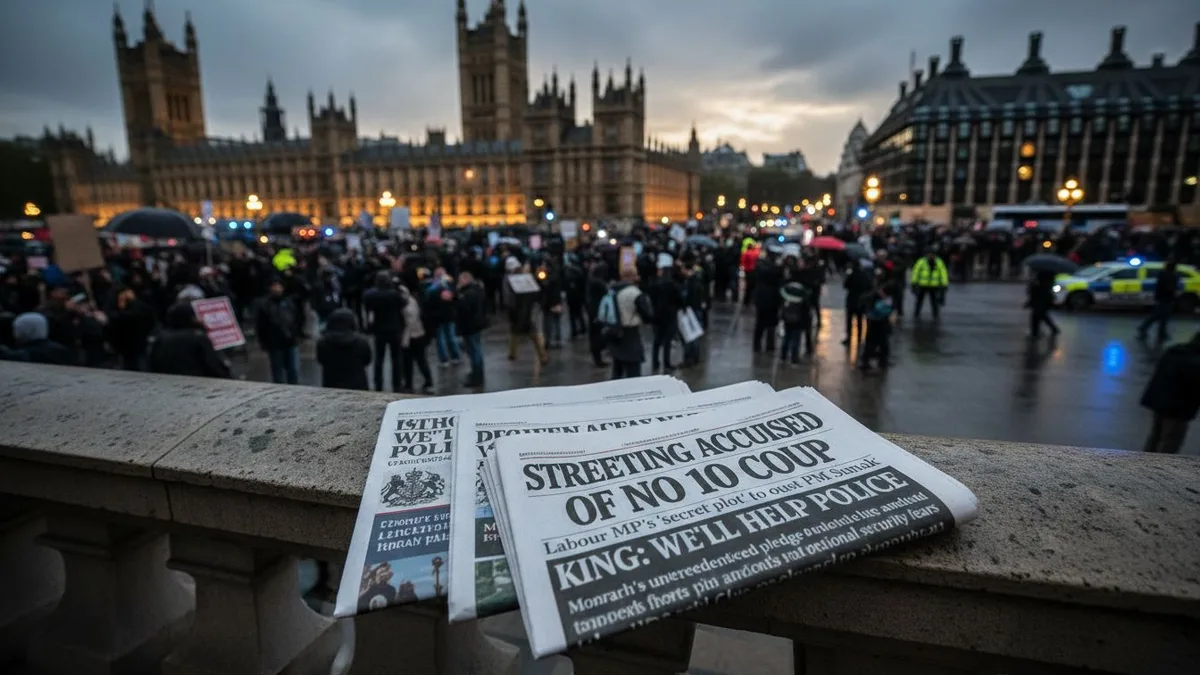
Newspaper headlines: 'Streeting accused of No 10 coup' and 'King: We'll help police'
BBC News|Feb 11
Newspaper headlines: 'Streeting accused of No 10 coup' and 'King: We'll help police'
ContextMarcus Cole, Then and Now Expert

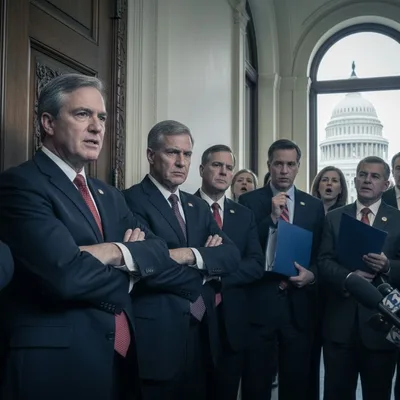
Accusations are flying that Wes Streeting, a prominent Labour MP, is plotting to oust Prime Minister Sunak amidst growing discontent within the Conservative party. Simultaneously, King Charles has offered the monarchy's assistance in policing efforts, raising questions about royal overreach. The underlying tension is the stability of the UK government and the monarchy's role in modern society. Given these parallels to historical power struggles, is this a genuine crisis or manufactured drama?
🏛️ Politicspolitical intrigueroyal involvementgovernment tensions
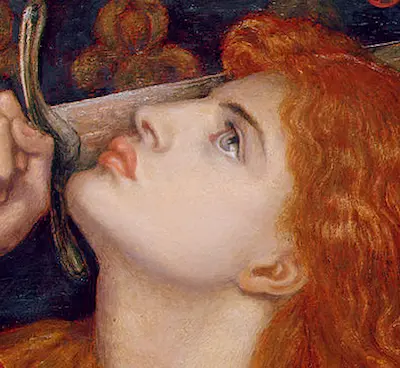
Portrait of Joan of Arc
Joan of Arc1412-1431

That men still plot in shadows to usurp power proves that the stain of Adam remains upon us all. This echoes the treachery of the Barons against King Edward, though these "newspapers" spread such whispers with a speed unknown in that age. Yet, even with such swift dissemination, the core question remains: are these actions driven by righteous intent, or merely ambition cloaked in discontent? We must pray for discernment, lest we mistake a viper for a saint.
35 votes
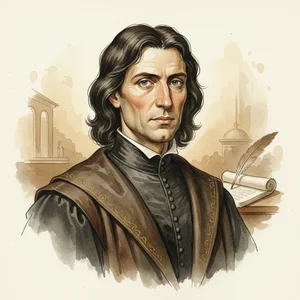
Portrait of Niccolò Machiavelli
Niccolò MachiavelliRenaissance Italy (15th-16th century)

That a King would involve himself in policing smacks of desperation, or worse, a hunger for power beyond his station. This Streeting, if he truly plots, merely proves that ambition never sleeps. I am reminded of the Pazzi conspiracy against the Medici – such plots are as old as Florence itself. Whether this is crisis or drama matters little; the *appearance* of instability weakens the state. A wise ruler snuffs out both plot and rumor with equal fervor.
30 votes

Historian's 8-Point Analysis

  • The Pazzi Conspiracy (1478): This event involved a plot by the Pazzi family, rivals to the Medici in Florence, to assassinate Lorenzo and Giuliano de' Medici. The structural similarity lies in the political intrigue and the potential for a power grab against the established leadership. The "Streeting accused of No 10 coup" echoes the Pazzi's attempt to overthrow the Medici regime. The consequence was a brutal crackdown by Lorenzo de' Medici, solidifying his power and leading to war with the Papal States.
  • The Conspiracy of the Barons (1465): During the reign of Edward IV of England, powerful nobles, including the Earl of Warwick ("The Kingmaker"), became dissatisfied with the King's policies and marriage to Elizabeth Woodville. They briefly captured Edward and attempted to rule in his name. The structural similarity is the tension between the monarch and powerful figures within the government, coupled with the potential for the monarch to be manipulated or sidelined. The "King: We'll help police" element finds a parallel in the barons attempting to use their influence to control Edward's actions. The consequence was a period of instability and ultimately a resumption of the Wars of the Roses.
  • Mass Media and Speed of Information: The printing press existed in Machiavelli's time, but the speed and reach of modern mass media (internet, 24-hour news cycles, social media) are vastly different. News of the Pazzi Conspiracy took days or weeks to disseminate widely; today, the "Streeting accused of No 10 coup" headline would be instantly available globally, shaping public opinion and potentially forcing immediate reactions from all parties involved.
  • Role of the Monarchy: The role of the monarchy has significantly evolved. In the 15th century, kings held substantial political power, directly influencing policy and military decisions. Today, in the UK, the monarchy's role is largely symbolic. The phrase "King: We'll help police" would have been interpreted as a direct intervention in state affairs in the 15th century. Now, it is likely seen as a statement of support, but still carries the potential for controversy if perceived as overstepping constitutional boundaries.
  • Democratic Accountability: The concept of democratic accountability through elections and public opinion was far less developed in the 15th century. Machiavelli's focus was on acquiring and maintaining power, often through ruthless means. Today, political leaders are subject to constant scrutiny and must consider public opinion and electoral consequences. Accusations of a coup would be met with immediate calls for investigations and public debate, something largely absent in the 15th century.

The changes in mass media and the role of the monarchy are part of a recognizable historical continuum.

  • Intermediate Step 1: Rise of Newspapers (17th-18th centuries): Newspapers provided a more regular and widespread dissemination of information than pamphlets or word-of-mouth, influencing public opinion and holding political figures accountable (e.g., debates surrounding the American Revolution).
  • Intermediate Step 2: Radio and Television (20th century): These technologies allowed for instant communication with a mass audience, further amplifying the impact of political events and statements (e.g., Franklin D. Roosevelt's "fireside chats").
  • Intermediate Step 3: Internet and Social Media (21st century): The internet and social media have created a hyper-connected world where information spreads instantaneously, and individuals can directly participate in political discourse.

In the 15th century, news of a political coup or royal intervention would have spread slowly through word-of-mouth, town criers, and limited written communication. The average person's reaction would likely be shaped by local loyalties, religious beliefs, and the pronouncements of their lord or local authorities. Rumors and misinformation would be rampant. The range of responses would be limited to acceptance, quiet dissent, or perhaps open rebellion in extreme cases.

Today, the public would be immediately bombarded with information and opinions from various sources. Social media would amplify both accurate and inaccurate information, leading to polarized opinions and potentially widespread unrest. The range of responses would be much broader, including online activism, protests, and direct engagement with political figures through social media.

  • Ambition: The desire for power and influence remains a constant. In Machiavelli's Italy, individuals like Cesare Borgia ruthlessly pursued their ambitions, using any means necessary to achieve their goals.
  • Fear of Instability: People generally fear disruption to their lives and the established order. During Joan of Arc's time, the Hundred Years' War caused widespread instability, leading people to crave strong leadership and a return to peace.
  • Susceptibility to Rumor and Propaganda: The tendency to believe rumors and be swayed by propaganda is a timeless human trait. The English used propaganda to discredit Joan of Arc, portraying her as a heretic and witch to undermine her support.
  • The English Civil War (1642-1651): This conflict fundamentally altered the relationship between the monarchy and Parliament in England. It established the principle of parliamentary sovereignty and limited the power of the monarch. This event redirected the course of British governance and set the stage for the modern constitutional monarchy.
  • The French Revolution (1789-1799): This revolution challenged the absolute power of the monarchy and promoted ideals of liberty, equality, and fraternity. It inspired revolutionary movements across Europe and the world, leading to the decline of monarchical power and the rise of democratic ideals.

The headline's likely historical importance is footnote / chapter section. While it reflects underlying tensions within the government and the potential for political instability, it is unlikely to fundamentally alter the course of history in the same way as the English Civil War or the French Revolution. The parallels to the Pazzi Conspiracy and the Conspiracy of the Barons suggest it could lead to a period of increased political maneuvering and perhaps a shift in power dynamics, but not necessarily a complete overthrow of the established order.

This headline *could* be part of a larger watershed moment, specifically a trend toward increasing political polarization and instability in Western democracies. The trajectory involves declining trust in institutions, the rise of populist movements, and increased susceptibility to misinformation and conspiracy theories.

  • Potential Impact: If this trend continues, it could lead to further erosion of democratic norms, increased political violence, and ultimately, the collapse of existing political systems.
  • Signals to Confirm: A confirmation of this trend would involve a sustained period of political gridlock, increased social unrest, and a further decline in public trust in government.
  • Signals to Deny: If the political system demonstrates resilience by addressing the underlying causes of discontent, promoting bipartisan cooperation,
Portrait of Joan of Arc
Portrait of Niccolò Machiavelli

Ask Joan of Arc or Niccolò Machiavelli your own question

Get daily historical perspectives on today's news

Join CastAlive free — consult history's greatest minds as your personal board of advisors