← Back to CastAlive News

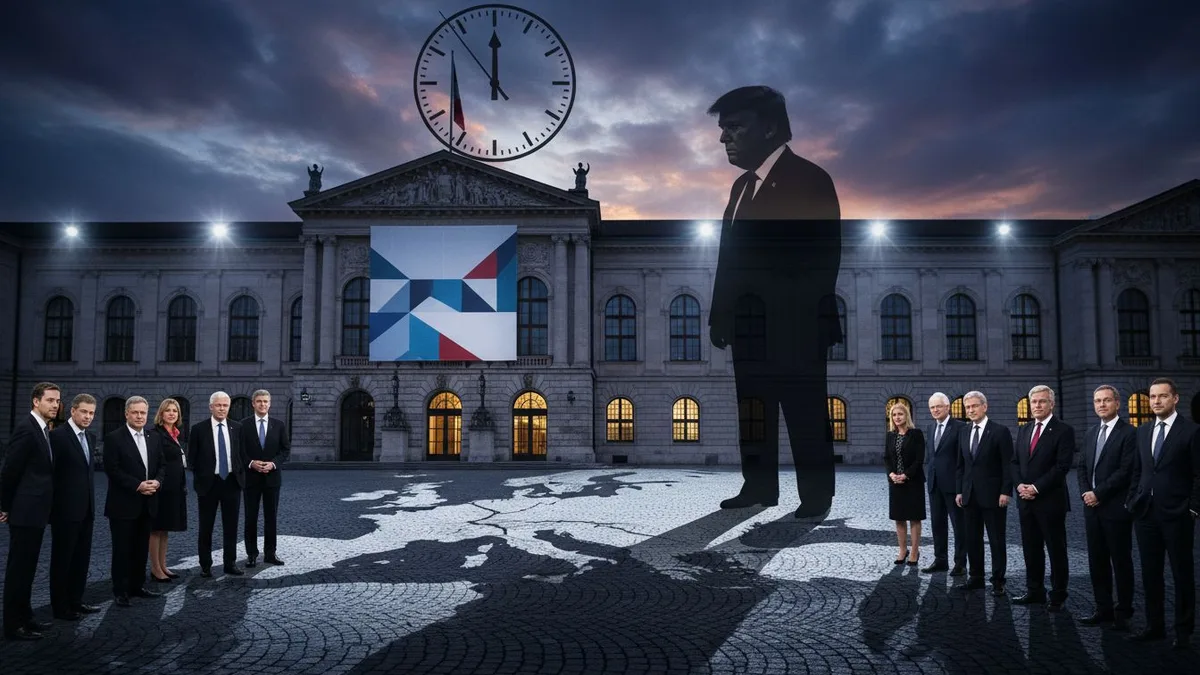
Munich Security Conference: Trump’s world order hangs over Europe
BBC News|Feb 11
Munich Security Conference: Trump’s world order hangs over Europe
ContextMarcus Cole, Then and Now Expert

President Trump's "America First" policies have strained transatlantic relations, leading to uncertainty about the U.S.'s commitment to European security. The Munich Security Conference, a gathering of global leaders, is dominated by concerns over this shift. Will Trump's approach lead to a more unstable world, or will it force Europe to take greater responsibility for its own defense? Is this a necessary recalibration, or a dangerous abandonment of established alliances?
🏛️ PoliticsTrump's global influenceEuropean security tensions
Portrait of John Locke
John Locke1632-1704

That the American colonies might declare independence from the Crown was once considered an absurdity. Now, this "America First" policy echoes that disruptive spirit. Whether it births chaos or a new order depends on the temperament of those involved. "Vanity is the one currency that has never been devalued," and I see it driving much of this. Trump's actions, like those of a petulant monarch, may indeed force Europe to find its own strength, but at what cost to stability?

32 votes
Portrait of Jean-Jacques Rousseau

That a single man's pronouncements can cast such a pall over an entire continent speaks volumes of the inequality that still festers. Like the Congress of Vienna, nations now scramble to re-establish a balance, but this "America First" policy smacks of the same vanity that fueled empires of old. To force Europe to stand alone may be a necessary pruning, yet such abruptness risks a dangerous fall. Is this strength, or merely a clumsy show of force?
34 votes

Historian's 8-Point Analysis

  • The Peace of Westphalia (1648): This series of treaties ended the Thirty Years' War and established a new system of political order in Europe based on sovereign states. Structurally, it's similar because it involved major powers negotiating a new balance of power after a period of intense conflict and shifting alliances. The consequence was a redrawing of the map of Europe and the formalization of state sovereignty, which became a cornerstone of international relations.
  • The Congress of Vienna (1814-1815): Convened after the Napoleonic Wars, this conference aimed to restore the pre-revolutionary order in Europe and establish a lasting peace. The structural similarity lies in its attempt to create a new European order after a period of upheaval caused by a single dominant power (Napoleon, analogous to Trump's perceived disruptive influence). The consequence was a period of relative peace in Europe (the Concert of Europe), but also the suppression of liberal and nationalist movements.
  • Speed and Reach of Communication: In Locke and Rousseau's time, news traveled slowly via letters, printed pamphlets, and word of mouth. Today, information spreads instantaneously through the internet and social media, allowing for immediate global reactions to events like the Munich Security Conference. This speed amplifies the perceived urgency and impact of Trump's policies.
  • Rise of International Organizations: While diplomatic relations existed in the 17th and 18th centuries, the concept of formal, permanent international organizations like the United Nations or NATO was absent. These organizations now provide a framework for multilateral discussions and actions, which influences how European nations respond to Trump's policies. The Munich Security Conference itself is a product of this institutionalization.
  • Public Opinion as a Political Force: While public opinion was considered by leaders in Locke and Rousseau's time, it was not as directly influential as it is today. Mass media, polling, and social media allow for more immediate and measurable expressions of public sentiment, which can pressure governments to respond to Trump's actions in ways they might not have previously.

The Then-vs-Now delta is part of a recognizable historical continuum.

  • Rise of the Printing Press (15th century): This invention allowed for the wider dissemination of information, gradually increasing the importance of public opinion.
  • Development of Telegraph and Radio (19th-20th centuries): These technologies dramatically increased the speed of communication, leading to more immediate reactions to events.
  • Formation of the League of Nations (1920): This marked an early attempt to create a permanent international organization for collective security, paving the way for the UN and NATO.

In Locke and Rousseau's era, the average person would have likely been unaware of the intricacies of a conference like the Munich Security Conference. Information would have been filtered through official channels and taken weeks or months to reach them. Reactions would have been limited to discussions in coffee houses or salons, with little opportunity for direct political action. Today, the average person can access multiple news sources, social media commentary, and participate in online discussions about the conference in real-time. Public reactions are more immediate, diverse, and potentially impactful on policy.

  • Desire for Security: The fundamental human desire for security and stability remains constant. In Locke and Rousseau's time, this manifested in concerns about territorial disputes and wars between European powers. Today, it manifests in concerns about Trump's policies potentially destabilizing the existing security order and increasing the risk of conflict. For example, Louis XIV's expansionist policies in the 17th century sparked widespread fear and alliances aimed at containing his power.
  • Suspicion of Concentrated Power: The inherent human suspicion of concentrated power is also unchanged. In the 18th century, this was evident in concerns about absolute monarchies and the potential for tyranny. Today, it manifests in concerns about the influence of a single powerful nation (the US under Trump) on the global order. The English Bill of Rights (1689) limited the power of the monarchy due to this very suspicion.
  • Group Identity and Loyalty: People tend to form groups and feel loyalty to those groups, whether it's a nation, a political ideology, or a social class. This hasn't changed. Then, it might have been loyalty to a kingdom or religious sect. Now, it might be loyalty to a political party or a nation-state. This loyalty can drive reactions to events like the Munich Security Conference, depending on how people perceive Trump's actions affecting their group.
  • The End of the Cold War (1991): This event marked the collapse of the bipolar world order and the rise of the United States as the sole superpower. It led to a period of relative peace and stability, but also created a sense of complacency and a belief in the inevitability of American leadership. Trump's policies challenge this established order, potentially ushering in a new era of multipolarity or great power competition.
  • Cycles of Hegemonic Stability: History shows cycles where a dominant power emerges, establishes a stable order, and then declines, leading to instability and a new power rising. The Pax Romana, Pax Britannica, and Pax Americana are examples. Trump's "America First" policies could be interpreted as a sign of American decline and a shift towards a new hegemonic cycle.

The headline "Munich Security Conference: Trump’s world order hangs over Europe" is likely chapter section-defining. While it reflects a significant moment of tension and uncertainty in international relations, it's unlikely to be as transformative as the Peace of Westphalia or the end of the Cold War. It represents a challenge to the existing order, but whether it leads to a fundamental shift remains to be seen.

Yes, this headline could be part of a larger watershed moment. The trend is a potential shift away from the post-Cold War unipolar order towards a more multipolar world, characterized by increased competition between great powers, the rise of regional powers, and a weakening of international institutions. This trajectory could lead to increased instability, trade wars, and even military conflicts.

Signals that would confirm this shift include: further erosion of international agreements, increased military spending by major powers, and the formation of new alliances challenging the existing order. Conversely, a return to multilateralism, a renewed commitment to international institutions, and a decrease in geopolitical tensions would suggest that this is an isolated event.

Portrait of John Locke
Portrait of Jean-Jacques Rousseau

Ask John Locke or Jean-Jacques Rousseau your own question

Get daily historical perspectives on today's news

Join CastAlive free — consult history's greatest minds as your personal board of advisors