← Back to CastAlive News

Four takeaways from Pam Bondi's fiery Epstein testimony

BBC News|Feb 13
Four takeaways from Pam Bondi's fiery Epstein testimony
ContextMarcus Cole, Then and Now Expert

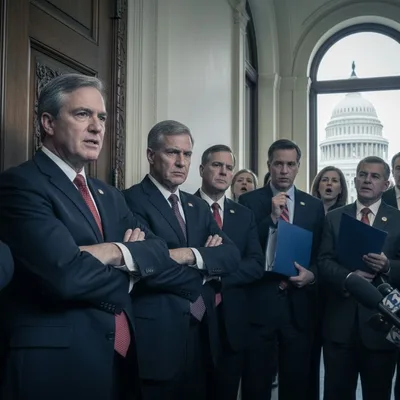
Attorney General Pam Bondi's contentious testimony before the House Judiciary Committee addressed the Justice Department's release of millions of pages of Epstein files.The release, mandated by the Epstein Files Transparency Act, has been plagued by redaction errors, angering both victims and those seeking accountability.The underlying tension is balancing transparency with the protection of privacy, amidst accusations of political cover-ups.
🏛️ PoliticsEpstein filesgovernment transparencylegal testimony
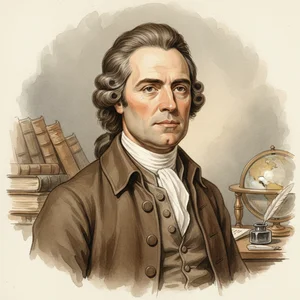
Portrait of John Locke
John Locke1632-1704

The clamor for transparency in this Epstein affair echoes the public frenzy surrounding the Affair of the Poisons, yet magnified a thousandfold by what you call mass media. Does this "Epstein Files Transparency Act" truly serve justice, or merely fuel the insatiable appetite for scandal? I confess I do not comprehend the workings of these "social media" platforms, but I understand the enduring human weakness for gossip and the potential for its manipulation. As I wrote in my *Two Treatises of Government*, power must be held accountable, but I fear this pursuit of transparency risks sacrificing the privacy of victims upon the altar of public spectacle and political maneuvering.

30 votes
Portrait of Jean-Jacques Rousseau

The release of these Epstein files, mandated by your "Transparency Act," reminds me of the Affair of the Poisons in my own time. Then, as now, the allure of uncovering secrets amongst the powerful risks becoming a spectacle, obscuring true justice. This "social media" that amplifies public reaction is a modern marvel, yet it also mirrors the rabble-rousing pamphlets that fueled the French Revolution. The question, as always, is whether this pursuit of transparency truly serves justice, or if it is manipulated for political gain, potentially at the expense of victims.

32 votes

Historian's 8-Point Analysis

  • The Star Chamber (1487-1641): The English Star Chamber, initially intended to ensure fairness in the legal system, evolved into a court used by the monarchy to suppress dissent and punish political enemies. Similar to the Epstein case, the Star Chamber operated with a degree of secrecy and was accused of biased proceedings. The consequence was growing resentment towards the monarchy and ultimately, the English Civil War. The similarity lies in the potential for a legal or investigative body to be perceived as serving a political agenda, leading to a loss of public trust. In the modern context, the allegations of political motivation behind the handling of the Epstein files resonate with this historical precedent.
  • The Affair of the Poisons (1677-1682): This scandal in France involved accusations of poisoning and witchcraft against members of the aristocracy, including mistresses of King Louis XIV. The investigation, led by the Chambre Ardente, uncovered a network of individuals involved in black magic and murder. The similarity to the Epstein case lies in the exposure of alleged criminal activity within elite circles and the potential for high-ranking individuals to be implicated. The consequence was a period of intense paranoia and political maneuvering within the French court. The modern parallel is the public fascination with the potential connections between Epstein and powerful figures.
  • The Dreyfus Affair (1894-1906): While outside the debaters' lifetimes, it offers a powerful example of a miscarriage of justice, government cover-up, and the role of public opinion. Alfred Dreyfus, a Jewish officer in the French army, was wrongly convicted of treason. The case exposed anti-Semitism within the French establishment and led to a major political crisis. The similarity lies in the potential for a legal case to become a symbol of broader societal issues, such as corruption, inequality, and abuse of power. The consequence was a deep division within French society and a reassessment of national values. The Epstein case, with its allegations of elite abuse and potential cover-ups, carries similar potential for societal division and reevaluation.
  • Mass Media and Social Media: In the 17th and 18th centuries, news spread through printed pamphlets, word-of-mouth, and limited circulation newspapers. Today, information is disseminated instantly through mass media and social media platforms, amplifying the reach and speed of public reaction. This means that allegations of wrongdoing by powerful figures, like those surrounding the Epstein case, can spread rapidly and ignite global outrage in a way that was impossible in Locke and Rousseau's time.
  • Government Transparency and Freedom of Information: While concepts of government accountability existed in the Enlightenment era, modern laws like the Freedom of Information Act (or, in this case, the fictional "Epstein Files Transparency Act") mandate a level of transparency that was unimaginable in the 17th and 18th centuries. This increased access to information creates both opportunities for greater public scrutiny and challenges for protecting privacy and sensitive information, as highlighted by the redaction failures in the Epstein files release.
  • Forensic Science and Evidence Analysis: Modern forensic science allows for the analysis of evidence (documents, images, videos) with a level of sophistication that was unavailable in the past. This capability can both strengthen investigations and create new challenges for interpreting evidence and ensuring its accuracy. The Epstein files, with their millions of documents, images, and videos, present a complex challenge for forensic analysis and interpretation.

The Then-vs-Now delta is part of a recognizable historical continuum regarding government transparency and public access to information.

  • The Printing Press (1440s): Increased the availability of printed materials, leading to the wider dissemination of news and ideas.
  • The Enlightenment (18th century): Emphasized reason, individual rights, and the importance of public discourse in holding governments accountable.
  • The Rise of Investigative Journalism (19th and 20th centuries): Journalists began to play a more active role in uncovering corruption and holding powerful institutions accountable.

In Locke and Rousseau's era, an equivalent event involving allegations of sexual abuse and corruption within elite circles would have likely been confined to rumors and whispers within the court or aristocratic circles. Information would have spread slowly through word-of-mouth and limited circulation pamphlets. Public reaction would have been largely dependent on social status and proximity to the events. Commoners would have had limited access to information and limited ability to influence the outcome.

Today, the public reaction is amplified by mass media and social media. Information spreads instantly, and public outrage can be mobilized quickly through online platforms. Victims have a greater voice and ability to share their stories. Political divisions are exacerbated by partisan media coverage and online echo chambers.

  • The Desire for Justice: The innate human desire for justice and accountability for wrongdoing has remained constant across eras. In the 17th and 18th centuries, this desire was often expressed through popular uprisings or petitions to the government. For example, the English Civil War (1642-1651) was fueled, in part, by a desire for greater justice and accountability from the monarchy.
  • The Fascination with Scandal: The human fascination with scandal and the private lives of the powerful has also remained constant. In the 18th century, scandalous pamphlets and gossip circulated widely, often targeting members of the aristocracy. This fascination stems from a combination of curiosity, envy, and a desire to see the mighty fall.
  • The Tendency Towards Tribalism: The human tendency to form groups and identify with particular ideologies or political factions has remained consistent. In the 18th century, political divisions were often based on religious or social class. Today, these divisions are amplified by social media and partisan media coverage, leading to increased polarization and distrust.
  • Watergate Scandal (1972-1974): This event, involving the Nixon administration's cover-up of a break-in at the Democratic National Committee headquarters, led to increased scrutiny of government power and a greater emphasis on transparency and accountability. It also ushered in a new era of investigative journalism.
  • #MeToo Movement (2017-present): This social movement, which exposed widespread sexual harassment and assault, has led to increased awareness of power imbalances and a greater willingness to hold perpetrators accountable. It has also sparked a broader conversation about gender equality and consent.

The likely historical importance of the Pam Bondi testimony and the Epstein files release is a chapter section. While the case is significant and has generated considerable public attention, it is unlikely to have the same transformative impact as Watergate or the #MeToo movement. The Epstein case is more likely to be remembered as a case study in elite abuse, government transparency, and the challenges of balancing privacy with the public's right to know.

Yes, this headline could be part of a larger watershed moment related to government transparency, elite accountability, and the power of social media to amplify public outrage. The trend is towards greater scrutiny of powerful institutions and individuals, driven by increased access to information and a growing demand for justice and accountability.

Signals that would confirm this being part of a larger shift include:

  • Increased legislative efforts to strengthen government transparency laws.
  • A greater willingness by law enforcement to investigate and prosecute powerful individuals accused of wrongdoing.
  • A sustained public demand for accountability and justice in cases involving elite abuse.
Portrait of John Locke
Portrait of Jean-Jacques Rousseau

Ask John Locke or Jean-Jacques Rousseau your own question

Get daily historical perspectives on today's news

Join CastAlive free — consult history's greatest minds as your personal board of advisors