← Back to CastAlive News

House GOP join Democrats to slap back Trump's tariffs on Canada
House GOP join Democrats to slap back Trump's tariffs on Canada
ContextMarcus Cole, Then and Now Expert

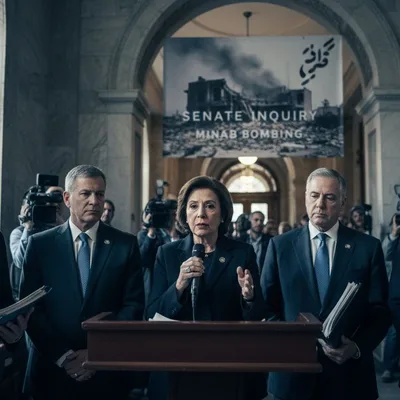
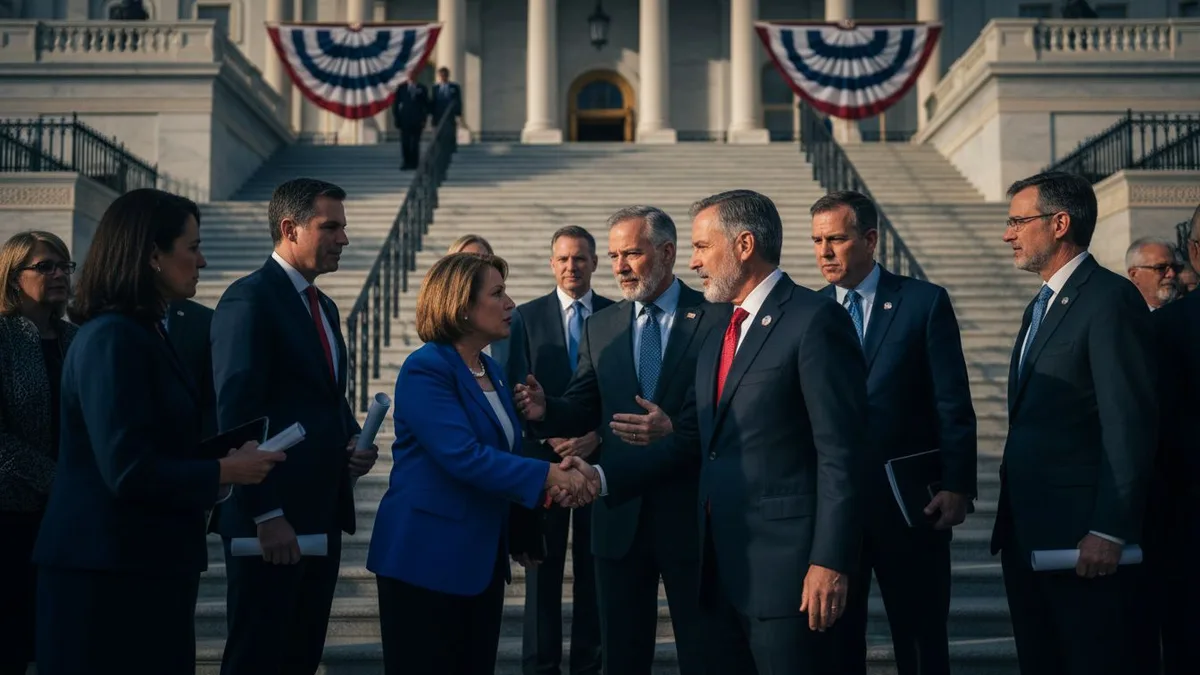
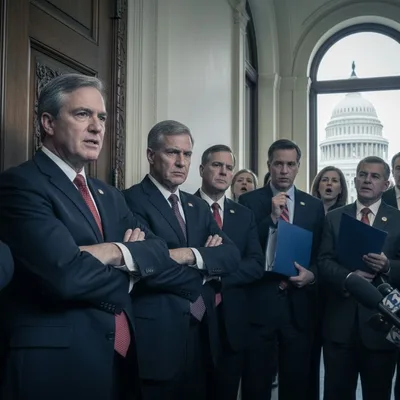
President Trump imposed tariffs on Canada, citing a national emergency over fentanyl. The House, with bipartisan support, voted to repeal them. This challenges Trump's trade policy and raises questions about presidential power versus Congressional authority. The underlying tension is between protectionist trade measures and free trade principles, with economic and political ramifications. Should the US prioritize domestic industry through tariffs, even if it strains international relations and potentially raises consumer costs?

🏛️ Politicstrade policytariffscongressional opposition
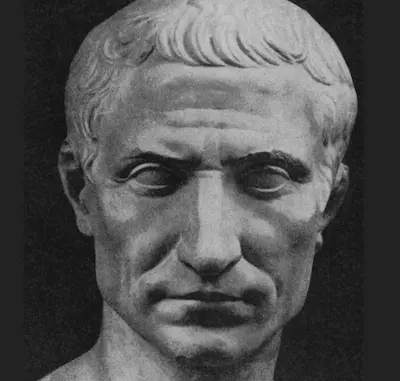
Portrait of Marcus Tullius Cicero

To impose tariffs under the guise of national emergency is a dangerous precedent, reminiscent of the grain shortages that led to unrest in my own time. Then, as now, the specter of scarcity was invoked to justify actions that ultimately served only to enrich a select few at the expense of the many. This body, the House, has wisely checked the President's hand. Just as the Gracchi brothers sought to redistribute land for the good of Rome, this vote seeks to restore balance in trade. Let us not forget the lessons of history. As Adam Smith writes, such limitations on trade are rarely, if ever, in the public good. The true strength of a nation lies not in isolation, but in the free exchange of goods and ideas.
31 votes
Portrait of Julius Caesar
Julius Caesar100-44 BC

This "national emergency" declared over a medicinal compound rings hollow. Like the tariffs of old, this action is less about genuine threat and more about leveraging power. Is this not reminiscent of the times when grain shipments were manipulated to starve political rivals? The speed with which your "House" acts is astonishing, yet the underlying motives remain unchanged. This attempt to protect domestic industry, as Adam Smith observed, can lead to heavier duties and ultimately hinder trade. I ask: are these tariffs a shrewd maneuver, or a harbinger of wider conflict? To prioritize domestic industry at the expense of international relations is a dangerous gamble.

31 votes

Historian's 8-Point Analysis

  • The Stamp Act of 1765: The British Parliament imposed a direct tax on the American colonies, requiring that many printed materials in the colonies be produced on stamped paper produced in London, and carrying an embossed revenue stamp. This is structurally similar to Trump's tariffs because it involved a powerful central authority (British Parliament/US Presidency) imposing economic burdens (taxes/tariffs) on a specific group (American colonists/Canadian economy) without their direct consent (colonial representation in Parliament/Canadian input on US trade policy). The consequence was widespread colonial resistance, boycotts of British goods, and ultimately, a major contributing factor to the American Revolution.
  • The Corn Laws (1815-1846): These laws in the United Kingdom imposed tariffs on imported grain to protect domestic producers. This is structurally similar because it involved tariffs designed to protect a specific domestic industry (British agriculture/US manufacturing). The consequence was higher food prices for consumers, leading to social unrest and ultimately the repeal of the Corn Laws, signaling a shift towards free trade.
  • The Smoot-Hawley Tariff Act (1930): The United States raised tariffs on thousands of imported goods. This is structurally similar because it involved a broad increase in tariffs intended to protect domestic industries during an economic downturn. The consequence was a contraction in international trade, exacerbating the Great Depression.
  • Speed of Information Dissemination: In Cicero and Caesar's time, news traveled slowly, primarily through messengers, letters, and public announcements. Today, news of the House vote and Trump's reaction spreads instantly via social media, news websites, and 24-hour cable news. This rapid dissemination creates immediate public pressure and allows for swift reactions from affected parties, including Canada.
  • Complexity of Global Supply Chains: The Roman economy was largely agrarian, with trade primarily involving raw materials and basic manufactured goods. Today, global supply chains are incredibly complex, with goods crossing borders multiple times during production. Tariffs disrupt these intricate networks, creating far-reaching consequences for businesses and consumers, something less relevant in the Roman era.
  • Democratic Institutions and Representation: While the Roman Republic had elements of representation, it was far less inclusive than modern democracies. The ability of the US House of Representatives to directly challenge the President's trade policy through a vote is a significant difference. In Rome, such challenges would likely have been more reliant on senatorial influence and potentially, political maneuvering or even violence.
  • Central Banking and Monetary Policy: The Romans had a monetary system, but lacked the sophisticated central banking systems of today. Modern central banks can attempt to mitigate the effects of tariffs through monetary policy, such as adjusting interest rates or intervening in currency markets. This option was unavailable to the Romans.

The Then-vs-Now delta is part of a recognizable historical continuum regarding trade policy and government power.

  • Mercantilism (16th-18th centuries): This economic doctrine emphasized state control over trade, with tariffs and protectionist measures used to accumulate wealth and power.
  • Free Trade Movement (19th century): The repeal of the Corn Laws in Britain marked a shift towards free trade, with reduced tariffs and increased international commerce.
  • Post-World War II Era: The creation of the General Agreement on Tariffs and Trade (GATT) and later the World Trade Organization (WTO) aimed to promote free trade and reduce trade barriers. The current situation can be seen as a partial reversal of this trend, with a resurgence of protectionist sentiment.

In Cicero and Caesar's time, an equivalent event – say, a sudden tax imposed on grain imports from Sicily – would have primarily affected merchants, landowners, and urban populations reliant on imported food. Information would have spread through word of mouth and public announcements, likely taking days or weeks to reach different parts of the Republic. Public reaction would have been localized, potentially leading to protests or riots in Rome if food prices spiked. Today, the reaction is global, immediate, and multifaceted, with responses ranging from social media outrage to sophisticated economic analyses.

  • Self-Interest: The desire to protect one's own economic interests. In Cicero's Rome, senators often used their influence to secure favorable trade deals for themselves and their allies. Today, politicians are still influenced by lobbying and campaign contributions from industries affected by trade policy.
  • Nationalism: The belief in the superiority of one's own nation and the desire to protect its interests. Caesar's military campaigns were partly driven by a desire to expand Roman power and wealth. Today, Trump's "America First" trade policy reflects a similar nationalist sentiment.
  • Resentment of Perceived Injustice: The feeling that one is being unfairly treated. In ancient Rome, the plebeians often resented the power and privileges of the patricians. Today, some American workers feel that they have been unfairly harmed by globalization and free trade agreements.
  • The Great Depression (1929-1939): The Smoot-Hawley Tariff Act, passed in 1930, is widely seen as a major policy error that exacerbated the Depression by reducing international trade. This event demonstrated the dangers of protectionism and led to a greater emphasis on international cooperation in trade policy after World War II.
  • The Rise of China as a Global Economic Power (late 20th/early 21st century): China's economic rise has challenged the existing global order and led to increased trade tensions with the United States and other countries. This has fueled protectionist sentiment and contributed to the current trade conflicts.

The headline "House GOP join Democrats to slap back Trump's tariffs on Canada" is likely a chapter section defining event. While the specific tariffs and the political backlash are significant, they are part of a broader trend of trade tensions and political polarization. It is not a book-defining event like the Great Depression, but it does represent a notable moment in the ongoing debate over trade policy and the role of the United States in the global economy.

This headline could be part of a larger watershed moment, signaling a potential shift away from protectionism and towards a more cooperative approach to international trade. The bipartisan opposition to Trump's tariffs suggests that there is growing concern about the economic consequences of protectionism. However, it is also possible that this is an isolated event, and that protectionist sentiment will continue to dominate trade policy. Signals that would confirm a larger shift include: further bipartisan efforts to reduce trade barriers, a decline in protectionist rhetoric from political leaders, and a renewed commitment to international trade agreements. The Supreme Court decision on IEEPA will also be key. If the Court rules against Trump's use of IEEPA, it would curb presidential power on trade and strengthen Congress's role.

Portrait of Marcus Tullius Cicero
Portrait of Julius Caesar

Ask Marcus Tullius Cicero or Julius Caesar your own question

Get daily historical perspectives on today's news

Join CastAlive free — consult history's greatest minds as your personal board of advisors