← Back to CastAlive News

Analysis: Trump takes victory lap after biggest climate rollback yet
BBC News|Feb 14
Analysis: Trump takes victory lap after biggest climate rollback yet
ContextMarcus Cole, Then and Now Expert

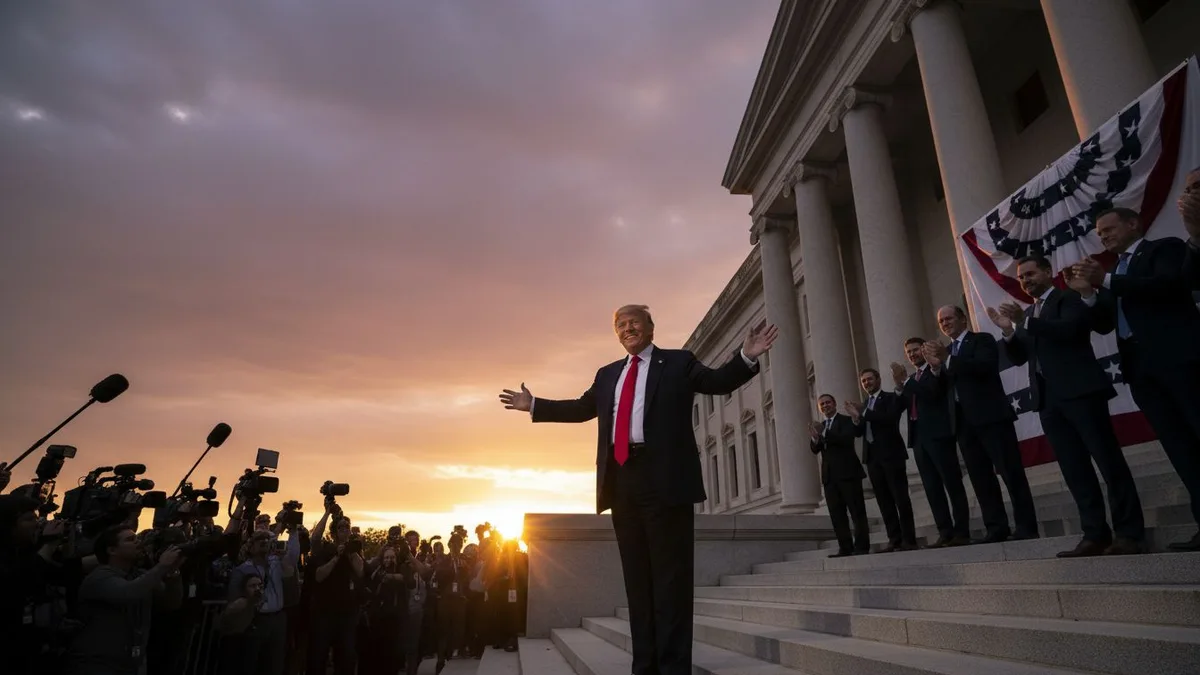
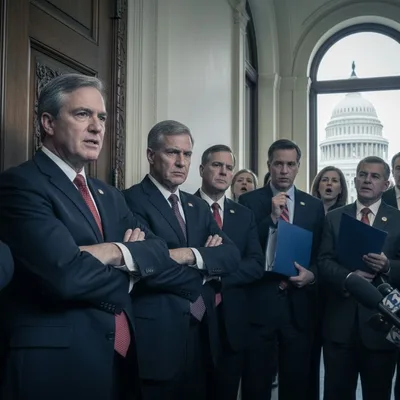
The Trump administration has repealed the 2009 endangerment finding, a key EPA decision that allowed the regulation of greenhouse gases under the Clean Air Act.This action, hailed as the "biggest climate rollback yet," eliminates the legal basis for many federal climate regulations.The underlying tension is between economic growth fueled by fossil fuels and the urgent need to address climate change.
🏛️ Politicsclimate policy rollbackenvironmental regulation
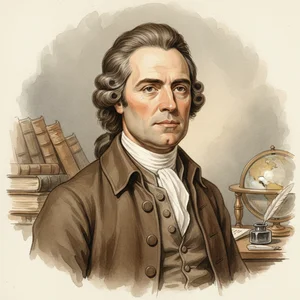
Portrait of John Locke
John Locke1632-1704

This "victory lap," as you call it, echoes the shortsightedness of monarchs who depleted their forests for immediate gain, heedless of future needs. Just as the English Forest Laws, designed to benefit the crown, restricted access to vital resources for the common man, this "rollback" seemingly prioritizes industry over the long-term well-being of all. You have machines that can measure changes in the air itself, a power beyond our imagining. Yet, the temptation to sacrifice the future for present gain, alas, remains unchanged. As I wrote in *Two Treatises of Government*, the purpose of government is to protect the rights of the governed, not to enrich a select few at the expense of the many.
23 votes
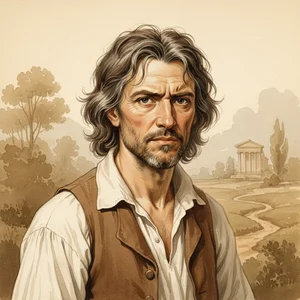
Portrait of Jean-Jacques Rousseau

This "victory lap," as you call it, echoes the self-congratulatory pronouncements of despots throughout history. To loosen regulations for short-term gain at the expense of the common good is a familiar folly. It reminds me of the English Forest Laws, where the powerful restricted access to resources for their own benefit, disregarding the needs of the many. Your "industries," powered by what you call "fossil fuels," appear to be the modern equivalent of those royal hunting grounds. The question is not merely economic liberty versus environmental protection, but whether a government truly serves the people or merely panders to the powerful, a question as old as government itself.

29 votes

Historian's 8-Point Analysis

  • The English Forest Laws (11th-13th centuries): The structural similarity lies in the restriction of access to and use of natural resources for the benefit of a specific group (the monarchy then, specific industries now), often at the expense of the broader populace and the environment. The Forest Laws, implemented after the Norman Conquest, restricted commoners' access to forests for hunting, grazing, and timber, reserving these resources for the king's use. Consequence: Widespread resentment, economic hardship for commoners, and ultimately, challenges to royal authority.
  • The Enclosure Acts (16th-19th centuries): These acts privatized common land in England, transforming it into individually owned property. The structural similarity is the prioritization of private property rights and economic efficiency over communal access to resources and environmental considerations. Consequence: Displacement of rural populations, increased agricultural productivity, but also social unrest and environmental degradation.
  • Colbertism and Deforestation in 17th Century France: Jean-Baptiste Colbert, Louis XIV's finance minister, implemented policies to strengthen the French economy, including promoting shipbuilding. This led to extensive deforestation to supply timber for the navy, disregarding long-term environmental consequences. The structural similarity is the prioritization of short-term economic gain (military power in Colbert's case) over sustainable resource management. Consequence: Short-term economic boost followed by timber shortages and environmental damage.
  • Scientific Understanding of Climate Change: In the 17th and 18th centuries, the scientific understanding of the Earth's climate system and the impact of human activity on it was rudimentary at best. Today, we have a sophisticated understanding of climate change, its causes, and its potential consequences, making the rollback of environmental regulations a far more consequential and controversial act.
  • Global Interconnectedness: News and information now spread instantaneously across the globe via the internet and social media. In the debaters' era, news traveled slowly, primarily through print and word of mouth. This means that the impact of Trump's actions, both positive and negative, will be felt and debated worldwide much more quickly.
  • Industrial Capacity: The industrial capacity to alter the environment is vastly greater now than in the 17th and 18th centuries. The scale of fossil fuel extraction, manufacturing, and consumption is unprecedented, leading to a much larger potential impact on the climate.
  • Democratic Institutions: While democratic institutions existed in some forms during the debaters' time, the scope of enfranchisement and the role of public opinion were far more limited. Today, public opinion, expressed through elections, protests, and advocacy, plays a more significant role in shaping environmental policy.

The Then-vs-Now delta is part of a recognizable historical continuum.

  • Early Industrialization (18th-19th centuries): The initial stages of industrialization saw a growing awareness of the environmental consequences of industrial activity, such as air and water pollution.
  • Progressive Era Conservation (Late 19th-Early 20th centuries): The Progressive Era saw the rise of the conservation movement, advocating for the protection of natural resources and the establishment of national parks.
  • Post-WWII Environmentalism (Mid-20th century): The post-war period saw a surge in environmental awareness, driven by events like the publication of Rachel Carson's "Silent Spring" and the growing recognition of the harmful effects of pollution.

In the debaters' era, an equivalent event (e.g., a royal decree allowing deforestation for shipbuilding) would have been met with limited public reaction, primarily confined to local communities directly affected. Information would have spread slowly, and the range of responses would have been limited to petitions, local protests, or, in extreme cases, rebellion. Today, the headline would trigger immediate and widespread reaction across the globe. Information would spread rapidly through social media, news outlets, and activist networks. Reactions would range from online petitions and boycotts to street protests and legal challenges.

  • Self-Interest: The desire for personal gain and economic advantage remains a powerful motivator. In the debaters' era, merchants and landowners often prioritized profit over environmental concerns, just as industries today may prioritize short-term profits over climate action.
  • Fear of Change: Resistance to change and a preference for the status quo are enduring human traits. In the debaters' era, people often resisted new technologies or economic policies that threatened their livelihoods or traditional ways of life. Today, some may resist climate action due to concerns about economic disruption or lifestyle changes.
  • Group Identity: The tendency to identify with and defend one's group or tribe is a fundamental aspect of human nature. In the debaters' era, people often identified strongly with their local community, religious group, or nation. Today, people may identify with political parties, ideological movements, or online communities, leading to polarization and conflict over issues like climate change.
  • The Publication of "Silent Spring" (1962): Rachel Carson's book raised public awareness of the harmful effects of pesticides and sparked the modern environmental movement. This event redirected the course of environmental policy and led to the creation of the Environmental Protection Agency (EPA).
  • The Kyoto Protocol (1997): This international agreement committed developed countries to reduce greenhouse gas emissions. While the agreement had limitations and was not ratified by the United States, it marked a significant step towards global cooperation on climate change.

The headline's likely historical importance is at the *chapter* level. While significant, the rollback is unlikely to be book-defining because it is part of an ongoing political and social struggle over climate policy. The event is more significant than a footnote, but less transformative than the publication of "Silent Spring."

Yes, this headline could be part of a larger watershed moment, specifically a trend towards the erosion of environmental regulations and a resurgence of fossil fuel interests. The trajectory suggests a potential rollback of decades of environmental progress, with potentially significant consequences for the climate and the environment. Signals that would confirm this being part of a larger shift include: further deregulation of environmental protections, increased investment in fossil fuel infrastructure, and a decline in public support for climate action. Signals that would deny this include: a shift in public opinion towards greater environmental protection, a change in political leadership, or a major climate-related disaster that galvanizes public action.

Portrait of John Locke
Portrait of Jean-Jacques Rousseau

Ask John Locke or Jean-Jacques Rousseau your own question

Get daily historical perspectives on today's news

Join CastAlive free — consult history's greatest minds as your personal board of advisors