← Back to CastAlive News

FACT FOCUS: False claims the Trump Administration made about climate change and energy

FACT FOCUS: False claims the Trump Administration made about climate change and energy
ContextMarcus Cole, Then and Now Expert

The Trump administration is accused of spreading misinformation to justify rolling back environmental regulations, most recently the endangerment finding that underpinned climate policy. This mirrors historical instances where governments downplayed crises for political or financial gain. The stakes are the long-term consequences of climate change versus short-term economic interests. Given the rapid spread of misinformation today, how can society effectively combat false claims about climate change and ensure informed environmental policy decisions?
🔬 Scienceclimate change misinformationenvironmental policy
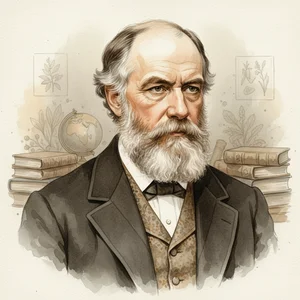
Portrait of Charles Darwin

The manipulation of facts by the Trump administration regarding climate change echoes the reluctance of authorities to acknowledge the severity of the Great Smog of London. Such denial, whether driven by political expediency or financial gain, places immediate interests above the long-term well-being of humanity. I recognize the impulse; I do not recognize the machinery. This "social media," allowing instant transmission of falsehoods, amplifies the danger. The telegraph, a marvel of my time, could spread misinformation, but this new invention does so with alarming speed and scale. To combat these false claims, we must champion scientific literacy and critical thinking, ensuring that evidence-based arguments prevail over self-serving narratives. As I argued in *On the Origin of Species*, rigorous observation and sound reasoning are the keys to understanding the natural world and making informed decisions about its future.
33 votes
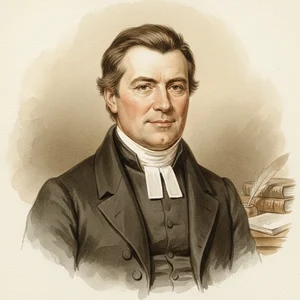
Portrait of William Paley
William Paley1743-1805

That the Trump administration should disseminate falsehoods regarding climate change is lamentable, yet hardly surprising. As Montaigne observed, the proximity of truth and falsehood is such that the unwary are easily deceived, and many willingly embrace vanity over fact. The speed by which these mistruths spread— facilitated by what I might liken to instantaneous pamphlets delivered across continents— presents a novel challenge. Though the telegraph has shrunk distances, the internet of which you speak collapses them altogether. Yet, the underlying problem remains the same: Men are swayed by passion and self-interest. Combating such claims requires, first, a renewed commitment to reasoned discourse and empirical evidence. Secondly, society must cultivate a discerning public, capable of distinguishing between truth and falsehood. Just as the Great Smog was downplayed to avoid economic consequence, so too must we acknowledge that the endangerment of our environment poses a far greater threat to long-term prosperity.


20 votes

Historian's 8-Point Analysis

  • The Great Smog of London (1952): This event, while not directly related to policy misinformation, shares a structural similarity with the current headline. The Great Smog was a severe air pollution event that blanketed London for several days, causing thousands of deaths. The government's initial response was slow and downplayed the severity of the crisis, partly due to a reluctance to admit the problem and implement costly solutions. Similarly, the Trump administration is accused of downplaying the severity of climate change and spreading misinformation to justify rolling back environmental regulations. The consequence of the Great Smog was increased public awareness of air pollution and the eventual passage of the Clean Air Act of 1956.
  • The South Sea Bubble (1720): This financial crisis involved widespread speculation and misinformation surrounding the South Sea Company. Promoters made exaggerated claims about the company's potential profits from trade with South America, leading to a stock market frenzy. When the bubble burst, many investors were ruined, and public trust in the government was severely damaged. This parallels the current situation in that both involve the dissemination of false or misleading information for political or financial gain, with potentially serious consequences for the public.
  • Information Dissemination: In the eras of Darwin and Paley, information spread much slower, primarily through printed materials, word of mouth, and limited scientific journals. Today, information, including misinformation, spreads rapidly through the internet, social media, and 24-hour news cycles. This makes it easier for false claims to reach a wider audience and harder to control their spread.
  • Scientific Consensus: While scientific societies existed in Darwin and Paley's time, the concept of a global scientific consensus on issues like climate change is a modern phenomenon. Today, the vast majority of climate scientists agree that climate change is happening and is caused by human activity. This consensus provides a stronger basis for challenging misinformation. However, it also creates a target for those seeking to undermine scientific authority.
  • Lobbying and Political Influence: The scale and sophistication of lobbying efforts by industries with vested interests in environmental policy are far greater today than in the 18th and 19th centuries. These lobbying efforts contribute to the spread of misinformation and influence political decision-making.

The changes in information dissemination represent a recognizable historical continuum.

1. The Printing Press (15th century): Allowed for the mass production of written materials, increasing the speed and reach of information dissemination compared to handwritten manuscripts. 2. The Telegraph (19th century): Enabled near-instantaneous communication over long distances, further accelerating the spread of news and information. 3. Radio and Television (20th century): Introduced new mediums for mass communication, allowing information to reach a wider audience through audio and visual formats. 4. The Internet and Social Media (21st century): Revolutionized information dissemination by providing instant access to a vast amount of information and enabling anyone to become a publisher.

In Darwin and Paley's era, an equivalent event—say, a government downplaying the health risks of industrial pollution—would have been met with a much slower and more localized reaction. Information would have spread through newspapers, pamphlets, and word of mouth, primarily among literate and relatively affluent segments of society. Public opinion would have been shaped by local authorities, religious leaders, and emerging scientific voices. Today, the reaction is immediate, widespread, and highly polarized. Social media amplifies both outrage and support, while news outlets provide constant updates and analysis. Public opinion is influenced by a diverse range of sources, including scientists, politicians, activists, and online influencers.

  • Confirmation Bias: The tendency to seek out and interpret information that confirms pre-existing beliefs. In Darwin and Paley's time, this manifested in the acceptance of religious dogma or traditional views without critical examination. Today, it leads people to consume news and information that aligns with their political ideologies, reinforcing their existing opinions on climate change.
  • Self-Interest: The desire to protect one's own economic or social well-being. In the 18th and 19th centuries, this motivated landowners and industrialists to resist regulations that might harm their profits. Today, it drives industries reliant on fossil fuels to lobby against climate policies and spread misinformation.
  • Fear of Change: Resistance to new ideas or technologies that disrupt established ways of life. In Darwin's time, this led to opposition to evolutionary theory. Today, it contributes to skepticism about climate solutions that require significant changes to energy systems and lifestyles.
  • **The publication of *On the Origin of Species* (1859):** This event marked a major inflection point in the understanding of the natural world. Darwin's theory of evolution challenged traditional views of creation and laid the foundation for modern biology. The initial reaction was met with controversy, but over time, evolutionary theory became widely accepted within the scientific community.
  • The first Earth Day (April 22, 1970): This event helped to raise public awareness of environmental issues and galvanize the environmental movement. It led to the passage of landmark environmental legislation in the United States and other countries.

The headline's likely historical importance is a chapter section. While the Trump administration's actions on climate change are significant, they are part of a larger ongoing struggle over environmental policy and the response to climate change. The revocation of the endangerment finding is a setback, but it is unlikely to fundamentally alter the long-term trajectory of climate action. The parallels to the Great Smog of London and the South Sea Bubble suggest that this event may lead to increased public awareness and pressure for policy changes.

Yes, this headline could be part of a larger watershed moment. The trend is a growing polarization of public opinion on climate change, fueled by misinformation and political polarization. The trajectory is towards a more fragmented and contentious debate over climate policy, with increasing challenges to scientific authority. The potential impact is a delay in effective climate action, leading to more severe consequences of climate change.

Signals that would confirm this being part of a larger shift include:

  • Continued spread of climate misinformation and denial.
  • Further erosion of public trust in science and government.
  • Increased political polarization on climate issues.
  • Failure to achieve meaningful progress on climate mitigation and adaptation.

Signals that would deny this being part of a larger shift include:

  • A decline in climate misinformation and denial.
  • A resurgence of public trust in science and government.
  • A bipartisan consensus on climate policy.
  • Significant progress on climate mitigation and adaptation.
Portrait of Charles Darwin
Portrait of William Paley

Ask Charles Darwin or William Paley your own question

Get daily historical perspectives on today's news

Join CastAlive free — consult history's greatest minds as your personal board of advisors