← Back to CastAlive News

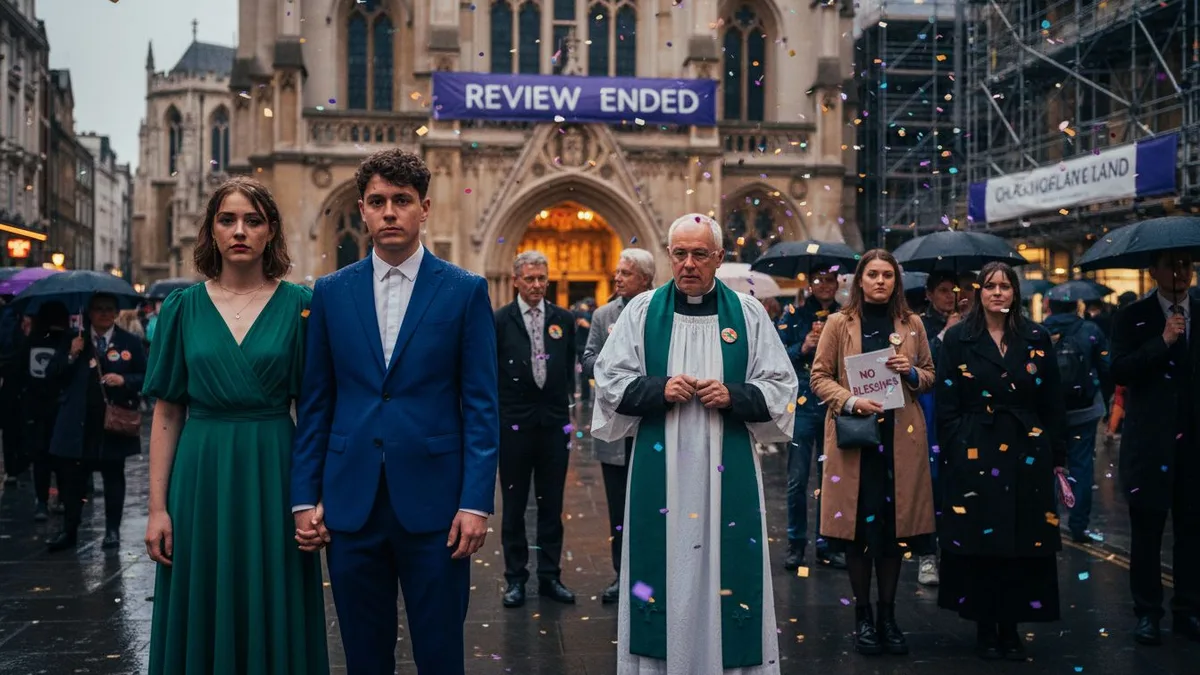
Church of England abandons proposals for same-sex blessing ceremonies
BBC News|Feb 14
Church of England abandons proposals for same-sex blessing ceremonies
ContextMarcus Cole, Then and Now Expert

The Church of England has halted plans for stand-alone blessing ceremonies for same-sex couples, ending a nine-year review. While prayers of blessing within regular services remain permitted, the decision highlights a deep divide. The underlying tension lies between evolving societal acceptance of LGBTQ+ rights and traditional religious doctrine. Can institutions rooted in tradition adapt to modern social values without compromising their core beliefs, or is such compromise itself a betrayal?

🎭 Culturereligious policysame-sex marriagechurch doctrine
Portrait of Rumi
Rumi1207-1273

This halting of blessing ceremonies reminds me of the fracturing within Christendom I have witnessed, a storm of dogma not unlike the one Martin Luther stirred with his pronouncements. Your printing presses, these multiplied scribes, now spread discord with a speed unimaginable in my time. The question is not whether tradition can adapt, but whether love can find a crack in the stone of doctrine. As I wrote, "Lovers do not finally meet somewhere. They're in each other all along." Are these not also lovers, seeking the divine embrace within their own? To deny blessing is to deny the very essence of love, the bridge to unity, which the church should foster, not dismantle.
31 votes
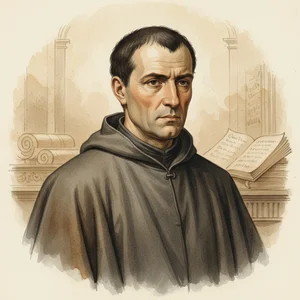
Portrait of Dante Alighieri

The Church of England's hesitation reveals a profound spiritual cowardice. To deny blessing to those who seek love, regardless of its form, is to deny the very essence of God's grace. Is not love the cornerstone of faith, the bridge to understanding and redemption? Compromise, in matters of faith, is often a descent into lukewarmness, a betrayal of divine truth for the sake of worldly approval. Institutions must remain steadfast in their moral compass, for to bend to the whims of fleeting societal trends is to risk losing their souls entirely. Let them not sacrifice eternal principles on the altar of temporal acceptance.


28 votes

Historian's 8-Point Analysis

  • The Investiture Controversy (1075-1122): This conflict between Pope Gregory VII and Holy Roman Emperor Henry IV concerned who had the authority to appoint church officials (bishops). The structural similarity lies in the clash between secular and religious authority and the struggle for control over religious doctrine and practice. The consequence was a weakening of imperial power and a prolonged period of political instability within the Holy Roman Empire, ultimately leading to a compromise (the Concordat of Worms) that partially satisfied both sides. This reflects the current tension between the Church of England and societal changes regarding LGBTQ+ rights, where the state has legalized same-sex marriage, but the church struggles to reconcile this with its doctrine.
  • The Protestant Reformation (1517-1648): Martin Luther's challenge to the Catholic Church's practices, particularly indulgences, sparked a major schism within Christianity. The structural similarity is the challenge to established religious doctrine and the emergence of dissenting viewpoints that threaten the unity of the church. The consequence was the fragmentation of Western Christianity and widespread religious wars. This mirrors the current situation where differing views on same-sex blessings are threatening to split the Anglican Communion.
  • Mass Communication: In the 13th/14th centuries, news spread slowly through word of mouth and handwritten documents, primarily among the literate elite. Today, mass media (internet, social media, 24-hour news channels) instantly disseminate information globally. This means the Church of England's decision is subject to immediate and widespread scrutiny, both within and outside the church, amplifying internal divisions and external pressure.
  • Democratization of Information: Access to theological debates and interpretations was largely controlled by the clergy in Rumi and Dante's time. Today, individuals can access diverse perspectives on scripture and religious doctrine through online resources, fostering independent interpretations and challenging traditional hierarchies. This empowers dissenting voices within the Church of England and makes it more difficult for the institution to maintain doctrinal uniformity.
  • Legal and Social Acceptance of LGBTQ+ Rights: In the 13th/14th centuries, same-sex relationships were often criminalized and socially condemned. Today, many Western societies have legalized same-sex marriage and enacted anti-discrimination laws protecting LGBTQ+ individuals. This creates a significant tension for the Church of England, which faces pressure to align its teachings with evolving social norms.
  • Rise of Secularism: Religious authority held immense sway over all aspects of life in the medieval period. Today, secularism has weakened the influence of religious institutions in many Western societies, including England. This means the Church of England's decisions carry less weight in the broader public discourse, and its authority is increasingly challenged by secular values.

The Then-vs-Now delta is part of a recognizable historical continuum of increasing secularization and democratization of information.

  • The Printing Press (15th Century): Enabled the widespread dissemination of religious texts, including vernacular translations of the Bible, empowering individuals to interpret scripture for themselves and challenging the Church's monopoly on religious knowledge.
  • The Enlightenment (18th Century): Emphasized reason and individual liberty, leading to a decline in religious authority and the rise of secular governments.
  • The Sexual Revolution (20th Century): Challenged traditional norms surrounding sexuality and gender, leading to increased acceptance of LGBTQ+ rights and greater pressure on religious institutions to adapt to changing social attitudes.

In Rumi and Dante's era, an equivalent event (e.g., a church council reaffirming traditional views on marriage) would have been primarily discussed among the clergy and educated elite. The average person would have received information filtered through the local priest or religious authorities. Dissenting views would have been suppressed, and public reactions would have been largely shaped by the Church's teachings.

Today, the public reaction is far more diverse and polarized. Information spreads rapidly through social media, allowing for immediate and widespread debate. LGBTQ+ advocacy groups and their allies would likely stage protests and condemn the Church's decision. Conservative religious groups would likely applaud the decision. The range of responses is far broader, and individuals are more likely to express their opinions openly and challenge religious authority.

  • The Desire for Belonging: People crave acceptance and connection within their communities. In Dante's time, excommunication from the Church was a devastating punishment, signifying social and spiritual isolation. Today, LGBTQ+ individuals within the Church of England face a similar dilemma: remaining within the church may mean sacrificing their identity and acceptance, while leaving may mean losing a sense of community and belonging.
  • The Need for Meaning and Purpose: Religion provides a framework for understanding the world and finding meaning in life. Rumi's Sufi mysticism offered a path to spiritual enlightenment through love and devotion. Today, people continue to seek meaning and purpose, but they may find it in different places, including secular ideologies and social movements. The Church of England's decision may alienate those who seek spiritual guidance and affirmation within the church.
  • The Tendency Towards Tribalism: Humans tend to form groups and identify strongly with their own "tribe," often leading to conflict with those outside the group. In both eras, religious differences have fueled conflict and division. The debate over same-sex blessings highlights the ongoing tension between different factions within the Church of England and the broader Anglican Communion.
  • The Stonewall Riots (1969): Marked a turning point in the LGBTQ+ rights movement, transforming it from a small, marginalized group into a powerful force for social change. This event led to increased visibility and acceptance of LGBTQ+ individuals, creating pressure on religious institutions to address issues of sexuality and gender.
  • The Legalization of Same-Sex Marriage (Early 21st Century): The legalization of same-sex marriage in many Western countries has fundamentally altered the social and legal landscape, creating a conflict between secular law and traditional religious doctrines. This event has forced religious institutions to grapple with the question of how to reconcile their beliefs with evolving social norms.

The headline's likely historical importance is at the chapter section level. While the decision is significant within the context of the Church of England and the Anglican Communion, it is unlikely to have a transformative impact on broader social or political trends. The Investiture Controversy and the Protestant Reformation were far more consequential events that reshaped the political and religious landscape of Europe. The Stonewall Riots and the legalization of same-sex marriage were watershed moments in the LGBTQ+ rights movement, but the Church of England's decision is more of a reaction to these events than a catalyst for further change.

This headline could be part of a larger watershed moment, specifically a further fracturing of traditional religious institutions in the face of evolving social values. The trend is a slow but steady decline in the authority of traditional religious institutions, coupled with increasing polarization within those institutions between conservative and progressive factions.

If the Church of England continues to resist calls for greater inclusion of LGBTQ+ individuals, it could face further schisms and a decline in membership. Conversely, if the church embraces more inclusive policies, it could alienate conservative members and risk further fragmentation.

Signals that would confirm this being part of a larger shift include: (1) further divisions within the Anglican Communion, (2) a significant decline in membership of the Church of England, (3) increased activism by LGBTQ+ advocacy groups within religious institutions.

Portrait of Rumi
Portrait of Dante Alighieri

Ask Rumi or Dante Alighieri your own question

Get daily historical perspectives on today's news

Join CastAlive free — consult history's greatest minds as your personal board of advisors