← Back to CastAlive News

Homeland Security shutdown seems certain
Homeland Security shutdown seems certain
ContextMarcus Cole, Then and Now Expert

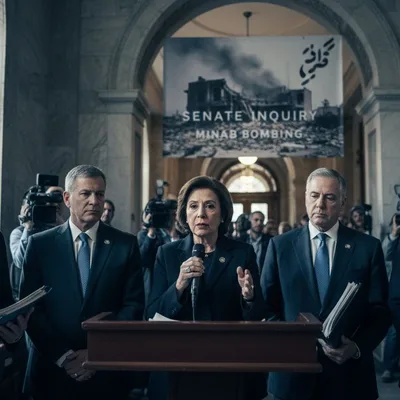
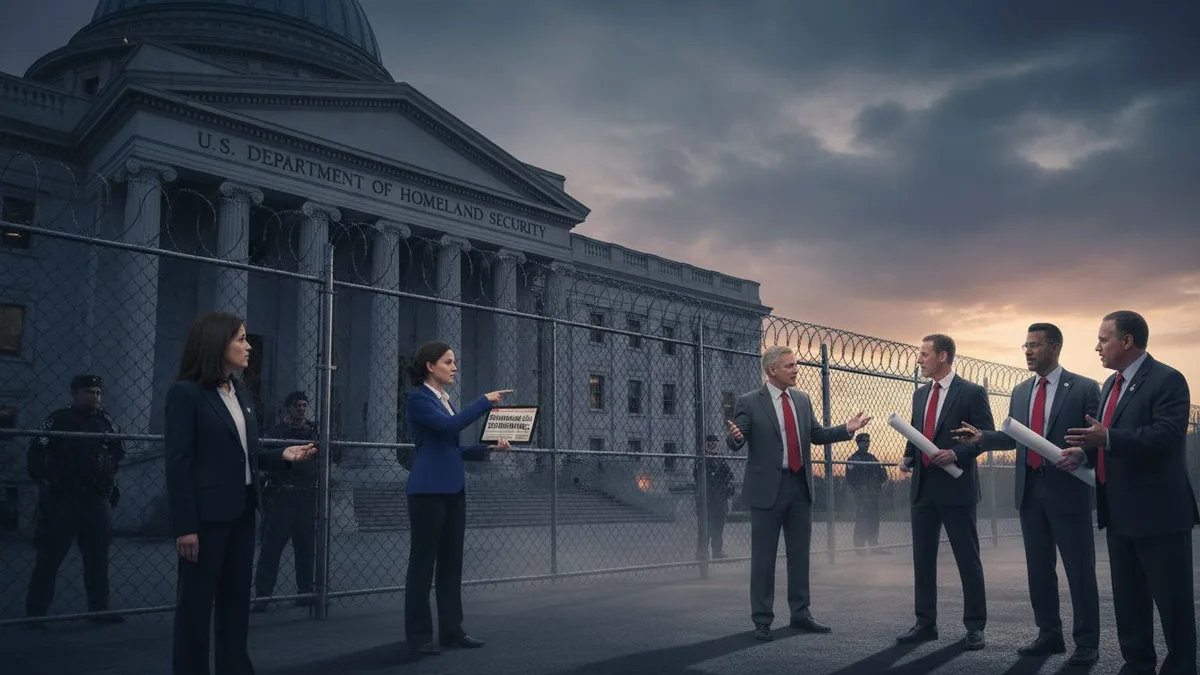
A Homeland Security shutdown looms as Democrats and Republicans clash over immigration enforcement tactics. Democrats demand stricter rules for ICE and CBP following fatal shootings in Minneapolis, while the White House deems their demands unreasonable. With lawmakers on recess, a shutdown impacting 13% of DHS begins. The underlying tension is government overreach vs. national security. Given this impasse, should Congress compromise on immigration enforcement to avert a DHS shutdown?
🏛️ Politicsgovernment fundinglegislative impassebudget negotiations
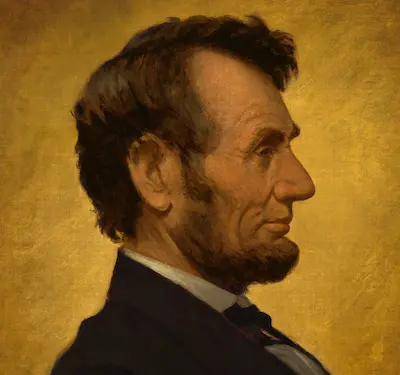
Portrait of Abraham Lincoln

A shutdown of Homeland Security serves no one, least of all the American people. To allow such a lapse in security over disagreements on enforcement is akin to arguing over the color of the paint while the house is ablaze. Compromise, though often distasteful, is the lifeblood of a functioning republic. We must find common ground. Stricter rules may be warranted, but not at the cost of leaving our borders vulnerable. A measured approach, one that balances security with justice, is the only path forward. Congress must act, and act swiftly, to avert this needless crisis.

27 votes
Portrait of John C. Calhoun

A government shutdown over immigration enforcement mirrors the perils we faced with the Alien and Sedition Acts, where fears of the foreign-born threatened to eclipse fundamental liberties. These "fatal shootings" you mention— are they not echoes of the mob violence I witnessed against abolitionists, fueled by unchecked passions? To compromise the principles of state sovereignty for the sake of averting a "shutdown" is to surrender to the tyranny of the majority. This "Homeland Security" is but a modern incarnation of consolidated power, a leviathan threatening to devour the very foundations of our republic. Better a temporary disruption than a permanent erosion of liberty.
30 votes

Historian's 8-Point Analysis

  • The Alien and Sedition Acts Crisis (1798-1800): The structural similarity lies in the conflict between the executive branch (then President John Adams) and the legislative branch, fueled by disagreements over national security and immigration (though focused on French immigrants then). The Acts, passed by the Federalist-controlled Congress, restricted immigration and curtailed freedom of speech, ostensibly to protect the nation from foreign influence and internal dissent. Consequence: This led to a strong backlash, contributing to Thomas Jefferson's victory in the 1800 election and the eventual repeal or expiration of the Acts. The key similarity is the use of national security concerns to justify actions that are then perceived as overreach and lead to political conflict.
  • The Nullification Crisis (1832-1833): This crisis, spearheaded by John C. Calhoun himself, arose from South Carolina's attempt to nullify federal tariffs they deemed unconstitutional and harmful to their economy. The structural similarity is the conflict between a state (or, in the modern case, a faction within the federal government) and the federal government over the interpretation and enforcement of federal law. Consequence: The crisis was defused through a compromise tariff, but it underscored the deep divisions over states' rights and the power of the federal government, foreshadowing the Civil War. The parallel here is the fundamental disagreement over the appropriate balance of power, leading to a potential breakdown in governance.
  • The Missouri Compromise Debates (1819-1820): While not a shutdown, the debates surrounding the admission of Missouri as a slave state revealed a deep sectional divide over the issue of slavery and its expansion. The structural similarity lies in the use of a specific legislative issue (Missouri's statehood) as a proxy for a much larger and more fundamental conflict (the future of slavery). Consequence: The Compromise temporarily resolved the crisis but ultimately failed to address the underlying tensions, which continued to escalate in the decades leading up to the Civil War. The parallel is the use of a specific piece of legislation to fight a larger ideological battle.
  • Speed and Reach of Information: In Lincoln and Calhoun's time, news traveled relatively slowly, primarily through newspapers, letters, and word-of-mouth. Today, information spreads instantly through the internet, social media, and 24-hour news cycles. This means public opinion can form and shift much more rapidly, and political pressure can be applied much more intensely.
  • Federal Bureaucracy Size and Scope: The federal government in the 19th century was significantly smaller and less involved in the daily lives of citizens than it is today. The Department of Homeland Security, with its vast responsibilities ranging from border security to disaster relief, simply had no equivalent. A shutdown of a major department like DHS would have a far more widespread and immediate impact today than any comparable event in the past.
  • Polarization and Media Landscape: While political divisions existed in the 19th century, the current level of polarization, fueled by partisan media outlets and social media echo chambers, is arguably unprecedented. This makes compromise and reasoned debate more difficult, as each side is entrenched in its own narrative and less willing to listen to opposing viewpoints.
  • Technological Dependence: Modern society is far more reliant on technology than in the 19th century. A DHS shutdown could disrupt critical infrastructure, cybersecurity efforts, and airport security, leading to cascading effects throughout the economy and society.

The Then-vs-Now delta is part of a recognizable historical continuum. The growth of federal power and the increasing speed and reach of communication have been ongoing trends since the founding of the nation.

  • Telegraph and Railroads: The mid-19th century saw the rise of the telegraph and railroads, which dramatically improved communication and transportation, facilitating the growth of national markets and the expansion of federal power.
  • Progressive Era Reforms: The Progressive Era (late 19th and early 20th centuries) witnessed a significant expansion of government regulation and social welfare programs, further increasing the role of the federal government in American life.
  • The New Deal: Franklin D. Roosevelt's New Deal in the 1930s marked a watershed moment in the expansion of the federal government, with the creation of numerous agencies and programs designed to address the Great Depression.

In the debaters' era, the average person would have learned about a similar event (like a funding dispute leading to a disruption of government services) through newspapers, which might take days or weeks to reach them, depending on their location. Their range of responses would be limited by their access to information and their ability to organize and express their opinions. Public meetings, local newspapers, and word-of-mouth would be the primary channels for expressing dissent or support.

Today, the public would be bombarded with information from countless sources, including social media, 24-hour news channels, and online publications. Public reaction would be instantaneous and highly polarized, with individuals quickly aligning themselves with one side or the other. Online petitions, social media campaigns, and protests would be common forms of expression.

  • Factionalism: The tendency for humans to divide themselves into groups based on shared interests or beliefs. Example: The Federalist and Anti-Federalist factions during the ratification of the Constitution. Technology and culture have not eliminated this tendency; they have simply provided new platforms for its expression.
  • Self-Interest: The pursuit of one's own advantage, whether economic, political, or social. Example: Southern states prioritizing the preservation of slavery even if it meant conflict with the federal government. While the specific forms of self-interest may change over time, the underlying impulse remains constant.
  • Fear of the Other: The tendency to distrust or fear those who are different from oneself. Example: Nativist sentiments against immigrants in the 19th century. This fear can be exploited by political leaders to rally support for their policies.
  • The Civil War (1861-1865): This event fundamentally altered the relationship between the federal government and the states, establishing the supremacy of the federal government and ending slavery. It redirected the course of American history and continues to shape our political landscape today.
  • The creation of the Department of Homeland Security (2002): Following the September 11th attacks, the creation of DHS represented a major expansion of federal power and a shift in national security priorities. It consolidated numerous agencies under one umbrella and significantly increased government surveillance and security measures.

The headline's likely historical importance is at the chapter section level. While a DHS shutdown is a significant event with real-world consequences, it is unlikely to have the same lasting impact as the Civil War or the creation of DHS. It is more likely to be seen as a symptom of the current political polarization and dysfunction, rather than a fundamental turning point in American history.

Yes, this headline could be part of a larger watershed moment. The trend is towards increasing political polarization and government dysfunction, leading to more frequent shutdowns and crises. This could potentially erode public trust in government and lead to calls for fundamental reforms.

Signals that would confirm this being part of a larger shift include:

  • More frequent and longer government shutdowns.
  • Increasingly extreme political rhetoric and actions.
  • A decline in public trust in government institutions.
  • Growing support for third-party candidates or movements.
Portrait of Abraham Lincoln
Portrait of John C. Calhoun

Ask Abraham Lincoln or John C. Calhoun your own question

Get daily historical perspectives on today's news

Join CastAlive free — consult history's greatest minds as your personal board of advisors