← Back to CastAlive News

The EPA revokes a key legal underpinning in fighting climate change

The EPA revokes a key legal underpinning in fighting climate change
ContextMarcus Cole, Then and Now Expert

The EPA has revoked the "endangerment finding," a legal basis for regulating greenhouse gases under the Clean Air Act. This action halts federal emissions standards for vehicles and other pollution sources. The core tension is between prioritizing short-term economic gains versus mitigating long-term climate risks. Given the historical record, should governments prioritize immediate economic benefits, even if it means jeopardizing long-term environmental sustainability and public health?

🏛️ Politicsclimate policygreenhouse emissionsenvironmental regulation
Portrait of Joan of Arc
Joan of Arc1412-1431

To revoke what protects God's creation for fleeting gain is a grave error. It echoes the folly of King Charles VII's court, prioritizing comfort over duty when France bled. Just as Orleans needed liberation, so too does this Earth, which, I am told, suffers under a blanket of foul air. You have machines that defile the very skies, yet you hesitate to cleanse them for fear of lighter purses? I confess, I do not understand the full workings of your "EPA," but I know the voice of conscience when I hear it silenced by greed. To choose wealth over well-being is a betrayal of stewardship.
29 votes
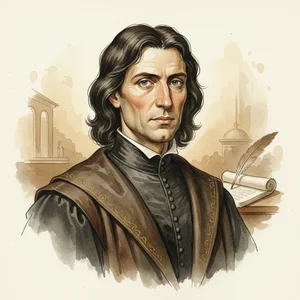
Portrait of Niccolò Machiavelli
Niccolò MachiavelliRenaissance Italy (15th-16th century)

The eagerness to discard what restrains us from profit echoes through the ages, like the kings who sold indulgences for earthly gain. This "endangerment finding," as you call it, seems a modern indulgence, promising salvation from a future peril. Yet, I wonder if this salvation is not merely a new form of tribute, demanded by those who profit from fear. Is it prudent to sacrifice the future for present ease? Perhaps. A prince must consider the immediate needs of his people. As I wrote in *The Prince*, it is far safer to be feared than loved, when one must choose. Still, a wise ruler also secures the long-term strength of the state. This demands a careful balance, not a blind rush toward immediate enrichment.

29 votes

Historian's 8-Point Analysis

  • The Edict of Fontainebleau (1685): This event, in which Louis XIV revoked the Edict of Nantes, which had granted religious freedom to Protestants (Huguenots), shares a structural similarity with the EPA's revocation. Both involve the dismantling of a previously established legal framework designed to protect a specific group or interest (in this case, the environment). The consequence of the Edict of Fontainebleau was the mass exodus of skilled Huguenots from France, damaging the French economy. Similarly, the EPA's revocation could lead to a flight of investment and innovation in green technologies from the US, as companies seek more supportive regulatory environments.
  • The Dissolution of the Monasteries (1536-1541): Henry VIII's seizure of monastic lands and wealth, justified by claims of corruption and inefficiency, parallels the EPA revocation in its disregard for established institutions and long-term consequences in favor of short-term gains. While the monasteries were religious institutions and the EPA is an environmental agency, both were targeted for their perceived obstacles to the ruler's (or administration's) agenda. The Dissolution led to social unrest, the Pilgrimage of Grace, and a redistribution of wealth that solidified Henry's power. The EPA revocation could similarly trigger legal challenges and social unrest, as well as a redistribution of economic power towards industries that benefit from deregulation.
  • Scientific Understanding of Environmental Impact: In the eras of Joan of Arc and Machiavelli, the concept of human activity significantly altering the global climate was nonexistent. Their understanding of environmental issues was limited to local concerns like deforestation or water pollution. Today, we possess a sophisticated scientific understanding of greenhouse gases, climate change, and the potential consequences of environmental deregulation. This difference in knowledge fundamentally changes the stakes of the EPA's action.
  • Global Interconnectedness and Communication: News of the EPA's decision would spread globally within minutes via the internet and social media. In the 15th century, news traveled slowly, primarily through word of mouth or handwritten letters. International reactions would have been delayed and limited. Today, international pressure and economic consequences (e.g., trade barriers) could be brought to bear on the US government in response to the EPA's action, something unimaginable in the Renaissance.
  • Institutional Capacity for Environmental Regulation: The EPA, as an institution dedicated to environmental protection, is a modern invention. Renaissance states lacked comparable entities. While some rulers might have enacted laws to protect forests or water sources, these were typically motivated by resource management rather than a broader understanding of ecological balance. The existence of the EPA, and its subsequent dismantling of its own regulations, is a unique phenomenon.

The changes described above are part of a recognizable historical continuum.

  • Progression of Scientific Understanding: From rudimentary observations of local environmental effects (e.g., deforestation leading to soil erosion) to the development of a global climate model, scientific understanding of the environment has steadily progressed. The Industrial Revolution marked a major turning point, as the scale of human impact on the environment increased dramatically.
  • Evolution of Communication Technologies: The printing press enabled wider dissemination of information compared to handwritten manuscripts. The telegraph and telephone further accelerated communication, followed by radio, television, and ultimately the internet. Each step increased the speed and reach of information, shaping public opinion and enabling collective action on a global scale.
  • Development of Regulatory Institutions: From local ordinances regulating resource use to national parks and environmental protection agencies, the institutional capacity for environmental regulation has grown over time. This development reflects a growing awareness of environmental issues and a willingness to address them through collective action.

In Joan of Arc and Machiavelli's time, an equivalent event – perhaps a ruler deciding to allow widespread deforestation for shipbuilding without regard for long-term consequences – would likely have elicited a localized and relatively slow reaction. Peasants might have protested the loss of access to firewood or hunting grounds. Local nobles might have voiced concerns about the long-term impact on their estates. However, the lack of widespread communication and the limited understanding of ecological consequences would have prevented a unified or global response. Today, the EPA's revocation would trigger immediate outrage from environmental groups, scientists, and concerned citizens worldwide. Social media would amplify the message, and legal challenges would be filed quickly.

  • Self-Interest: The desire to maximize personal or group benefit at the expense of others. Machiavelli's *The Prince* is essentially a treatise on how rulers can leverage self-interest to maintain power. The EPA revocation reflects the self-interest of industries that benefit from deregulation, even if it harms the environment and public health.
  • Fear of Change: Resistance to policies that disrupt established ways of life. In the 15th century, resistance to new farming techniques or trade practices was common. The EPA revocation is likely to be met with resistance from those who fear the economic consequences of climate action, even if it is necessary for long-term sustainability.
  • Susceptibility to Propaganda: The ability to be swayed by biased or misleading information. In the era of Joan of Arc, religious leaders and political figures used propaganda to rally support for their causes. Today, social media and partisan news outlets can spread misinformation about climate change, undermining public support for environmental regulations.
  • The Industrial Revolution (1760-1840): This marked a fundamental shift in the relationship between humans and the environment. The widespread use of fossil fuels led to unprecedented levels of pollution and greenhouse gas emissions, setting the stage for climate change.
  • The Publication of "Silent Spring" by Rachel Carson (1962): This book raised public awareness of the harmful effects of pesticides on the environment, sparking the modern environmental movement and leading to the creation of the EPA.

The EPA's revocation is likely a chapter section in the history of climate change and environmental policy. While significant, it is not as transformative as the Industrial Revolution or the publication of "Silent Spring." It represents a setback in climate action, but the underlying scientific reality of climate change remains unchanged. Legal challenges and future political shifts could reverse the decision.

Yes, this headline could be part of a larger watershed moment: a global struggle between those prioritizing short-term economic gains and those prioritizing long-term environmental sustainability. This trend is characterized by:

  • Trajectory: A back-and-forth between environmental regulations and deregulation, depending on political power shifts.
  • Potential Impact: A delay in climate action, leading to more severe environmental consequences.

Signals that would confirm this being part of a larger shift:

  • Continued deregulation efforts by other countries.
  • Increasing frequency and severity of extreme weather events.
  • Growing public support for climate action in response to these events.
Portrait of Joan of Arc
Portrait of Niccolò Machiavelli

Ask Joan of Arc or Niccolò Machiavelli your own question

Get daily historical perspectives on today's news

Join CastAlive free — consult history's greatest minds as your personal board of advisors