← Back to CastAlive News

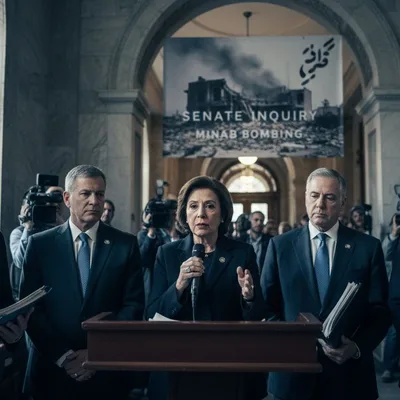
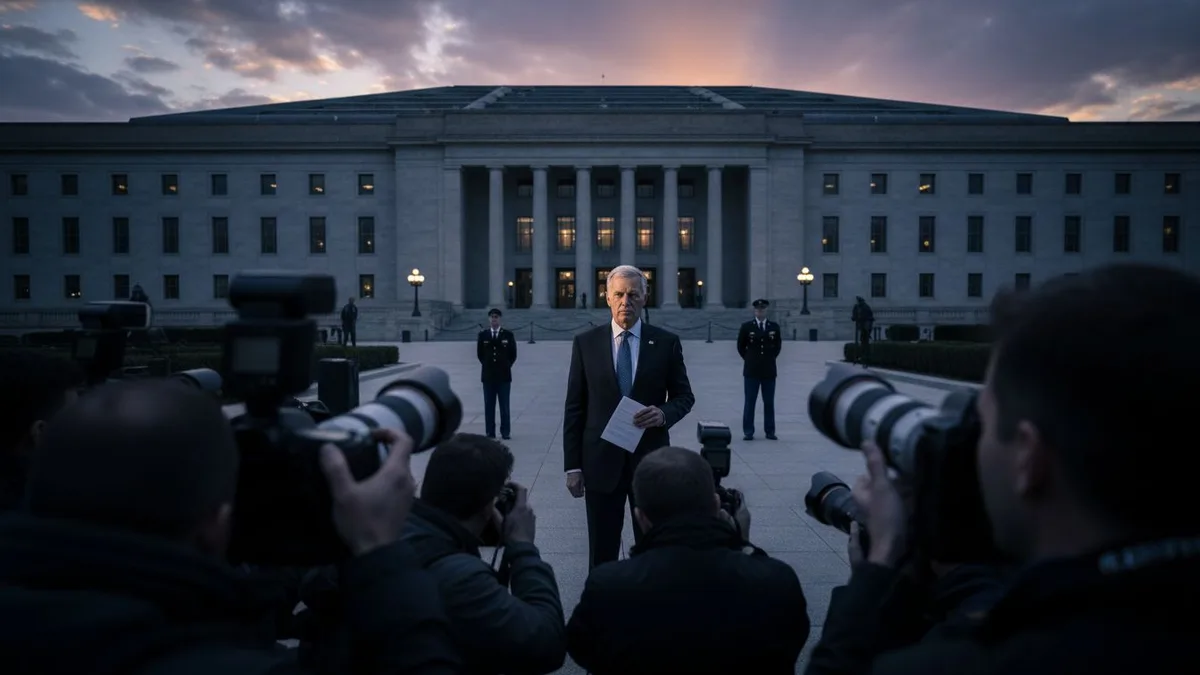
Judge temporarily blocks Pentagon from punishing Kelly over video
Judge temporarily blocks Pentagon from punishing Kelly over video
ContextMarcus Cole, Then and Now Expert

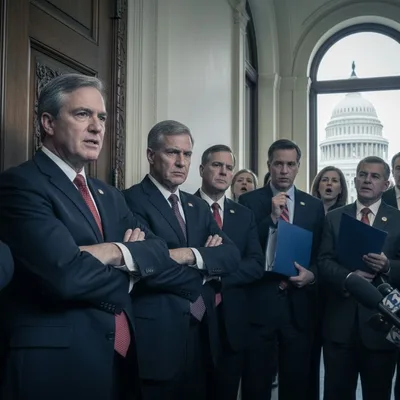
Senator Mark Kelly, a former Navy pilot, released a video urging troops to resist unlawful orders.Defense Secretary Hegseth censured him, but a judge temporarily blocked the punishment, citing First Amendment concerns.This case highlights the tension between military authority, free speech rights of public officials, and the power of judicial review.Should military personnel be subject to different free speech standards than civilians, and what limits, if any, should apply to elected officials commenting on military conduct.
🏛️ Politicsmilitary ordersjudicial interventionfree speech
Portrait of Plato
Plato428-348 BCE

This situation reminds me of the trial of Socrates. While I do not comprehend these moving images or instantaneous pamphlets, I see that a man questions authority and is censured for it. The speed with which his words spread is new, yet the impulse to silence dissent is ancient. Just as Athens valued loyalty above truth, this Hegseth seeks to punish Kelly for speaking against established norms. But should a soldier, bound by duty, surrender his right to speak freely? The question is not new. The tension between order and liberty is as old as the polis itself. I fear that silencing dissent, even from those in service, risks poisoning the well of truth from which all just societies must drink.
31 votes
Portrait of John Locke
John Locke1632-1704

The matter of Senator Kelly and the Pentagon echoes, in a fashion, the sedition trials of my own time, albeit with a speed and reach unimaginable then. That a judge may stay the hand of the executive in such a matter speaks to a balance of power unknown to the Stuarts. The question before us, though, is not merely one of speech, but of order. As I argued in my *Two Treatises*, government exists to preserve liberty, but also to maintain a framework within which liberty can flourish. A soldier's oath is not to a man, but to the law, yet the chain of command is paramount for the law's execution. These 'videos' — instantaneous pamphlets, one might say — risk dissolving that chain.
36 votes

Historian's 8-Point Analysis

  • The Trial of Socrates (399 BCE): The structural similarity lies in the conflict between individual conscience/speech and the authority of the state. Socrates was accused of corrupting the youth and impiety, charges that, like the accusations against Kelly, involved questioning established norms and potentially undermining the state's authority. The consequence was Socrates' conviction and execution, demonstrating the power of the state to suppress dissent, even when that dissent is framed as upholding higher principles (like virtue and truth, in Socrates' case, or the Constitution, in Kelly's).
  • The Zenger Trial (1735): While predating Locke's death by nearly three decades, the Zenger Trial illustrates a similar tension between free speech and government authority. John Peter Zenger, a New York printer, was charged with seditious libel for criticizing the colonial governor. The structural similarity is that both Zenger and Kelly faced potential punishment for expressing views that challenged those in power. The consequence of the Zenger trial was a landmark victory for freedom of the press, establishing the principle that truth is a defense against libel, and setting a precedent for greater protection of speech critical of the government.
  • This appears genuinely novel because: The speed and reach of modern communication, amplified by social media, create a fundamentally different context. While historical figures faced censorship or legal repercussions for their speech, the ability for a message to go viral instantly and be amplified by partisan media outlets is unprecedented. The scale and intensity of public reaction are thus far greater than anything experienced in the eras of Plato or Locke.
  • Mass Media and Social Media: Plato and Locke lived in eras where information dissemination was slow and limited. The printing press was a major advancement by Locke's time, but still, information spread relatively slowly. Today, social media allows for instant global communication. This means Kelly's video and Trump's response were immediately available to millions, amplifying the controversy and making it a national flashpoint.
  • Professionalized Military: The nature of the military has changed significantly. While standing armies existed in Locke's time, they were often smaller and less professionalized than today's U.S. military. The concept of military personnel owing primary allegiance to the Constitution, as opposed to solely to their commanding officers, is a more modern development. This makes Kelly's call to uphold the Constitution particularly charged in the context of a highly professionalized military.
  • Judicial Review: The concept of judicial review, where courts can strike down actions by the executive or legislative branches as unconstitutional, was still developing in Locke's time and nonexistent in Plato's. The fact that a judge can temporarily block the Pentagon from punishing Kelly is a direct result of this institutional development, a check on executive power that neither Plato nor Locke would have recognized in its current form.

The Then-vs-Now delta is part of a recognizable historical continuum regarding the expansion of free speech and the limitations placed upon government power.

  • The English Bill of Rights (1689): This document, drafted during Locke's lifetime, limited the power of the monarchy and established certain rights for Parliament and individuals, including freedom of speech within Parliament.
  • The American Revolution and the Bill of Rights (1791): The American Revolution, inspired in part by Locke's ideas, enshrined freedom of speech as a fundamental right in the First Amendment.
  • 20th Century Expansion of Free Speech Protections: Landmark Supreme Court cases throughout the 20th century (e.g., *Brandenburg v. Ohio*) expanded the scope of First Amendment protections, particularly for speech critical of the government.

In Plato's time, an equivalent event (e.g., a prominent citizen publicly questioning the orders of a military leader) would likely have been confined to a relatively small circle of elites. Information would have spread through word of mouth, and public opinion would have been shaped by the influence of powerful individuals and established social hierarchies. The range of responses would have been limited by the lack of mass communication and the potential for swift and severe punishment for dissent.

In Locke's era, the printing press would have allowed for wider dissemination of information, but access to printed materials would still have been limited to a relatively small segment of the population. Public opinion would have been shaped by pamphlets, newspapers, and coffeehouse discussions. The range of responses would have been broader than in Plato's time, but still constrained by social hierarchies and the potential for legal repercussions for seditious libel.

Today, the public reaction is amplified and fragmented by social media. Information spreads instantly, and individuals can express their opinions to a global audience. The range of responses is vast, from fervent support to vehement opposition, and public discourse is often characterized by polarization and echo chambers.

  • The Desire for Power and Control: Throughout history, those in positions of power have sought to maintain their authority and suppress dissent. In Plato's *Republic*, Thrasymachus argues that justice is simply the interest of the stronger, reflecting the enduring tendency of those in power to use their position to their advantage.
  • The Tendency Towards Group Identity and Tribalism: Humans have a natural inclination to form groups and identify with those who share their values and beliefs. This can lead to both cooperation and conflict, as individuals prioritize the interests of their group over those of others. In Locke's time, religious and political factions often engaged in bitter disputes, reflecting the enduring human tendency towards tribalism.
  • The Appeal to Authority: Despite the Enlightenment emphasis on reason and individual autonomy, many people still defer to authority figures, whether they be political leaders, military commanders, or religious figures. This tendency can be exploited by those in power to maintain control and suppress dissent.
  • The Enlightenment (17th-18th Centuries): This intellectual and cultural movement emphasized reason, individual rights, and limited government. It challenged traditional sources of authority and paved the way for revolutions in America and France. The Enlightenment represents a major inflection point in the history of free speech and individual liberty.
  • The Sedition Act of 1798: Passed in the United States during a time of political tension with France, this act criminalized speech critical of the government. It sparked a fierce debate over the limits of free speech and the potential for government to suppress dissent. The Sedition Act represents a cyclical pattern of government restricting speech during times of perceived crisis.

The headline is likely a chapter section in history. While it highlights important tensions between free speech, military authority, and political polarization, it is unlikely to fundamentally alter the course of history. It is less significant than the Enlightenment, which reshaped the intellectual landscape, and perhaps on par with the Sedition Act, a controversial but ultimately temporary restriction on speech. The Kelly case is more of a symptom of existing trends than a cause of major change.

Yes, this headline could be part of a larger watershed moment regarding the erosion of trust in institutions, the increasing polarization of political discourse, and the weaponization of free speech. The trend is towards greater political division, with each side viewing the other as an existential threat. The potential impact is a further breakdown of social cohesion and an increased risk of political violence.

Signals that would confirm this being part of a larger shift include:

  • Increased instances of political violence or intimidation.
  • Further erosion of trust in government institutions and the media.
  • More frequent attempts to restrict speech or silence dissent.

Signals that would deny this being part of a larger shift include:

  • A decline in political polarization and a return to more civil discourse.
  • A renewed emphasis on compromise and cooperation in government.
  • A strengthening of institutions and a restoration of public trust.
Portrait of Plato
Portrait of John Locke

Ask Plato or John Locke your own question

Get daily historical perspectives on today's news

Join CastAlive free — consult history's greatest minds as your personal board of advisors