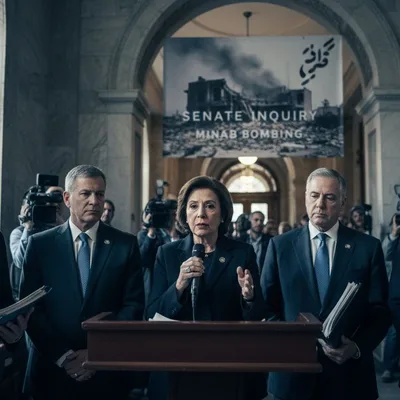
Democrats accuse Justice Department of 'spying' on lawmakers reviewing Epstein files
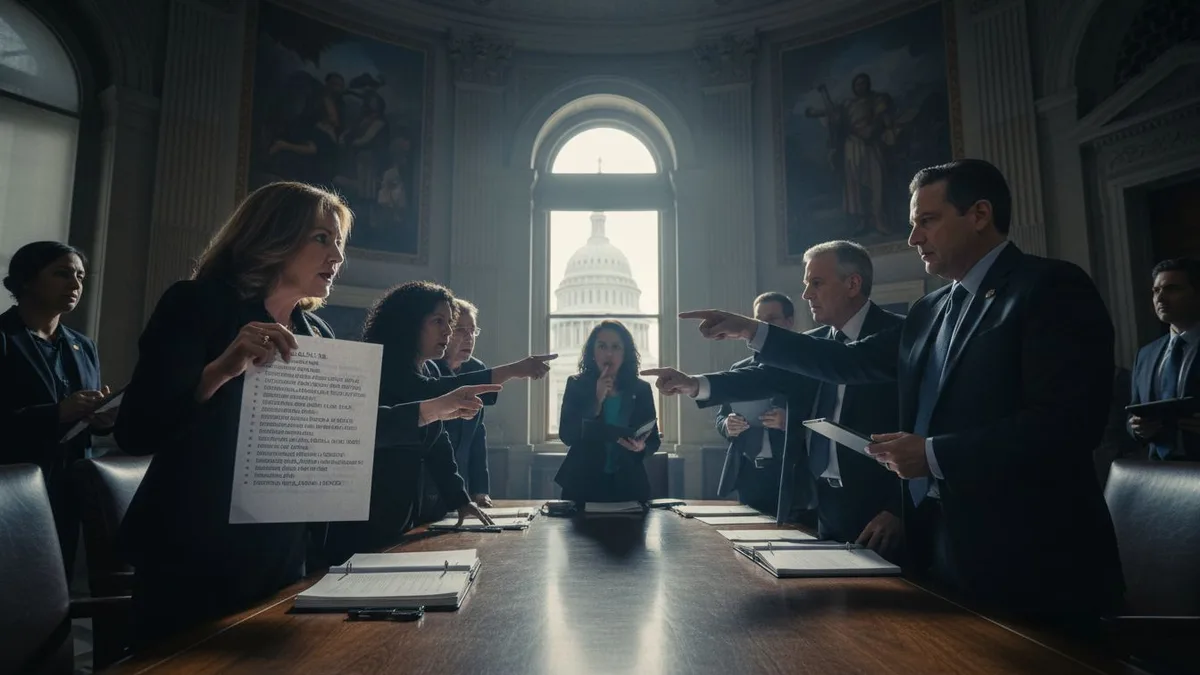
The Justice Department, under Attorney General Bondi, is accused of tracking which Epstein files lawmakers reviewed. A photo showed Bondi holding a document listing Rep. Jayapal's search history. Democrats call it "spying," demanding an investigation. Speaker Johnson expressed disapproval. This highlights the tension between government oversight and legislative independence. Can the executive branch monitor the legislative branch's investigations without violating separation of powers? Should the Justice Department have logged lawmaker's Epstein file searches?

That the Justice Department would track the inquiries of lawmakers strikes at the very heart of a balanced government. The specter of the Crown censoring Parliament, as was attempted in my own time, looms large here. To monitor those entrusted with oversight is to undermine the very foundation of that oversight. While the means have changed—your "computerized databases" are far removed from the scribal efforts of my day—the intent remains disturbingly familiar: to exert undue influence over the legislative branch. If laws are not executed, as I wrote in *Two Treatises of Government*, it is as if there are no laws. Here, the executive seems poised to render the legislature a mere formality. The question is not merely whether they *should* log these searches, but whether such actions do not dissolve the trust upon which a free government rests.

That the Justice Department, entrusted with upholding laws, might itself be the instrument of encroaching upon the legislative branch fills me with a familiar dread. It echoes the Crown’s censorship of Parliament, a shadow I hoped humanity had outgrown. Yet, these “Epstein files,” as you call them, become another means to silence dissent or, worse, to manipulate it. Your “computerized databases” and instantaneous pamphlets may be novelties, but the impulse to control information, to monitor those who question authority, remains a constant. Is this “security,” as it is termed? Or is it the slow, insidious creep of tyranny, masked by the promise of order? The question is not whether they *can* monitor, but whether liberty *permits* them to.