← Back to CastAlive News

Border czar Homan says Minnesota immigration crackdown is ending

Border czar Homan says Minnesota immigration crackdown is ending
ContextMarcus Cole, Then and Now Expert

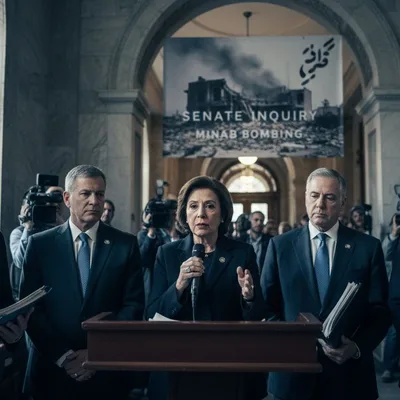
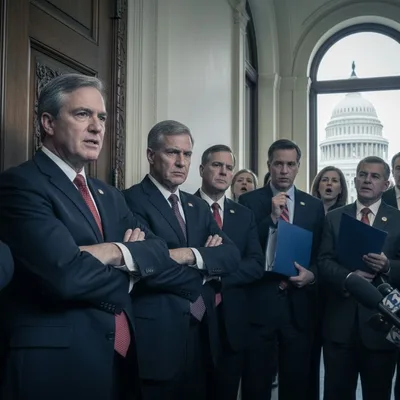
Operation Metro Surge," a controversial federal immigration crackdown in Minnesota involving thousands of agents, is ending.Border czar Tom Homan cites success, while critics point to deaths and community trauma.The underlying tension is the balance between national security, immigration enforcement, and individual rights, particularly regarding due process and the use of force.Given the historical context of state power versus individual liberty, should the federal government have conducted "Operation Metro Surge" in the first place.
🏛️ Politicsimmigration enforcementborder policydetentions
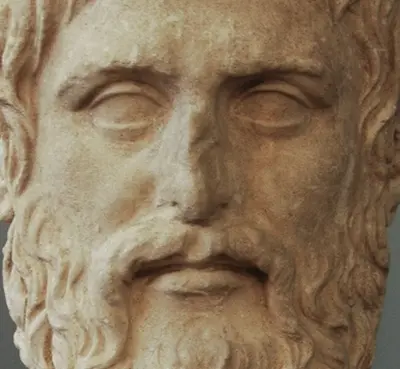
Portrait of Plato
Plato428-348 BCE

That a "czar" dictates the ebb and flow of justice should already give one pause. The Athenians, in their treatment of Melos, demonstrated the seductive power of might over right. This "Operation Metro Surge," as you term it, echoes that brutal calculus: security as justification for subjugation. You now possess the ability to collect and collate information in ways unimaginable to me. Yet this power, like the mob that condemned Socrates, can be used to amplify injustice rather than illuminate truth. Did the federal government have the right? Perhaps, by the laws of men. But was it just? I suspect not.

29 votes
Portrait of John Locke
John Locke1632-1704

The Athenian treatment of the Melians echoes in this "Operation Metro Surge," revealing a timeless truth: power often disregards justice. Was it justifiable? No. As I wrote in *Two Treatises of Government*, individuals possess inherent rights, and government exists to safeguard them, deriving its legitimacy from consent. This "border czar" and his "Operation" reminds me of the Star Chamber, dispensing with due process in the name of security. The speed of your pamphlets—instantly conveying news across vast distances—is astonishing. Yet, the core question remains: does fear justify the erosion of liberty? I argued against absolute power then, and I argue against it now.

28 votes

Historian's 8-Point Analysis

  • The Athenian Treatment of the Melians (416 BCE): During the Peloponnesian War, Athens, a powerful city-state, demanded that the neutral island of Melos surrender and join their alliance. When the Melians refused, citing their desire to remain neutral and appealing to justice, the Athenians besieged and conquered the island. They then executed all the adult men and enslaved the women and children. This event shares a structural similarity with the headline in that a powerful entity (Athens/the US federal government) used force against a weaker entity (Melos/immigrant communities in Minnesota) based on perceived threats to security and order. The consequence was the brutal subjugation of the weaker party, justified by the stronger party's perceived needs.
  • The Roman Expulsions of Foreigners (Various Dates, e.g., 187 BCE): Throughout Roman history, there were instances of expulsions of foreigners (peregrini) from Rome, often driven by fears of social unrest, disease, or perceived threats to Roman values. For example, in 187 BCE, large numbers of Latin residents were expelled from Rome after disputes over citizenship rights. This mirrors the headline in that a central authority (Rome/the US federal government) took action to remove or control a specific group of people (foreigners/immigrants) within its territory, based on concerns about internal stability and the perceived disruption they caused. The consequence was often displacement, economic hardship, and increased social tensions.
  • The Spanish Expulsion of the Moriscos (1609-1614): King Philip III of Spain ordered the expulsion of the Moriscos, descendants of Muslims who had nominally converted to Christianity, from Spanish lands. This action was driven by religious and political anxieties, as the Moriscos were suspected of secretly practicing Islam and potentially collaborating with Spain's enemies. The expulsion resulted in a significant demographic shift, economic disruption, and widespread suffering for the expelled Moriscos. The structural similarity lies in the targeting of a specific group (Moriscos/immigrants) based on perceived disloyalty and the use of state power to forcibly remove them.
  • Communication Speed & Reach: In Plato's time, news of events like the Melian massacre would spread slowly through word of mouth and limited written accounts. Locke would have relied on printed pamphlets and letters, still relatively slow and limited in distribution. Today, news of "Operation Metro Surge" and its ending is disseminated globally within seconds through social media, news websites, and 24-hour news channels. This instantaneous and widespread information flow amplifies public reaction and scrutiny.
  • Bureaucratic Capacity & Data Collection: Neither Plato nor Locke could have conceived of the scale of data collection and bureaucratic infrastructure that enables modern immigration enforcement. The ability to track, detain, and deport individuals based on sophisticated databases and identification systems is a uniquely modern phenomenon.
  • International Law & Human Rights Norms: While concepts of justice and fairness existed in both Plato and Locke's time, the modern framework of international law and human rights norms, which places limits on state power and emphasizes the protection of vulnerable populations, is a significant development. This framework provides a basis for challenging actions like "Operation Metro Surge" on legal and ethical grounds.
  • Democratic Accountability: While elements of democracy existed in ancient Greece, and Locke advocated for representative government, the level of democratic accountability present in the modern US, with regular elections, freedom of the press, and robust civil society organizations, provides avenues for citizens to influence policy and hold government officials accountable for their actions.

The changes identified in #2 are part of a recognizable historical continuum, particularly in the development of bureaucratic capacity and communication technologies.

  • Printing Press (15th Century): Allowed for wider dissemination of information than handwritten manuscripts, contributing to the Reformation and the rise of public opinion.
  • Telegraph (19th Century): Enabled near-instantaneous communication across long distances, revolutionizing news reporting and business operations.
  • Radio & Television (20th Century): Further expanded the reach and speed of information dissemination, shaping public opinion and political discourse.

In Plato's Athens, news of the Melian massacre would likely have been met with a mixture of reactions. Some Athenians might have celebrated the victory as a demonstration of Athenian power, while others might have expressed concern about the brutality of the act. Information would have spread slowly, and the average Athenian's ability to influence policy would have been limited.

In Locke's England, news of a similar event would have circulated through pamphlets and newspapers. Public reaction would likely have been divided along political and religious lines, with some supporting the government's actions and others condemning them as unjust.

Today, the public reaction is much faster, more widespread, and more diverse. Social media allows for immediate expression of opinions, and news organizations provide constant updates. The range of responses includes outrage, support, skepticism, and calls for political action.

  • Fear of the "Other": The tendency to view those who are different as a threat. In Plato's time, this manifested as suspicion and hostility towards foreigners and barbarians. For example, Greeks often viewed non-Greeks as inherently inferior and untrustworthy. This fear persists today, fueling anti-immigrant sentiment and discriminatory policies.
  • Desire for Security: The fundamental human need for safety and stability. In Locke's era, this was reflected in the emphasis on law and order and the protection of property. People supported strong government action to suppress dissent and maintain social order. This desire remains a powerful motivator today, often used to justify policies that restrict individual liberties in the name of national security.
  • The Appeal to Self-Interest: Individuals and groups often act in ways that they believe will benefit themselves, even if it comes at the expense of others. In both Plato and Locke's time, rulers and elites often pursued policies that enriched themselves and consolidated their power, regardless of the consequences for the common people. This self-interest continues to drive political and economic decision-making today.
  • The Enlightenment (18th Century): This intellectual movement emphasized reason, individual rights, and limited government. It challenged traditional notions of authority and paved the way for democratic revolutions. The Enlightenment's focus on human rights has had a lasting impact on international law and political discourse, shaping contemporary debates about immigration and border policy.
  • The Hart-Celler Act (1965): This US immigration law abolished national origin quotas, leading to a significant increase in immigration from non-European countries. It fundamentally altered the demographic landscape of the United States and sparked ongoing debates about immigration policy and national identity.

The headline "Border czar Homan says Minnesota immigration crackdown is ending" is likely a footnote in history. While it reflects broader trends in immigration enforcement and political polarization, it is unlikely to have a lasting impact on the scale of the Enlightenment or the Hart-Celler Act. It's a specific instance within a larger, ongoing debate.

This headline could be part of a larger watershed moment if it signals a significant shift in immigration policy or a change in public attitudes towards immigration. The trend is towards increasing polarization and conflict over immigration, with some advocating for stricter enforcement and others calling for more humane and inclusive policies.

Signals that would confirm this being part of a larger shift include:

  • A sustained decline in immigration enforcement actions.
  • The passage of comprehensive immigration reform legislation.
  • A significant shift in public opinion towards more positive views of immigration.

Conversely, if immigration enforcement actions increase, comprehensive reform fails, and public opinion remains divided, this headline will likely be seen as an isolated event within a broader pattern of conflict and division.

Portrait of Plato
Portrait of John Locke

Ask Plato or John Locke your own question

Get daily historical perspectives on today's news

Join CastAlive free — consult history's greatest minds as your personal board of advisors