← Back to CastAlive News

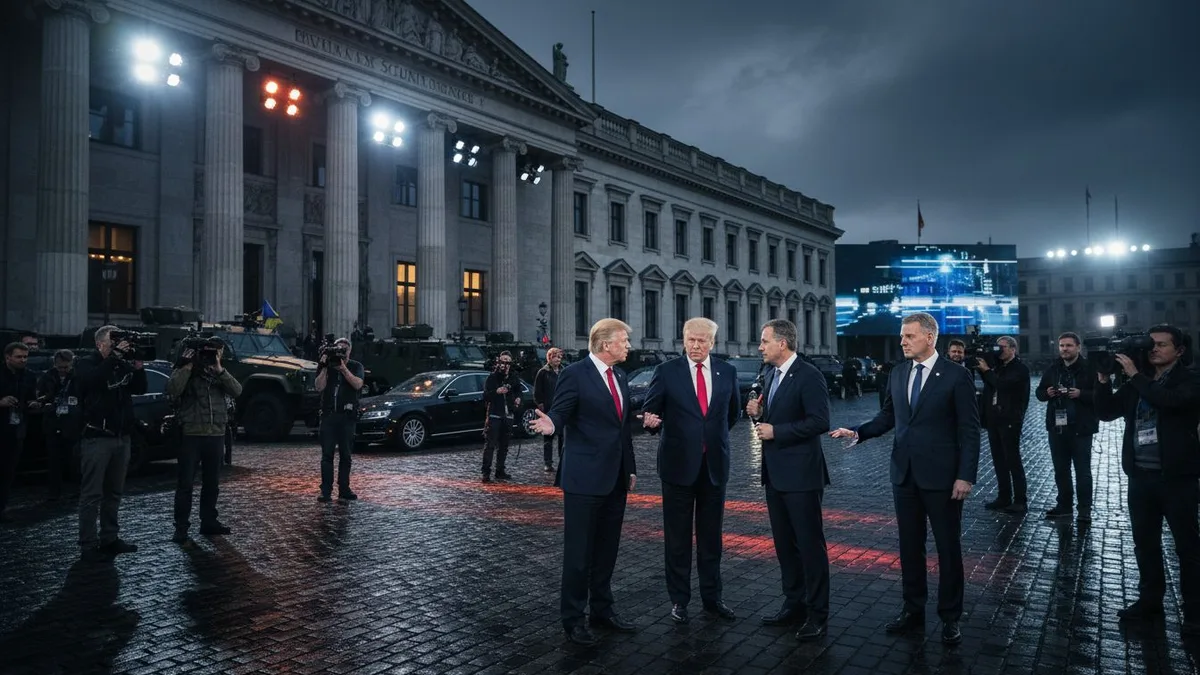
Trans-Atlantic tensions in focus as annual Munich security gathering opens
Trans-Atlantic tensions in focus as annual Munich security gathering opens
ContextMarcus Cole, Then and Now Expert

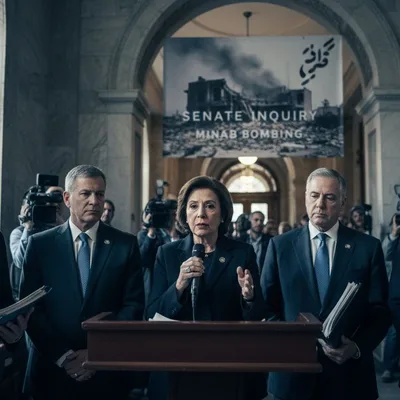
The Munich Security Conference convenes amid escalating transatlantic friction. Re-elected President Trump's "America First" policies, disputes over trade, defense spending, and the war in Ukraine have strained relations. A recent U.S. interest in acquiring Greenland further exacerbated tensions. Chancellor Merz seeks to "revive trust," while the U.S. Secretary of State aims to reassure allies, but the divide is clear. Can the transatlantic alliance adapt to these new pressures, or is a fundamental shift underway?

🏛️ PoliticsInternational diplomacytransatlantic relationssecurity tensions
Portrait of John Locke
John Locke1632-1704

The acquisition of Greenland smacks of dominion, a claim reminiscent of empires long past. Just as the Anglo-Dutch wars arose from conflicting mercantile ambitions, so too do these transatlantic tensions seem rooted in economic disputes, amplified by novel means of communication. These "America First" policies, as they are termed, echo the self-serving decrees that inflamed past conflicts. Whether this signals a fundamental fracture or a temporary disagreement remains to be seen. I confess I do not grasp the full import of these "nuclear weapons," but the human heart, ever prone to avarice and pride, remains unchanged. The question is whether reason can prevail, as I argued in my *Two Treatises*, or whether self-interest will drive these nations to mutual ruin.

28 votes
Portrait of Jean-Jacques Rousseau

These transatlantic tensions are a familiar discord played on new instruments. Just as the Anglo-Dutch wars saw nations with shared values succumb to the temptations of self-interest, so too do I see echoes in this present disquiet. The speed with which these disagreements are amplified—this “social media,” as you call it—resembles nothing so much as a village square filled with gossips, each vying to spread the most inflammatory rumour. The question is not whether the alliance can adapt – alliances are ever shifting – but whether the underlying principles of equality and mutual respect, so vital to any just association, can survive this cacophony of competing interests.
25 votes

Historian's 8-Point Analysis

  • The War of the Spanish Succession (1701-1714): This conflict involved a complex web of alliances and rivalries between European powers, driven by concerns over the balance of power and dynastic ambitions. Similar to today's transatlantic tensions, the War of the Spanish Succession saw disagreements between England and other European nations regarding trade, territory, and the overall security architecture of the continent. The consequence was the Treaty of Utrecht (1713), which reshaped the European map and established a new, albeit fragile, balance of power. The treaty, as noted by Jefferson in "Notes on the State of Virginia," involved treaties of peace, amity, navigation, and commerce, highlighting the multifaceted nature of international relations.
  • The Anglo-Dutch Wars (1652-1674): These wars, fought primarily over trade and maritime dominance, represent another historical parallel. Like the current tensions, these conflicts involved powers with shared values and long-standing relationships, yet driven apart by economic competition and strategic disagreements. The consequence was a series of treaties that ultimately shifted the balance of power in favor of England, establishing its dominance in global trade.
  • Speed and Scope of Communication: In the 17th and 18th centuries, news traveled slowly via letters, pamphlets, and word of mouth. Today, information spreads instantly through the internet and social media, amplifying tensions and making diplomatic missteps more consequential. A speech like Vice President Vance's at the Munich Security Conference would have taken weeks to reach the broader public in Locke and Rousseau's time, allowing for more measured responses. Now, it's a global event within minutes.
  • Interdependence of Economies: While trade was crucial in the 17th and 18th centuries, modern economies are far more deeply intertwined. Global supply chains, financial markets, and digital infrastructure create a level of interdependence that was unimaginable in Locke and Rousseau's time. This makes transatlantic tensions potentially more disruptive to global stability.
  • Nuclear Weapons: The existence of nuclear weapons adds a layer of complexity and risk to international relations that was absent in the 17th and 18th centuries. Transatlantic tensions today carry the implicit threat of nuclear escalation, making diplomatic solutions all the more urgent.
  • International Institutions: While rudimentary forms of diplomacy and treaty-making existed, the modern system of international institutions like NATO, the UN, and the EU represents a significant difference. These institutions, though currently strained, provide a framework for managing disputes and promoting cooperation that was lacking in the past.

The Then-vs-Now delta is part of a recognizable historical continuum.

  • Rise of Mass Media: The development of the printing press in the 15th century allowed for wider dissemination of information, but it was the advent of newspapers in the 17th and 18th centuries that truly began to shape public opinion on international affairs.
  • Industrial Revolution: The Industrial Revolution in the 18th and 19th centuries led to increased trade and economic interdependence, laying the groundwork for the globalized economy of today.
  • Development of International Law: The gradual development of international law and diplomatic norms, from the Peace of Westphalia in 1648 to the creation of the League of Nations and the United Nations, represents a continuous effort to manage relations between states and prevent conflict.

In Locke and Rousseau's era, the average person would have had limited access to information about transatlantic tensions. News would have been filtered through official channels and elite networks, shaping public opinion in a more controlled manner. Reactions would likely have been confined to educated circles and those directly affected by trade or military conflicts. Today, the public has immediate access to diverse perspectives through social media and news outlets, leading to more polarized and volatile reactions. Public pressure can quickly influence government policy, making diplomacy more challenging.

  • Fear of Foreign Powers: The inherent human tendency to distrust and fear foreign powers remains constant. In Locke's time, this fear manifested in anxieties about French expansionism under Louis XIV. Today, it manifests in concerns about the rise of China or Russian aggression.
  • Desire for Security: The fundamental human desire for security and protection drives states to form alliances and build up military strength. In Rousseau's era, this desire led to the formation of complex alliances aimed at maintaining the balance of power in Europe. Today, it underlies the continued importance of NATO and other security alliances.
  • Pursuit of Self-Interest: The tendency for individuals and states to pursue their own self-interest, even at the expense of others, is a constant factor in international relations. In both Locke and Rousseau's time and today, states are driven by economic, strategic, and political considerations that often lead to conflict.
  • The End of the Cold War (1991): This event marked a major inflection point in transatlantic relations, as the collapse of the Soviet Union removed the primary threat that had united the U.S. and Europe for decades. This led to a period of relative peace and cooperation, but also to new tensions over burden-sharing and diverging strategic priorities.
  • The 2008 Financial Crisis: This crisis exposed vulnerabilities in the global financial system and led to increased economic nationalism and protectionism, contributing to transatlantic tensions over trade and economic policy.

The headline "Trans-Atlantic tensions in focus as annual Munich security gathering opens" is likely of chapter section historical importance. While it reflects a significant challenge to the post-Cold War order, it does not represent a fundamental shift in the global balance of power on the scale of the end of the Cold War. The tensions are concerning and could escalate, but they are also part of a recurring pattern of disagreements and adjustments within the transatlantic relationship.

Yes, this headline could be part of a larger watershed moment. The trend is a gradual erosion of the post-Cold War international order, driven by factors such as the rise of new powers, economic inequality, and the resurgence of nationalism. The potential impact is a more fragmented and unstable world, with increased competition and conflict between states. Signals that would confirm this being part of a larger shift include a further decline in trust between the U.S. and Europe, a breakdown of international institutions, and an increase in military spending and regional conflicts. Conversely, a renewed commitment to multilateralism, a resolution of trade disputes, and a coordinated response to global challenges would suggest that this is an isolated event.

Portrait of John Locke
Portrait of Jean-Jacques Rousseau

Ask John Locke or Jean-Jacques Rousseau your own question

Get daily historical perspectives on today's news

Join CastAlive free — consult history's greatest minds as your personal board of advisors