← Back to CastAlive News

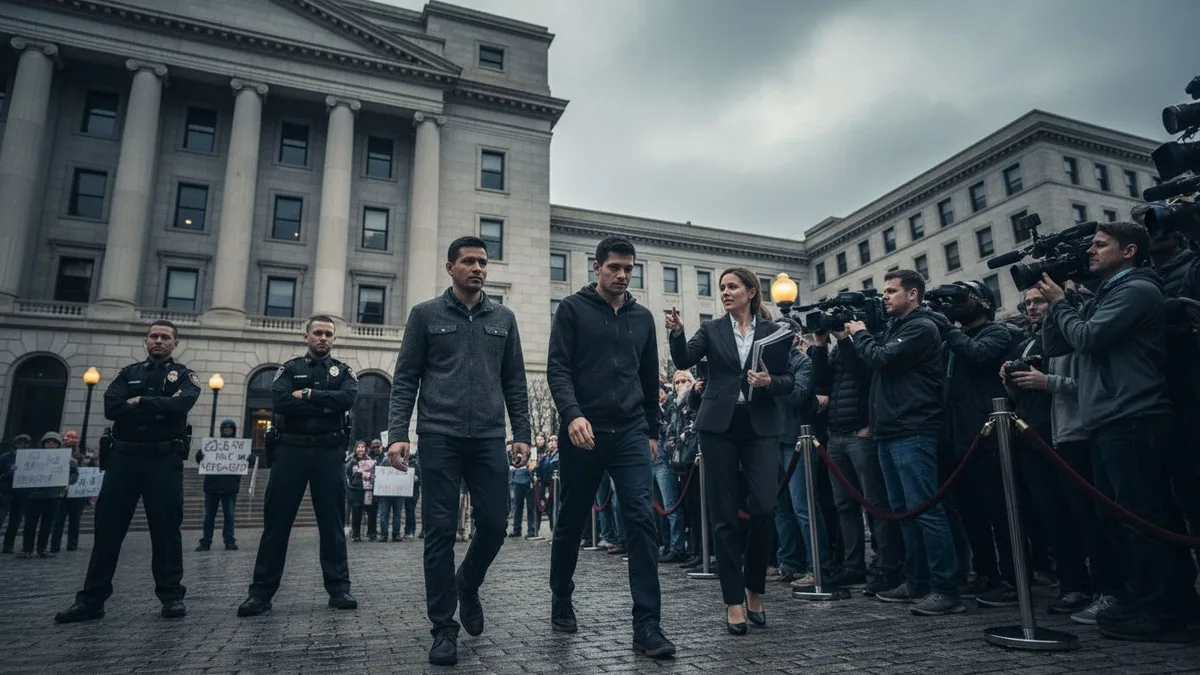
Prosecutors move to dismiss case against men accused of assaulting ICE officer in Minnesota
Prosecutors move to dismiss case against men accused of assaulting ICE officer in Minnesota
ContextMarcus Cole, Then and Now Expert

Today's debate centers on the dismissal of assault charges against two Venezuelan men in Minneapolis, after video evidence contradicted ICE officers' initial claims. The U.S. Attorney dropped the case, and ICE is investigating the officers for potential perjury. This highlights the ongoing tension between immigration enforcement and potential abuses of power. Given these developments, should the federal government prioritize aggressive immigration enforcement, even at the risk of potential civil rights violations?
🏛️ Politicsimmigration enforcementcharges dismissalofficer conduct
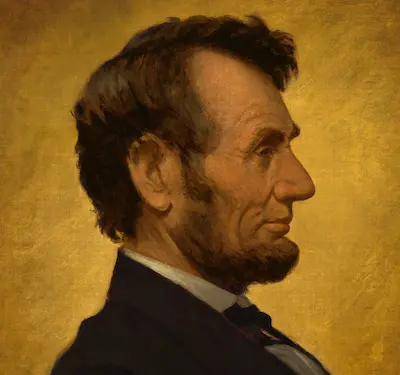
Portrait of Abraham Lincoln

The dismissal of these charges is a grave matter, not because of the men accused, but because justice itself appears to have been assaulted. If officers of the law fabricate evidence, the very foundation of our legal system crumbles. As I wrote, "Let reverence for the laws be breathed by every American mother to the lisping babe that prattles on her lap." We must pursue justice, not simply deportations. The question is not whether to prioritize aggressive enforcement at all costs, but whether we are willing to sacrifice truth and integrity on the altar of expediency. No, sir. Aggressive enforcement should never come at the expense of civil rights, for those rights are the bedrock of our Union.

27 votes
Portrait of John C. Calhoun

The dismissal of charges against these men, based on contradictory evidence, is a grave matter, but not unprecedented. As in the enforcement of the Fugitive Slave Act of 1850, we see federal power wielded in a manner that invites abuse and erodes trust. This "video evidence," as you call it, is a new instrument, but the question of its reliability remains. Just as testimony could be swayed by prejudice then, so too can these moving pictures be manipulated now. The true question is whether the aggressive pursuit of immigration laws justifies the risk of trampling upon individual liberties. I say, as I did regarding the tariff, that the rights of the minority must be protected, lest the Union itself be fractured by injustice.
27 votes

Historian's 8-Point Analysis

  • The Boston Massacre (1770): British soldiers fired on a crowd of civilians, resulting in multiple deaths. The structural similarity lies in the use of force by agents of the government (British soldiers then, ICE officers now) against civilians, the subsequent legal proceedings, and the public outcry over perceived injustice. Consequence: The Boston Massacre fueled anti-British sentiment and contributed to the growing tensions leading up to the American Revolution.
  • The Amistad Affair (1839): Enslaved Africans revolted against their captors on the ship Amistad. After landing in the US, they were arrested. The legal battle that ensued centered on their status as property versus free individuals. The similarity rests in the question of legal status and rights of non-citizens (or those perceived as non-citizens) and the potential for abuse of power by authorities. Consequence: The Amistad case became a symbol of the abolitionist movement and raised questions about the morality and legality of slavery.
  • The Fugitive Slave Act of 1850 Enforcement: This act, part of the Compromise of 1850, required citizens to assist in the capture and return of runaway slaves. It led to numerous incidents of violence and legal disputes, often involving questionable accusations and enforcement tactics. The parallel lies in the federal government's active role in enforcing laws related to marginalized groups, the potential for abuse of power, and the resulting public divisions and legal challenges. Consequence: The Fugitive Slave Act intensified sectional tensions and further polarized the nation on the issue of slavery.
  • Instant Communication & Mass Media: In Lincoln and Calhoun's time, news traveled much slower, primarily through newspapers, pamphlets, and word of mouth. Today, social media and 24-hour news cycles allow information (and misinformation) to spread rapidly, potentially inflaming public opinion and impacting legal proceedings. The existence of video evidence in this case is a direct result of technological advancements, and its rapid dissemination shapes public perception in ways unimaginable in the 19th century.
  • Federal Law Enforcement: The existence of a dedicated federal agency like ICE is a relatively modern phenomenon. While the federal government had marshals and other law enforcement officials in the 19th century, the scale and scope of modern federal law enforcement agencies are significantly larger. This impacts the scale of enforcement and the potential for systematic issues.
  • Immigration Policy: Immigration laws and enforcement mechanisms were far less developed and formalized in the mid-19th century. The concept of "illegal immigration" as it exists today was not fully formed. This changes the legal and political context of the headline significantly.
  • Judicial Review: The power of judicial review, as established by *Marbury v. Madison* (1803), was well established by the time of Lincoln and Calhoun. However, the speed and intensity with which judicial decisions are scrutinized by the public and the media have increased dramatically.

The Then-vs-Now delta is part of a recognizable historical continuum regarding the evolution of communication and federal power.

  • Intermediate Step 1 (Late 19th/Early 20th Century): The rise of telegraphy and the penny press allowed for faster dissemination of news, though still limited compared to today. The establishment of federal agencies like the FBI marked an expansion of federal law enforcement powers.
  • Intermediate Step 2 (Mid-20th Century): Radio and television further accelerated the spread of information and created a national audience. The Civil Rights Movement highlighted the role of the federal government in protecting minority rights.
  • Intermediate Step 3 (Late 20th Century): The advent of cable news and the internet began to create a 24/7 news cycle and decentralized information sources.

In Lincoln and Calhoun's era, an equivalent event (perhaps involving federal marshals and fugitive slaves) would have sparked intense debate, but the information available would have been limited and filtered through partisan newspapers. Public reaction would have been more localized and slower to develop. Today, the public would have immediate access to multiple perspectives, including video evidence, and social media would amplify outrage and calls for action. The speed and intensity of the reaction would be significantly higher.

  • Confirmation Bias: The tendency to interpret new evidence as confirmation of one's existing beliefs. Example: Pro-slavery advocates in Calhoun's time would have likely dismissed any evidence of abuse by slave catchers as abolitionist propaganda, while abolitionists would have readily believed such accounts.
  • Group Loyalty: The inclination to favor members of one's own group (e.g., nationality, political affiliation). Example: In Lincoln's time, people would have been more likely to side with federal authorities or against them based on their stance on states' rights and the legitimacy of federal power.
  • Moral Outrage: The emotional response to perceived injustice. Example: Both abolitionists and pro-slavery advocates were motivated by moral outrage at what they perceived as the other side's inhumanity.
  • The Civil War (1861-1865): This event fundamentally reshaped the relationship between the federal government and the states, establishing the supremacy of federal law and expanding federal power. It also led to the abolition of slavery and the recognition of citizenship for African Americans. This event redirected the course of American history by establishing the dominance of the federal government and redefining citizenship.
  • The Immigration and Nationality Act of 1965: This act abolished national origin quotas, leading to a significant increase in immigration from non-European countries. This act reshaped the demographics of the United States and contributed to ongoing debates about immigration policy and national identity.

The likely historical importance of today's headline is a footnote. While the incident raises important questions about immigration enforcement and police accountability, it is unlikely to have a lasting impact on the scale of the Civil War or the 1965 Immigration Act. It might warrant a footnote in a chapter discussing contemporary immigration policy and law enforcement practices.

This headline *could* be part of a larger watershed moment if it signals a growing trend of federal law enforcement misconduct and a corresponding public backlash. Signals that would confirm this include:

  • Increased scrutiny of ICE and other federal agencies.
  • More frequent reports of abuse of power and false testimony.
  • Legislative efforts to reform immigration enforcement practices.
  • A shift in public opinion towards greater skepticism of federal law enforcement.

If these signals do not emerge, the event is likely an isolated incident.

Portrait of Abraham Lincoln
Portrait of John C. Calhoun

Ask Abraham Lincoln or John C. Calhoun your own question

Get daily historical perspectives on today's news

Join CastAlive free — consult history's greatest minds as your personal board of advisors