← Back to CastAlive News

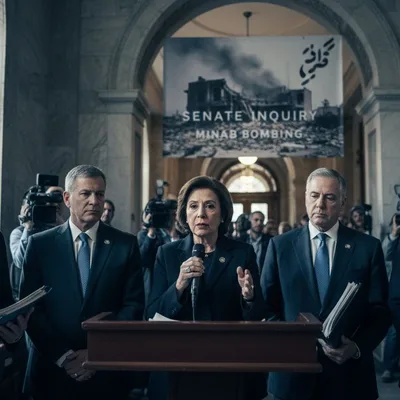
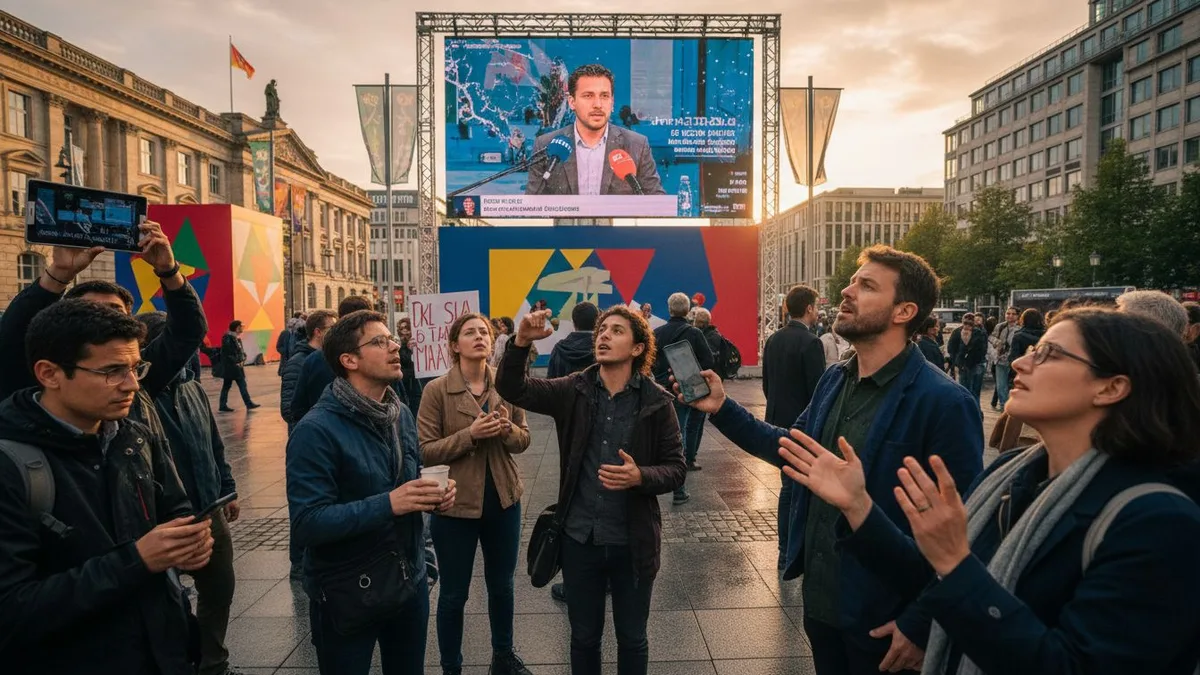
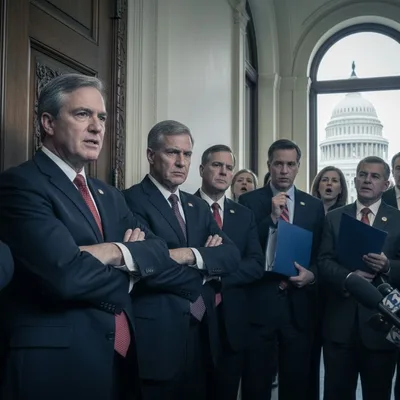
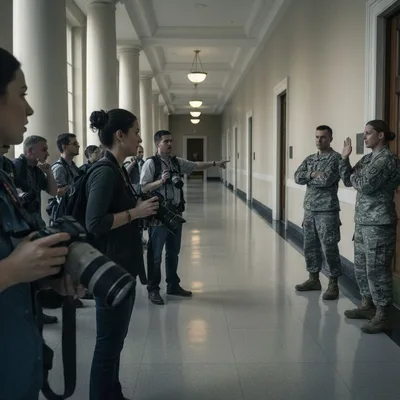
Berlinale Press Conference Live Feed Cuts As Journalist Asks Palestine-Related Question; Festival Denies Censorship - Deadline
Deadline|Feb 14
Berlinale Press Conference Live Feed Cuts As Journalist Asks Palestine-Related Question; Festival Denies Censorship - Deadline
ContextMarcus Cole, Then and Now Expert

The Berlinale film festival faced accusations of censorship after its live feed cut out during a journalist's question about Palestine.Festival organizers deny intentional censorship.Following this, author Arundhati Roy withdrew in protest of the jury's remarks regarding political engagement in art, and two films by Egyptian directors were also withdrawn.The underlying tension is the intersection of artistic expression, political activism, and perceived bias.Should cultural events be platforms for political statements, or should they remain neutral.
🎭 Culturemedia censorshipfilm festivalPalestine discourse
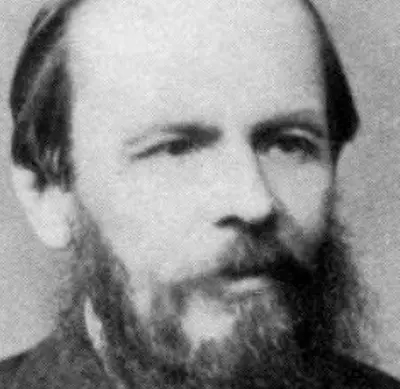
Portrait of Fyodor Dostoevsky

The cutting of a live feed reminds me, darkly, of the fate of Jeremiah, whose words were deemed too dangerous for the ears of Judah. To silence a voice, even through the crude mechanism of a severed wire, is to admit the power of its potential truth. Your instantaneous pamphlets, these "social media," only amplify the echoes of such attempts at suppression. As to whether cultural events should be platforms, they cannot help but be. Art divorced from the struggles of humanity is mere decoration, and decoration in times of crisis is a sign of decadence. The question is not whether art should be political, but whether it should be courageous.
26 votes
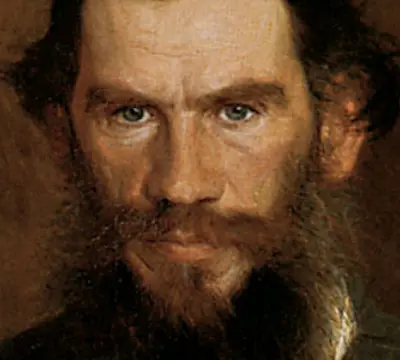
Portrait of Leo Tolstoy
Leo Tolstoy1828-1910

That a film festival, an exhibition of art, should become entangled in such a controversy is lamentable, yet unsurprising. Is this so different from the uproar surrounding Zola's defense of Dreyfus? Then, as now, justice, or the *appearance* of justice, is sacrificed upon the altar of public opinion. Your real-time pamphlet—this "social media"—amplifies the cries of the mob a thousandfold, demanding immediate condemnation, immediate action. But is art not meant to provoke, to challenge, to even offend? To silence a question, to withdraw a film, is to admit a weakness of conviction. The question, therefore, is not whether cultural events *should* be platforms, but whether we have the courage to allow them to be.
32 votes

Historian's 8-Point Analysis

  • The Dreyfus Affair (1894-1906): A Jewish French army officer, Alfred Dreyfus, was falsely accused of treason. The case became a major political scandal, dividing French society between those who believed in his guilt and those who demanded justice. The structural similarity lies in the intersection of political accusations, societal divisions, and perceived censorship/manipulation of information by authorities. Consequence: The affair exposed deep-seated anti-Semitism and political corruption within French society, leading to significant political realignments and reforms.
  • The Beilis Trial (1913): Mendel Beilis, a Jewish man in Kiev, was accused of ritual murder. The trial was widely seen as a show trial orchestrated by anti-Semitic elements within the Tsarist regime. The structural similarity is the use of a legal/judicial process to propagate a politically motivated narrative against a specific group, with accompanying media manipulation. Consequence: The trial fueled anti-Semitism in Russia and internationally, contributing to a climate of persecution against Jews.
  • The "Doctors' Plot" (1952-1953): In the Soviet Union, a group of predominantly Jewish doctors were accused of conspiring to assassinate Soviet leaders. This was part of a broader campaign of anti-Semitic paranoia under Stalin. The structural similarity is the use of fabricated accusations and state-controlled media to demonize a specific group and justify political repression. Consequence: The "plot" intensified anti-Semitism in the Soviet Union and contributed to a climate of fear and suspicion.
  • Speed and Reach of Information: In the 19th century, news traveled much slower, primarily through newspapers and word-of-mouth. Today, information spreads instantly through social media and online news outlets. This means that accusations of censorship or bias can gain traction and spread globally within minutes, influencing public opinion far more rapidly.
  • Decentralization of Media: Dostoevsky and Tolstoy lived in an era where media was largely controlled by governments or established institutions. Today, the rise of independent online media and social media platforms allows for a much wider range of voices and perspectives, making it harder for any single entity to control the narrative.
  • Increased Awareness of Geopolitical Conflicts: The Israeli-Palestinian conflict is a highly visible and widely discussed issue in the 21st century, due to global media coverage and the internet. In the 19th century, such conflicts would have been less immediately accessible to the average person, particularly in Russia.
  • The "Censorship" Question: In the 19th century, censorship was more overt and often state-sponsored. Today, "censorship" is often framed as algorithmic bias, shadow banning, or the suppression of certain viewpoints by private companies, making it more ambiguous and harder to define.

The Then-vs-Now delta is part of a recognizable historical continuum.

  • 19th Century: The rise of mass media (newspapers, telegraph) increased the speed and reach of information, but control remained largely in the hands of governments and established institutions.
  • 20th Century: Radio and television further accelerated the spread of information, but these media were still subject to government regulation and corporate control.
  • Late 20th/Early 21st Century: The internet and social media decentralized media production and distribution, empowering individuals and challenging traditional gatekeepers.

In Dostoevsky and Tolstoy's era, an equivalent event (e.g., a prominent cultural event accused of bias) would have been reported in newspapers, reaching a relatively small, literate segment of the population. Information would have been filtered through established editorial perspectives. Public reaction would have been slower, more localized, and largely confined to intellectual circles and political elites.

Today, the headline would trigger immediate and widespread outrage on social media, amplified by partisan news outlets. Public reaction would be global, immediate, and highly polarized, with accusations of censorship, bias, and political agendas dominating the discourse. The speed and intensity of the reaction would be far greater than in the 19th century.

  • The Desire for Justice: People have always been driven by a sense of fairness and a desire to see justice prevail. In Dostoevsky's *Crime and Punishment*, Raskolnikov's actions are driven by a distorted sense of justice. This desire persists today, fueling outrage over perceived injustices.
  • The Tendency Towards Tribalism: Humans tend to form groups and identify strongly with their own "tribe," often leading to suspicion and hostility towards outsiders. In Tolstoy's *War and Peace*, characters display strong nationalistic sentiments and prejudices against those from different backgrounds. This tribalism manifests today in the polarization of political discourse and the demonization of opposing viewpoints.
  • The Susceptibility to Propaganda: People are often susceptible to manipulation and propaganda, especially when it appeals to their emotions or confirms their existing beliefs. The Beilis trial is a prime example. Despite technological advancements, this susceptibility remains a constant, making people vulnerable to misinformation and biased narratives.
  • The Enlightenment (18th Century): This intellectual and philosophical movement emphasized reason, individual rights, and freedom of expression. It laid the groundwork for modern concepts of free speech and the press, which are central to the debate over censorship. The cycle is one of expansion and contraction of freedoms, with periods of greater openness followed by periods of repression.
  • The Russian Revolution (1917): This event marked a radical shift in political power and led to the establishment of a communist regime that heavily controlled information and suppressed dissent. This event highlighted the dangers of unchecked state power and the importance of protecting freedom of expression.

The headline is likely a footnote. While it reflects broader trends of political polarization and debates over censorship, it is unlikely to have a lasting impact on the scale of the Dreyfus Affair or the Russian Revolution. It is a symptom of ongoing tensions but not a fundamental turning point.

Yes, this headline could be part of a larger watershed moment. The trend is towards increasing polarization of political discourse, the weaponization of accusations of censorship, and the erosion of trust in traditional institutions. The potential impact is a further fragmentation of society and a decline in the ability to engage in constructive dialogue.

Signals that would confirm this being part of a larger shift include:

  • Increasing instances of cultural events being targeted by political campaigns.
  • Further erosion of trust in media and cultural institutions.
  • Escalation of online harassment and doxxing campaigns targeting individuals who express dissenting views.
Portrait of Fyodor Dostoevsky
Portrait of Leo Tolstoy

Ask Fyodor Dostoevsky or Leo Tolstoy your own question

Get daily historical perspectives on today's news

Join CastAlive free — consult history's greatest minds as your personal board of advisors