← Back to CastAlive News

AI agents are transforming what it's like to be a coder: 'It's been unlike any other time.'

AI agents are transforming what it's like to be a coder: 'It's been unlike any other time.'
ContextMarcus Cole, Then and Now Expert

AI coding tools are rapidly automating software development, generating code, reviewing repositories, and even proposing architectural improvements. This is increasing efficiency and potentially reshaping the role of the coder. But, the rapid adoption of AI raises concerns about job displacement, code quality, and security vulnerabilities. Given these historical parallels and unprecedented advancements, how should we balance innovation with the potential risks to the workforce and the integrity of our code?
💻 InnovationAI coding toolssoftware development transformation
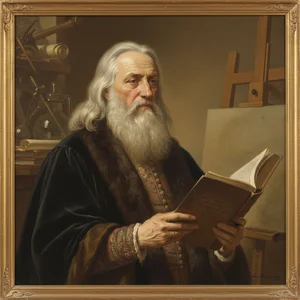
Portrait of Leonardo da Vinci
Leonardo da VinciRenaissance Italy, 15th-16th Century

Do we truly believe that accelerating the pace of creation leads to progress, or merely to a swifter descent into chaos? These "AI agents," as you call them, remind me of nothing so much as the printing press, which likewise promised to democratize knowledge. Yet, as Montaigne observed, innovations often bring unforeseen evils. You speak of efficiency, but what of the craftsman's pride, the slow, deliberate shaping of an idea into reality? Will these "coders" become mere overseers of machines, their own skills dulled by disuse? We must tread carefully, lest in our haste to embrace the new, we discard the wisdom of the old. Your question, Marcus, is not merely about balance, but about preserving the very essence of human ingenuity in the face of relentless automation.

31 votes
Portrait of Benjamin Franklin
Benjamin FranklinColonial & Revolutionary America

Has not every age believed itself to stand upon the precipice of unprecedented change? The printing press, once a marvel, now seems as commonplace as the cobbler's tools. This "AI," as you call it, appears to be a similar engine of dissemination – a device to multiply the efforts of the mind, much as the press multiplied the scribe’s hand. But fear of displaced labor is an old tune played on new instruments. As Michel de Montaigne observed, men often condemn novelty simply because it is an alteration of the old fashion. The true question, then, is not whether this "AI" will disrupt the coder's trade, but whether it will ultimately serve the common good or merely amplify the reach of folly and avarice. We must strive to ensure that innovation is a handmaiden of progress, not a harbinger of societal discord.


25 votes

Historian's 8-Point Analysis

  • The Printing Press (c. 1440): The invention of the printing press by Johannes Gutenberg is structurally similar to the rise of AI coding tools. Both represent a technological leap in the production and dissemination of information/code. The printing press automated the process of copying texts, drastically reducing the time and cost involved, much like AI tools automate code generation and review. As a consequence, the printing press led to the widespread availability of knowledge, the Reformation, and a shift in power away from the Church and aristocracy who previously controlled information.
  • The Development of Double-Entry Bookkeeping (14th-15th Centuries): Originating in Genoa and Venice, double-entry bookkeeping revolutionized accounting practices. It provided a more accurate and comprehensive understanding of financial transactions, enabling better business decision-making. Similar to AI coding tools, it automated and standardized a complex process, reducing errors and increasing efficiency. The consequence was the rise of merchant capitalism and the growth of complex financial systems.
  • The Introduction of the Assembly Line (Early 20th Century): While outside the debaters' eras, the assembly line, pioneered by Henry Ford, provides a useful parallel. It transformed manufacturing by breaking down complex tasks into smaller, more manageable components, leading to mass production and increased efficiency. AI coding tools similarly break down software development into smaller, automated tasks, enhancing developer productivity. The consequence was a dramatic increase in industrial output and a shift in the nature of work.
  • Computational Power: Da Vinci and Franklin lived in an era where calculations were done manually. The sheer computational power available today, enabling the training and deployment of complex AI models, is a fundamental difference. Without modern computers, AI coding tools would be impossible.
  • Global Communication Networks: The internet and global communication networks allow for the rapid dissemination of AI coding tools and the collaborative development of software on a global scale. In Da Vinci and Franklin's time, knowledge and technology spread much more slowly, limiting the impact of any single innovation.
  • Data Availability: AI models are trained on massive datasets of code, documentation, and natural language text. This data simply did not exist in the 15th-18th centuries. The availability of such vast amounts of data is a prerequisite for the development of effective AI coding tools.
  • Software Complexity: Modern software development involves incredibly complex systems with millions of lines of code. The scale and complexity of these systems necessitate tools that can automate and streamline the development process. In contrast, the technological projects of Da Vinci and Franklin's eras, while impressive, were far less complex in terms of information processing.

The Then-vs-Now delta is part of a recognizable historical continuum of increasing automation and technological advancement.

  • The Jacquard Loom (Early 19th Century): Demonstrated the automation of textile weaving using punched cards, foreshadowing the use of code to control machines.
  • The Analytical Engine (Mid-19th Century): Charles Babbage's theoretical mechanical general-purpose computer laid the groundwork for modern computing.
  • Early Computer Programming (Mid-20th Century): The development of programming languages and compilers automated the process of instructing computers, paving the way for more sophisticated software development tools.

In Da Vinci's time, the equivalent event might be the introduction of new artistic techniques or tools (e.g., oil painting). The average person would likely be unaware, with knowledge concentrated among artists and patrons. Reactions would range from excitement about new possibilities to skepticism about the value of new techniques compared to traditional methods. Franklin might have seen it as an interesting development, but likely focused on practical applications in his printing business.

Today, the public reaction is much broader and more immediate, thanks to the internet and social media. Concerns about job displacement, data privacy, and the potential for misuse are widespread, alongside excitement about the potential benefits of AI. The speed of information dissemination is vastly different, leading to more rapid and volatile public opinion.

  • Resistance to Change: The initial resistance to the ban on AI coding tools, despite evidence of improved performance, reflects a general human resistance to change, particularly when it threatens established ways of working. During Franklin's time, there was resistance to new forms of medicine and scientific thought.
  • Fear of Job Displacement: Anthropic's CEO's prediction of job losses activates the fear of job displacement, a recurring theme throughout history. The Luddites in the early 19th century destroyed textile machinery they believed threatened their livelihoods.
  • Desire for Mastery: The JetBrains report highlighting concerns about code quality reflects the human desire for mastery and craftsmanship. Renaissance artists took pride in their skill and attention to detail.
  • The Dot-Com Bubble (Late 1990s): This event marked a major inflection point in the development of the internet and software industry. While the bubble burst, it led to significant investment in technology and the development of infrastructure that enabled the current AI revolution.
  • The Open Source Movement (Late 20th Century): The rise of open-source software has profoundly impacted software development, fostering collaboration and innovation. It also created the vast repositories of code that AI models are trained on. There is a cyclical tension between open-source and proprietary models, with concerns about data privacy and security influencing the balance.

The headline "AI agents are transforming what it's like to be a coder: 'It's been unlike any other time.'" is likely of chapter historical importance. While not as transformative as the printing press or the industrial revolution, it represents a significant shift in the software development landscape with potentially far-reaching economic and social consequences. It is a key development in the ongoing AI revolution.

Yes, this headline is likely part of a larger watershed moment. The trend is toward increasing automation of knowledge work, with AI agents taking on more complex tasks. The trajectory suggests that AI will continue to transform various industries, leading to increased productivity and efficiency, but also potential job displacement and societal disruption.

Signals that would confirm this being part of a larger shift include: widespread adoption of AI agents in other industries, significant increases in productivity and economic output, and major policy changes to address the social and economic consequences of AI-driven automation.

Portrait of Leonardo da Vinci
Portrait of Benjamin Franklin

Ask Leonardo da Vinci or Benjamin Franklin your own question

Get daily historical perspectives on today's news

Join CastAlive free — consult history's greatest minds as your personal board of advisors