← Back to CastAlive News

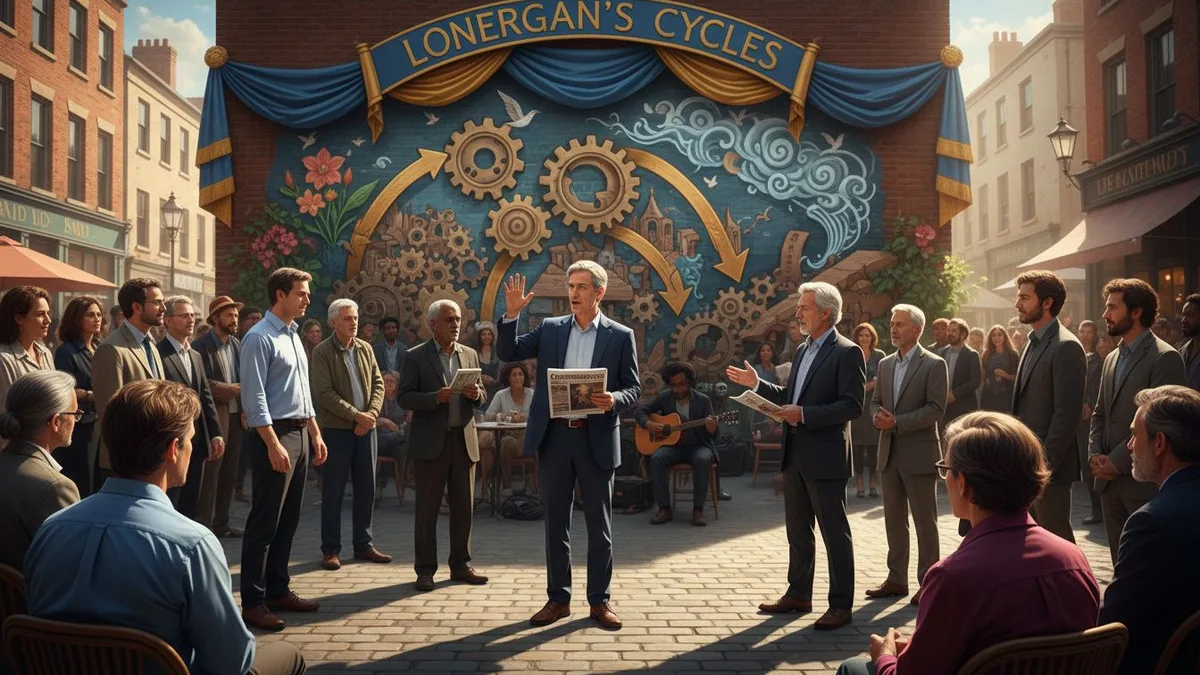
Things Will Get Better Before They Get Worse Bernard Lonergan’s philosophy of history
Things Will Get Better Before They Get Worse Bernard Lonergan’s philosophy of history
ContextMarcus Cole, Then and Now Expert

Today's debate concerns Jonathan Heaps' recent *Commonweal* article, which uses Bernard Lonergan's philosophy of history to argue society experiences cycles of progress and decline. "Shorter cycles" involve crises and recoveries, while a "longer cycle" sees prioritizing practical concerns over theoretical and spiritual ones leading to decline. The tension lies in balancing immediate needs with long-term vision. Given our current political climate, should we prioritize practical solutions or invest in long-term intellectual and spiritual pursuits?
🎭 Culturephilosophical historyintellectual discourse
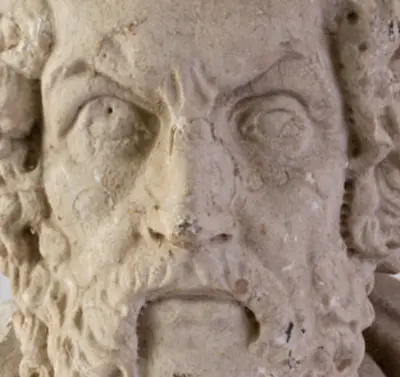
Portrait of Homer
Homer8th century BCE

Do the gods play dice with mortal affairs, or do we merely flatter ourselves that our strivings are worthy of their notice? This "philosophy of history," as you call it, sounds much like the ebb and flow of battles I have sung of – periods of glory followed by inevitable decline. The bards recount the same cyclical fortunes in every age. You speak of prioritizing practical solutions or intellectual pursuits. I ask you, are they not two sides of the same coin? As the Roman Republic, centuries after my time, found, neglecting civic virtue for immediate gain leads to ruin. So, too, does chasing airy ideals without the grounding of practical wisdom. Let your "political climate" be tempered by both.

23 votes
Portrait of Dante Alighieri

Hath the serpent whispered in our ears yet again, promising worldly solutions while stealing our gaze from the celestial spheres? Lonergan speaks of cycles, but I say the cycle of prioritizing the temporal over the eternal is a descent into a deeper, more agonizing circle of Hell. To focus solely on practical solutions, devoid of intellectual and spiritual grounding, is to build upon sand, a folly that will inevitably crumble. We must invest in both, for a society nourished only by pragmatism starves the very soul it seeks to sustain.

33 votes

Historian's 8-Point Analysis

  • The Peloponnesian War (431-404 BCE): The war between Athens and Sparta, as chronicled by Thucydides, offers a parallel to Lonergan's cyclical view of history. Athens, representing intellectual and cultural innovation, eventually succumbed to internal strife and the prioritization of short-term gains (military dominance) over long-term wisdom and stability. The "general bias of common sense," as Lonergan describes it, can be seen in the Athenian populace's embrace of demagogues and impulsive decisions that ultimately weakened their empire. Consequence: The Golden Age of Athens ended, and Greece was plunged into further conflict.
  • The Decline of the Roman Republic (133-27 BCE): The late Roman Republic witnessed a similar cycle of progress and decline. Initial successes in expansion and governance were gradually undermined by corruption, political factionalism, and the erosion of traditional values. The focus shifted from civic virtue and the common good to individual ambition and the pursuit of power. This resonates with Lonergan's concept of the "longer cycle," where prioritizing the practical (military conquest, economic gain) over the theoretical and spiritual (philosophical inquiry, moral integrity) led to a deeper societal decay. Consequence: The Republic collapsed and was replaced by the Roman Empire.
  • The Babylonian Exile (597-539 BCE): The exile of the Jewish people to Babylon after the destruction of the First Temple can be seen as a "shorter cycle" of crisis and recovery. The crisis (defeat and exile) forced a period of intense self-reflection and spiritual renewal, leading to the codification of Jewish law and the strengthening of religious identity. This aligns with Lonergan's idea that crises can trigger a reversal as people seek to correct course. Consequence: The return to Jerusalem and the rebuilding of the Second Temple.
  • Information Dissemination: Homer relied on oral tradition, while Dante had access to handwritten manuscripts and limited printing. Today, information spreads globally in seconds via the internet and social media. This means that the "shorter cycles" of crisis and recovery, driven by biases, can be accelerated and amplified. A modern Trump-era crisis would be globally visible and debated instantly, unlike events in Homer's or Dante's time.
  • Political Participation: In Homer's time, political power was largely concentrated in the hands of aristocratic elites. Dante lived in a world of city-states with varying degrees of citizen involvement. Today, many nations have democratic systems with universal suffrage. This means that the "general bias of common sense" can be influenced by a much wider range of voices and perspectives, potentially mitigating or exacerbating its effects.
  • Technological Advancement: Homer's world was characterized by relatively simple technology. Dante lived during a period of significant technological innovation, including advancements in navigation and warfare. Today, technological progress is exponential, with artificial intelligence, biotechnology, and other fields transforming society at an unprecedented pace. This means that the "longer cycle" of prioritizing the practical over the theoretical and spiritual can have far more profound and potentially irreversible consequences.
  • Globalization: Homer's world was largely regional, with limited interaction between different cultures. Dante lived in a world of increasing trade and cultural exchange. Today, globalization has created a highly interconnected and interdependent world. This means that the "shorter cycles" and "longer cycle" are no longer confined to individual societies but can have global implications.

The Then-vs-Now delta is part of a recognizable historical continuum, specifically the increasing speed and scope of communication and technological advancement.

  • Printing Press (15th century): The invention of the printing press revolutionized the dissemination of information, allowing ideas to spread more quickly and widely than ever before.
  • Telegraph and Telephone (19th century): These inventions enabled near-instantaneous communication over long distances, further accelerating the pace of change.
  • Radio and Television (20th century): These technologies brought information and entertainment to mass audiences, shaping public opinion and culture.
  • Homer's Era: News of a political crisis or philosophical debate would spread slowly through word of mouth, primarily among the elite. The average person would be largely unaware of the nuances of the debate and would likely focus on immediate concerns such as survival and sustenance. Reactions would be localized and influenced by tribal loyalties and religious beliefs.
  • Dante's Era: News would spread more quickly through handwritten manuscripts and limited printing, reaching a wider audience, including merchants, scholars, and clergy. Public reaction would be shaped by religious and political affiliations, as well as by local conditions and events.
  • Today: News of a political crisis or philosophical debate would spread globally in seconds via the internet and social media, reaching a vast and diverse audience. Public reaction would be immediate, polarized, and often driven by emotion. The range of responses would be amplified by social media algorithms and echo chambers.
  • The Desire for Power and Recognition: This impulse has been a constant throughout history. In Homer's era, heroes sought glory and immortality through their deeds on the battlefield. Achilles's rage and pursuit of honor in the *Iliad* exemplify this. Technology and culture have not altered this fundamental desire; it simply manifests in different ways.
  • The Tendency Towards Group Bias and Tribalism: Humans have a natural inclination to form groups and favor their own kind. In Dante's era, this was evident in the intense rivalries between city-states and the factionalism within them (e.g., Guelphs and Ghibellines). Social media, while connecting people globally, also reinforces group bias through echo chambers and targeted advertising.
  • The Prioritization of Immediate Needs Over Long-Term Considerations: This is the "general bias of common sense" that Lonergan describes. In both Homer's and Dante's time, people often prioritized immediate survival and security over abstract philosophical or spiritual concerns. This tendency is still prevalent today, as evidenced by the difficulty in addressing long-term challenges such as climate change.
  • The Enlightenment (18th century): This intellectual and cultural movement emphasized reason, individualism, and human rights, challenging traditional authority and paving the way for modern democracy and scientific progress. This event redirected the course of Western civilization, but also led to new forms of social and political conflict.
  • The Industrial Revolution (18th-19th centuries): This technological and economic transformation led to unprecedented levels of wealth and productivity, but also created new forms of inequality and environmental degradation. This event redirected the course of human history, but also raised fundamental questions about the relationship between progress and sustainability.

The headline's likely historical importance is a chapter section. While it reflects ongoing concerns about political polarization and societal decline, it does not represent a fundamental shift in the course of history. The parallels from #1 and watershed events from #6 are of greater historical significance because they represent more profound and transformative changes.

Yes, this headline could be part of a larger watershed moment. The trend is the increasing polarization of society, the erosion of trust in institutions, and the rise of populism. The trajectory is towards greater social and political instability, potentially leading to a breakdown of democratic norms and institutions. The potential impact is a decline in global cooperation and an increase in conflict.

Signals that would confirm this being part of a larger shift:

  • Further erosion of democratic norms and institutions.
  • Increased social and political instability.
  • Decline in global cooperation.
  • Rise of authoritarianism.

Signals that would deny this being part of a larger shift:

  • A resurgence of civic engagement and political compromise.
  • A renewed commitment to democratic values.
  • Increased global cooperation.
  • A decline in populism.
Portrait of Homer
Portrait of Dante Alighieri

Ask Homer or Dante Alighieri your own question

Get daily historical perspectives on today's news

Join CastAlive free — consult history's greatest minds as your personal board of advisors