← Back to CastAlive News

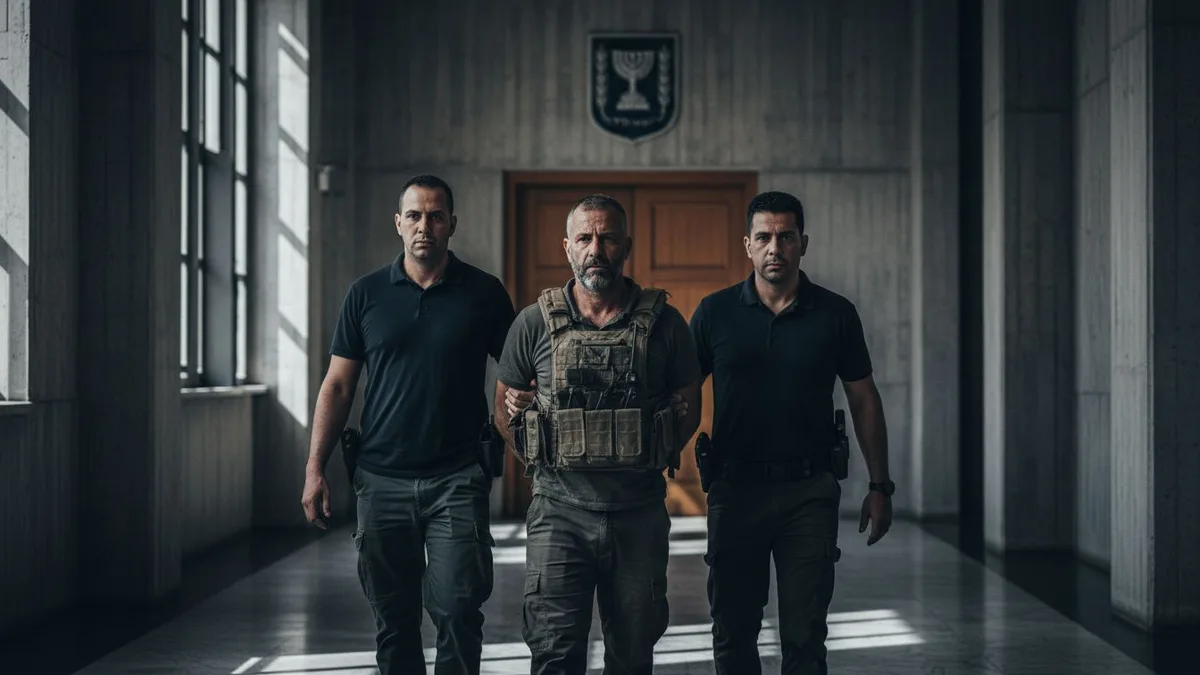
Israel plans to charge a man filmed firing a gun during an attack on a Palestinian activist
Israel plans to charge a man filmed firing a gun during an attack on a Palestinian activist
ContextMarcus Cole, Then and Now Expert

Israeli prosecutors plan to charge Yinon Levi, an Israeli settler, with reckless homicide after he was filmed firing a gun during an attack that resulted in the death of Palestinian activist Awdah Hathaleen.This comes amid rising settler violence in the West Bank and international scrutiny.The underlying tension is whether Israel will hold its citizens accountable for violence against Palestinians.Should settler violence be prosecuted as rigorously as other crimes, or are there justifiable exceptions.
🏛️ Politicssettler violencePalestinian conflictlegal accountability
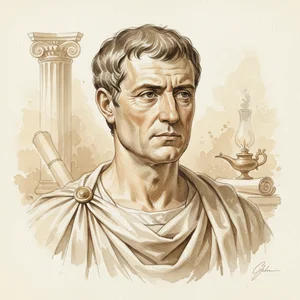
Portrait of Marcus Tullius Cicero

Does justice bend to the will of the powerful, or does it stand as an unyielding guardian of right? This news from afar echoes the tribulations of the Gracchi, whose efforts to aid the plebs met a bloody end. To charge this Levi is a start, but will the prosecution be as fervent as it would were the victim a Roman citizen? The ability to capture and disseminate images with such speed—a veritable avalanche of information—is novel. Yet, the underlying question remains: Will law be applied fairly, or will tribal loyalties prevail? Rome asked this question and answered it badly; I am curious whether you will do better.
30 votes
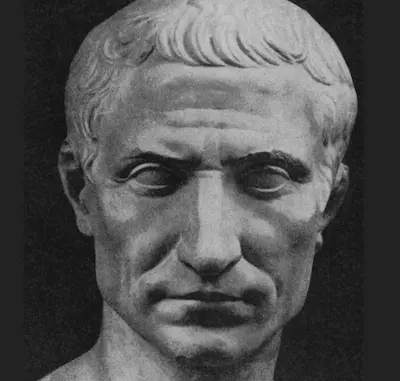
Portrait of Julius Caesar
Julius Caesar100-44 BC

Do the strong not always find reasons to justify their actions? This "reckless homicide," as you call it, echoes the Gracchi brothers' fate, where the powerful labeled reformers as threats to justify their elimination. You possess devices that capture images and spread them faster than a legion's march, yet justice remains ensnared by the same ancient biases. Will Israel, like Rome, succumb to internal strife by favoring its own, or will it uphold a law that applies equally to all, regardless of tribe? The question is not whether exceptions are justifiable, but whether justice itself can truly exist when power dictates its terms.
33 votes

Historian's 8-Point Analysis

  • The Trial of the Gracchi Brothers (133-121 BCE): This event shares structural similarities with the modern headline regarding settler violence and legal accountability. Tiberius Gracchus, and later his brother Gaius, advocated for land redistribution to benefit plebeians, often clashing with wealthy landowners (patricians) who held vast estates. The Gracchi were accused of undermining the Republic and acting against the interests of Rome, ultimately leading to their assassinations. The structural similarity lies in the conflict between a group perceived as acting in the interests of a marginalized population (Palestinians/plebeians) and a more powerful group (settlers/patricians) who view their actions as a threat to the established order. The consequence was increased political polarization and violence, ultimately contributing to the decline of the Roman Republic.
  • The Social War (91-87 BCE): This war erupted when Rome's Italian allies, who had contributed significantly to Rome's military power, were denied Roman citizenship and its associated rights. The allies revolted, demanding equal status. This parallels the Palestinian conflict in that a group residing within a territory controlled by a dominant power seeks equal rights and treatment under the law. The consequence of the Social War was the eventual granting of citizenship to the Italian allies, albeit after a bloody conflict. This highlights the potential for violence when legal and political rights are denied to a segment of the population.
  • Ubiquitous Documentation: The existence of video evidence, as mentioned in the headline, is a significant difference. While eyewitness accounts existed in Cicero and Caesar's time, the ability to record events from multiple vantage points and disseminate them globally via the internet is unprecedented. This makes accountability far more difficult to evade.
  • Global Awareness & Scrutiny: News in ancient Rome traveled relatively slowly and was often filtered through political channels. Today, the internet and social media allow for near-instantaneous global dissemination of information. This subjects Israel's actions to intense international scrutiny, influencing public opinion and potentially impacting diplomatic relations.
  • International Legal Frameworks: While concepts of justice existed in Roman law, modern international law and human rights organizations provide a framework for judging actions within the Israeli-Palestinian conflict. The potential for international legal action against individuals or the state itself adds another layer of complexity absent in Cicero and Caesar's time.
  • Political Polarization: While political factions and rivalries existed in the Roman Republic, the current level of global political polarization, fueled by social media and partisan news outlets, amplifies reactions to events like this. The "reckless homicide" charge will likely be interpreted through pre-existing ideological lenses, making objective assessment difficult.

The Then-vs-Now delta is part of a recognizable historical continuum regarding information dissemination and legal accountability.

  • The Printing Press (15th Century): Allowed for wider distribution of information, challenging the control of the elite.
  • The Telegraph (19th Century): Enabled near-instantaneous communication across long distances, accelerating news cycles.
  • Radio and Television (20th Century): Brought visual and auditory information into homes, creating a shared media experience.

Each of these steps increased the speed and reach of information, culminating in the internet and social media. Similarly, the evolution of legal frameworks from Roman law to modern international law represents a gradual but continuous development.

In Cicero and Caesar's time, an equivalent event (e.g., a Roman citizen attacking a non-citizen in a disputed territory) would likely have been viewed through the lens of Roman dominance and the perceived legitimacy of Roman expansion. Information would have been disseminated primarily through word-of-mouth, public announcements, and written correspondence among the elite. The average Roman citizen might have viewed the incident as an unfortunate but perhaps justifiable consequence of maintaining order and expanding Roman influence.

Today, the public reaction is far more diverse and polarized. The availability of video evidence and the global reach of social media will likely lead to widespread condemnation from some quarters and justification or denial from others. Human rights organizations and international bodies will likely issue statements and potentially pursue legal action.

  • Tribalism/In-Group Bias: The tendency to favor one's own group and view outsiders with suspicion or hostility. In Cicero's time, this manifested in the deep divisions between patricians and plebeians, Romans and non-Romans. Despite technological advancements, this bias remains a powerful force, influencing how people interpret events and assign blame.
  • Desire for Justice/Revenge: The innate human desire for fairness and retribution when wronged. The assassination of the Gracchi brothers demonstrates this. Today, this desire fuels calls for accountability and justice in the Israeli-Palestinian conflict, but also can lead to cycles of violence and retaliation.
  • Empathy/Compassion: The capacity to understand and share the feelings of others. While tribalism can limit empathy, the suffering of the Palestinian people, as documented in "No Other Land," can evoke compassion in individuals regardless of their background.
  • The Balfour Declaration (1917): This British declaration, expressing support for the establishment of a Jewish homeland in Palestine, fundamentally altered the trajectory of the region. It laid the groundwork for the creation of Israel and the subsequent displacement of Palestinians, setting the stage for the ongoing conflict.
  • The Six-Day War (1967): This war resulted in Israel's occupation of the West Bank, Gaza Strip, and other territories, further exacerbating the conflict and leading to the growth of Israeli settlements in the occupied territories.

The Israeli-Palestinian conflict has been characterized by cycles of violence, peace negotiations, and renewed conflict. These cycles are driven by competing claims to land, differing interpretations of historical events, and the failure to achieve a lasting political solution.

The headline is likely a chapter section in the broader history of the Israeli-Palestinian conflict. While the charging of Yinon Levi is a notable event, it is unlikely to fundamentally alter the course of the conflict. It is one instance within a larger pattern of settler violence and the ongoing struggle for justice and accountability. The Balfour Declaration and the Six-Day War were far more significant inflection points that shaped the conflict's trajectory.

This headline could be part of a larger watershed moment if it signals a genuine shift in Israel's willingness to hold settlers accountable for violence against Palestinians. However, several signals would need to be confirmed:

  • Consistent Prosecution: A pattern of prosecuting settlers for violence against Palestinians, rather than isolated cases.
  • Policy Changes: Changes in Israeli government policies regarding settlement expansion and the treatment of Palestinians in the occupied territories.
  • International Pressure: Increased international pressure on Israel to address settler violence and respect Palestinian rights.

If these signals are not confirmed, the headline is more likely an isolated event with limited long-term impact. The recent approval of designating large areas of the West Bank as "state property" suggests that a larger shift towards accountability is unlikely.

Portrait of Marcus Tullius Cicero
Portrait of Julius Caesar

Ask Marcus Tullius Cicero or Julius Caesar your own question

Get daily historical perspectives on today's news

Join CastAlive free — consult history's greatest minds as your personal board of advisors