← Back to CastAlive News

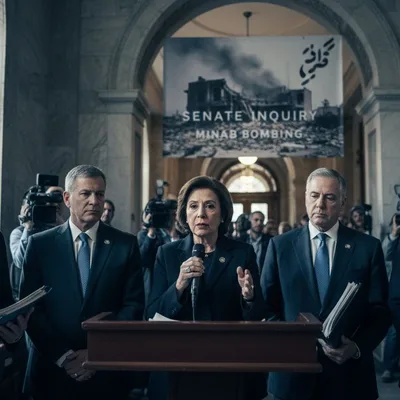
Hillary Clinton accuses Trump administration of Epstein files cover-up in BBC interview

BBC News|Feb 18
Hillary Clinton accuses Trump administration of Epstein files cover-up in BBC interview
ContextMarcus Cole, Then and Now Expert

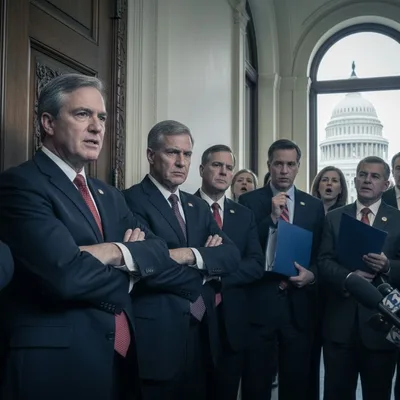
Hillary Clinton accuses the Trump administration of obstructing justice by "slow-walking" the release of Epstein files, a claim the White House denies.Millions of pages have been released, but some remain sealed, citing privacy concerns.With the Clintons scheduled to testify before Congress, the underlying tension is whether the full truth about Epstein's network will be revealed or if political interests are hindering transparency.Should the remaining Epstein files be released, even if they contain sensitive information.
🏛️ PoliticsEpstein investigationpolitical accountabilitylegal transparency
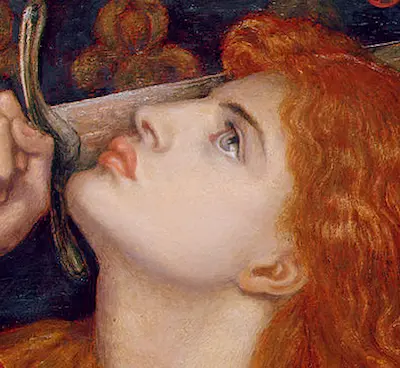
Portrait of Joan of Arc
Joan of Arc1412-1431

Must truth forever be chained to the whims of princes? That Lady Clinton accuses a former administration of hindering justice in this "Epstein files" matter stirs memories of the trials I faced, where political machinations sought to discredit divine purpose. This modern method of disseminating information—what you call a "BBC interview"—resembles the town criers of old, yet amplified a thousandfold. Should these "Epstein files" be released? If they contain truths that expose corruption and protect the innocent, then yes. Though Machiavelli may argue for veiled secrets as a tool of governance, I say justice, like God's light, must illuminate all corners, even those preferred in darkness.
29 votes
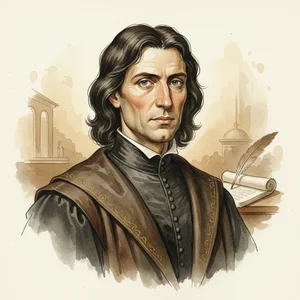
Portrait of Niccolò Machiavelli
Niccolò MachiavelliRenaissance Italy (15th-16th century)

That shadows of suspicion should cling to the powerful is hardly novel; I have seen it in republics and principalities alike. Whether these “Epstein files” should be unfurled like a banner for all to see hinges not on some naive pursuit of absolute truth, but on what serves the greater good of the state. I recall the Dreyfus affair, a tempest of accusations and counter-accusations that threatened to tear France asunder. This modern clamor, amplified by what you call "social media," strikes a similar chord. If releasing these documents strengthens the republic, then release them. But if it merely fuels factionalism and weakens governance, seal them tighter than a Borgia’s secrets. The pursuit of justice must not become a tool for political sabotage.

26 votes

Historian's 8-Point Analysis

  • The Dreyfus Affair (1894-1906): A Jewish French army officer, Alfred Dreyfus, was falsely accused of treason. The case became a political scandal, dividing France between Dreyfusards (those who believed in his innocence) and anti-Dreyfusards (those who believed in his guilt). The structural similarity lies in the accusation of a cover-up, the politicization of a legal case, and the use of the case to attack political opponents. In the Dreyfus Affair, the military establishment was accused of covering up evidence to protect its reputation. The consequence was a deep societal division and a questioning of the integrity of the French government.
  • Watergate Scandal (1972-1974): A break-in at the Democratic National Committee headquarters in the Watergate Hotel led to a major political scandal involving President Richard Nixon and his administration. The structural similarity lies in the accusation of a high-level cover-up, the use of government resources for political gain, and the potential for impeachment. Nixon was accused of obstructing justice and abusing his power. The consequence was Nixon's resignation and a loss of public trust in the government.
  • The Profumo Affair (1963): British Secretary of State for War John Profumo had an affair with Christine Keeler, who was also involved with a Soviet intelligence officer. The scandal involved allegations of espionage and security breaches. The structural similarity to the Clinton/Epstein issue is the implication of powerful figures in a scandal involving moral turpitude and potential national security risks. The consequence was Profumo's resignation and damage to the reputation of the Conservative government.
  • Mass Media & Social Media: In Joan of Arc's time, information spread primarily through word of mouth, sermons, and limited written documents. Machiavelli's era saw the rise of the printing press, but information dissemination was still relatively slow and controlled. Today, news and accusations spread instantly through mass media and social media, amplifying the impact and reach of accusations like Clinton's. This allows for immediate public reaction and pressure on authorities, a stark contrast to the slower pace of information dissemination in the past.
  • Political Polarization: While political factions existed in both Joan of Arc and Machiavelli's times, the level of polarization and partisan media seen today is unprecedented. The 24/7 news cycle and social media algorithms reinforce existing biases, making it more difficult to have a nuanced discussion about complex issues like the Epstein case.
  • Legal Transparency Laws: Modern legal transparency laws like the Epstein Files Transparency Act, passed in 2025, are a relatively recent development. While some legal records existed in the past, the expectation of widespread public access to sensitive documents is a modern phenomenon. This creates a higher standard of accountability for government officials.
  • Global Interconnectedness: The Epstein case involves individuals from multiple countries, highlighting the interconnectedness of modern society. This makes it more difficult to contain scandals and allows for international scrutiny of national governments. In contrast, Joan of Arc and Machiavelli operated in a world with more limited international interaction.

The Then-vs-Now delta is part of a recognizable historical continuum related to the increasing accessibility of information and the rise of public opinion as a political force.

  • The Printing Press (15th Century): Enabled wider dissemination of information, challenging the authority of the Church and the state.
  • The Rise of Newspapers (18th-19th Centuries): Created a mass media landscape, allowing for the spread of political ideas and the formation of public opinion.
  • Radio and Television (20th Century): Further amplified the reach of mass media, allowing for direct communication between political leaders and the public.

In Joan of Arc's time, accusations against powerful figures would primarily be spread through gossip and rumors, with limited ability for the average person to verify the information. Public reaction would be heavily influenced by religious beliefs and loyalty to the monarchy. In Machiavelli's era, the printing press would allow for wider dissemination of information, but access would still be limited to the educated elite. Public reaction would be shaped by political factions and the interests of powerful families. Today, the average person has instant access to a vast amount of information, including primary source documents and expert analysis. Public reaction is shaped by political polarization, social media echo chambers, and a general distrust of authority.

  • The Desire for Justice: The impulse to see justice served, especially in cases involving powerful individuals, is a constant throughout history. In Joan of Arc's time, the desire for justice motivated her to fight for the liberation of France.
  • The Tendency Towards Conspiracy Theories: The human tendency to see patterns and connections where they may not exist, leading to the creation of conspiracy theories, is a recurring phenomenon. In Machiavelli's era, conspiracies were common in Italian politics, with powerful families plotting against each other.
  • The Appeal of Scapegoating: The tendency to blame individuals or groups for societal problems, often based on prejudice or misinformation, is a persistent human trait. The Dreyfus Affair offers a clear example.
  • The Reformation (16th Century): The Reformation, sparked by Martin Luther's challenge to the Catholic Church, marked a major shift in the relationship between individuals and authority. It led to religious wars and the fragmentation of Europe, but it also paved the way for greater religious freedom and individual expression. This event is relevant because it demonstrates the power of individuals to challenge established institutions and the potential for such challenges to lead to widespread social and political change.
  • The Enlightenment (18th Century): The Enlightenment emphasized reason, individual rights, and the separation of powers. It led to the American and French Revolutions and the rise of democratic ideals. This event is relevant because it established the principles of transparency, accountability, and the rule of law, which are central to the current debate over the Epstein files.

The headline's likely historical importance is a chapter section. While the Epstein case is a significant event with potentially far-reaching consequences, it is unlikely to be a book-defining moment. The Dreyfus Affair and Watergate had more profound impacts on their respective societies. The Epstein case is more likely to be remembered as a symptom of broader trends, such as the rise of political polarization, the decline of trust in institutions, and the increasing scrutiny of powerful individuals.

Yes, this headline could be part of a larger watershed moment. The trend is towards increasing scrutiny of elites and a growing demand for transparency and accountability. This trend is driven by social media, political polarization, and a general distrust of institutions. The potential impact is a further erosion of trust in government and a rise in populism. Signals that would confirm this being part of a larger shift include:

  • Widespread public protests and demonstrations.
  • Significant changes in campaign finance laws and ethics regulations.
  • A decline in voter turnout and political engagement.
  • The rise of new political parties and movements that challenge the status quo.
Portrait of Joan of Arc
Portrait of Niccolò Machiavelli

Ask Joan of Arc or Niccolò Machiavelli your own question

Get daily historical perspectives on today's news

Join CastAlive free — consult history's greatest minds as your personal board of advisors