← Back to CastAlive News

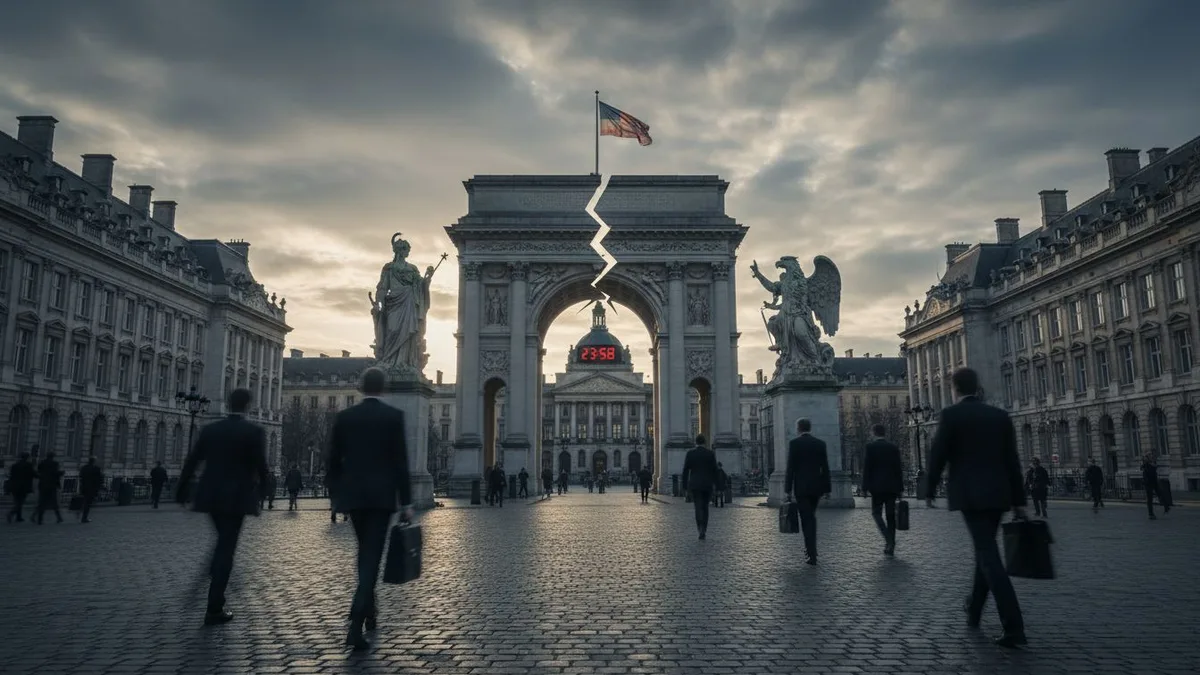
Can Americas Allies Survive Transatlantic Ruptue
Can Americas Allies Survive Transatlantic Ruptue
ContextMarcus Cole, Then and Now Expert

The transatlantic alliance, forged in the aftermath of WWII, faces unprecedented strain.Disagreements over trade, defense spending, and foreign policy under President Trump are testing the bonds between the US and its European allies.Populist movements on both sides of the Atlantic further complicate matters.The underlying tension is whether shared values and security interests can overcome these divisions.
🏛️ Politicstransatlantic relationsdiplomatic tensionsinternational alliance
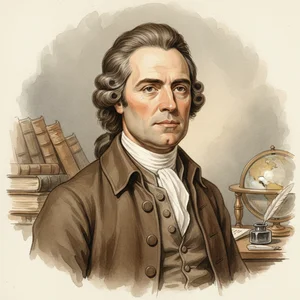
Portrait of John Locke
John Locke1632-1704

Whether shared values truly bind nations, or merely the fleeting convenience of mutual advantage, is a question as old as alliances themselves. The Anglo-Dutch Wars, driven by competing trade interests despite a shared Protestant faith and prior alliance against Spain, offer a grim reminder that self-interest often trumps sentiment. This "transatlantic rupture," as you call it, seems less a cataclysm and more a predictable consequence of shifting power. I confess I struggle to grasp these "globalized supply chains," but they appear to be a more intricate version of the trade routes that fueled conflict in my own time. The question has not changed; only the scale. The alliance will endure only so long as it serves the perceived interests of each party. When that perception shifts, so too will the alliance.

32 votes
Portrait of Jean-Jacques Rousseau

That nations, like men, are corrupted by too much ease and too little virtue is a lamentable truth. This "transatlantic alliance," as you call it, suffers from precisely that ailment; I recognize the symptoms. The pursuit of self-interest, a principle as old as the human heart, now manifests on a scale previously unimaginable. Like the Anglo-Dutch wars, where former allies became rivals over trade, these modern disagreements reveal a similar shifting of power and competing desires. Your "globalized supply chains" are but elaborate trade routes, vulnerable to the same passions that drove nations to conflict centuries ago. Can shared values overcome such division? Perhaps. But I fear that, as Paine observed, self-interest will always trump sentiment, and the alliance will crumble, not from external assault, but from internal decay.
21 votes

Historian's 8-Point Analysis

  • The Anglo-Dutch Wars (1652-1674): These conflicts, driven by commercial rivalry and naval power, showcase a rupture between nations that were once allies against Spain. The structural similarity lies in the shift from shared interests (anti-Spanish alliance) to competing interests (trade dominance), leading to open conflict. Consequence: A series of naval battles, shifting alliances, and ultimately, a decline in Dutch dominance and the rise of British naval power.
  • The War of the Spanish Succession (1701-1714): This war saw a breakdown in the alliance between England and France, despite previous periods of cooperation. The structural similarity lies in shifting power dynamics and competing claims to the Spanish throne. Consequence: A major European war, redrawing of the map of Europe, and further consolidation of British power.
  • The Peloponnesian War (431-404 BC): While predating both Locke and Rousseau, the conflict between Athens and Sparta offers a relevant parallel. The structural similarity lies in the breakdown of a previously stable system of alliances due to perceived imbalances of power, diverging interests, and internal political pressures within the allied states. Consequence: A prolonged and devastating war that weakened both sides and ultimately led to the decline of Athenian power.
  • Speed and Scope of Information Dissemination: In Locke and Rousseau's time, news traveled slowly via letters, pamphlets, and word of mouth. Today, information spreads globally in seconds through the internet and social media, amplifying reactions and potentially escalating tensions far more rapidly.
  • Economic Interdependence: While trade existed in the 17th and 18th centuries, the level of economic interdependence today is vastly different. Global supply chains, multinational corporations, and complex financial networks mean that a rupture in transatlantic relations could have far more widespread and immediate economic consequences than in the past.
  • Nuclear Weapons: The existence of nuclear weapons introduces an entirely new dimension to international relations. The potential for catastrophic escalation acts as both a deterrent and a source of heightened anxiety in any major international crisis.
  • Rise of Non-State Actors: The influence of non-state actors, such as multinational corporations, NGOs, and terrorist organizations, is far greater today than in the debaters' era. These actors can both exacerbate and mitigate tensions between nations, adding complexity to the transatlantic relationship.

The Then-vs-Now delta is part of a recognizable historical continuum, particularly regarding the speed and scope of information dissemination and economic interdependence.

  • The Printing Press (15th Century): Increased the speed and reach of information compared to handwritten manuscripts, contributing to the Reformation and the rise of nation-states.
  • The Telegraph (19th Century): Enabled near-instantaneous communication across long distances, revolutionizing business, diplomacy, and warfare.
  • The Internet (20th Century): Created a global network for instant communication and information sharing, further accelerating the pace of events and amplifying public opinion.

In Locke and Rousseau's era, the average person would likely have been less directly impacted by a transatlantic rupture. Information would have been limited and filtered through elite channels. Public reaction would have been largely confined to educated circles and those directly involved in trade or government. Today, the average person is bombarded with information and opinions on the issue, leading to potentially more volatile and polarized public reactions. Social media allows for rapid mobilization of public opinion and direct engagement with political leaders.

  • Fear of the "Other": The tendency to distrust and fear those who are different or foreign remains a constant. In Locke and Rousseau's time, this manifested in religious wars and national rivalries. Today, it can be seen in anti-immigrant sentiment and the rise of nationalism.
  • Desire for Security: The fundamental human need for safety and security remains unchanged. In the 18th century, this drove alliances and military buildups. Today, it fuels debates over defense spending and the role of international organizations like NATO.
  • Pursuit of Self-Interest: Individuals and nations alike are driven by self-interest. In the 17th and 18th centuries, this led to mercantilist policies and colonial expansion. Today, it manifests in trade disputes and competition for resources.
  • The End of World War II (1945): This event marked the beginning of the modern transatlantic alliance, with the United States and Europe uniting to contain the Soviet Union and rebuild the post-war world. It established a framework for cooperation on security, economic, and political issues.
  • The Fall of the Berlin Wall (1989): This event signaled the end of the Cold War and the collapse of the Soviet Union, leading to a period of American dominance and a re-evaluation of the transatlantic relationship. The absence of a common enemy led to increased divergence in priorities and interests.

The likely historical significance of today's headline is a chapter section. While a rupture in transatlantic relations would be a significant event with far-reaching consequences, it is unlikely to be as transformative as the end of World War II or the fall of the Berlin Wall. It represents a shift in the existing order, but not necessarily a complete collapse.

Yes, this headline could be part of a larger watershed moment, signaling a decline in the liberal international order and a shift towards a more multipolar world. The trend is towards increasing nationalism, protectionism, and geopolitical competition. The potential impact is a fragmentation of the global system, with the rise of new power blocs and increased instability. Signals that would confirm this being part of a larger shift include: further erosion of international institutions, escalation of trade wars, and increased military conflicts. Signals that would deny this include: a renewed commitment to multilateralism, a resolution of trade disputes, and a de-escalation of geopolitical tensions.

Portrait of John Locke
Portrait of Jean-Jacques Rousseau

Ask John Locke or Jean-Jacques Rousseau your own question

Get daily historical perspectives on today's news

Join CastAlive free — consult history's greatest minds as your personal board of advisors