← Back to CastAlive News

Vietnam attends Board of Peace and the effort to bring peace to Gaza
Vietnam attends Board of Peace and the effort to bring peace to Gaza
ContextMarcus Cole, Then and Now Expert

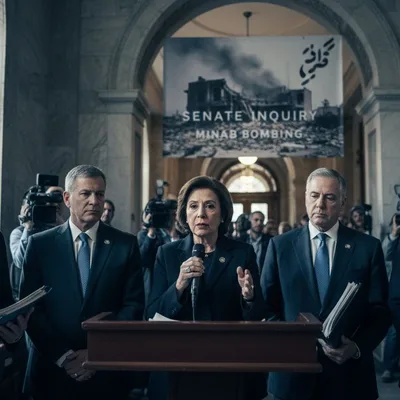
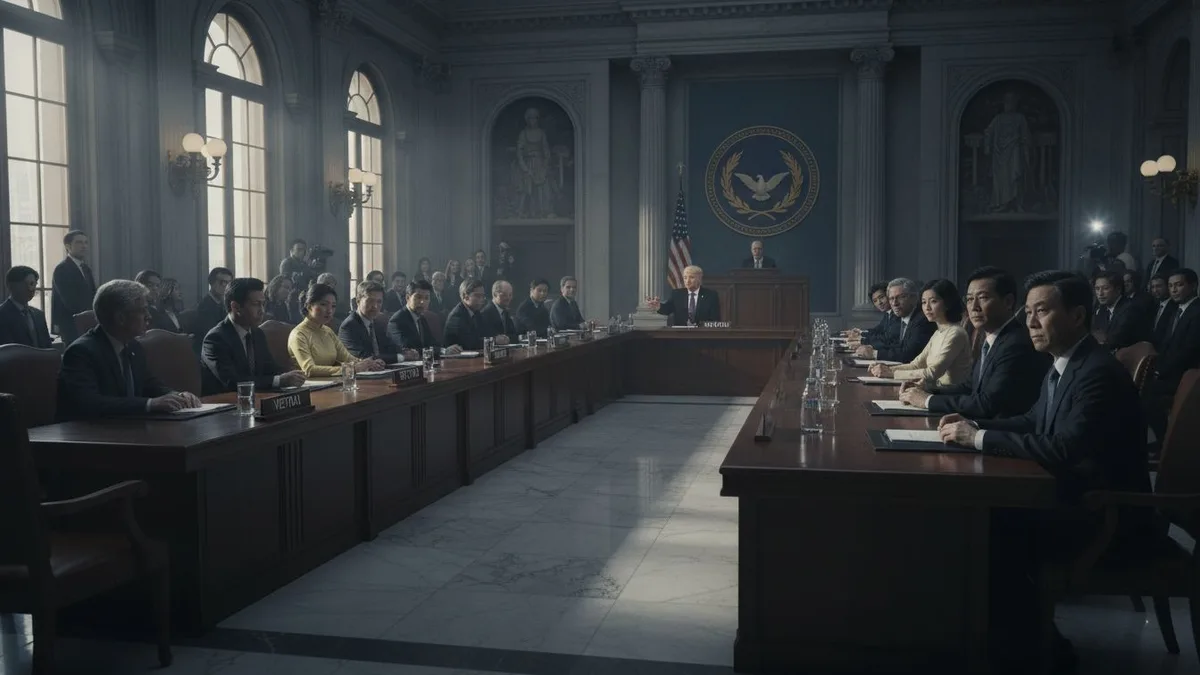
The US-led Board of Peace, designed to implement a Gaza peace plan, has convened its inaugural meeting in Washington D.C.Vietnam, invited by President Trump, is a founding member, signaling a broadening of international involvement.The underlying tension lies in whether this US-led initiative can achieve lasting peace in a historically volatile region.Can a multilateral effort, even with unlikely participants, succeed where past attempts have failed, or is this just another exercise in great power politics.
🏛️ Politicsinternational diplomacyGaza peace efforts
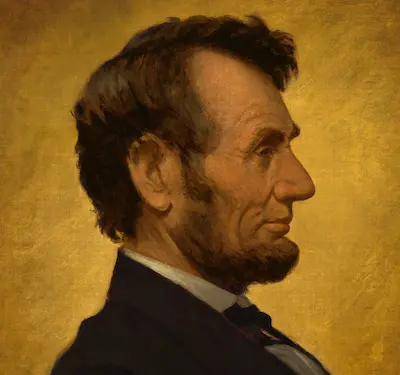
Portrait of Abraham Lincoln

Whether this Board of Peace can mend the broken places in Gaza is a question for the ages, akin to asking if gentle rain can quench a raging fire. Yet, I see in Vietnam's presence a glimmer of hope, a testament to the enduring power of reconciliation. As I understand it, the goal is lasting peace. Lasting peace is only achieved through equality. Perhaps this unlikely alliance can, by some miracle, transcend past failures. We must remember that even the most ambitious endeavors are paved with uncertainty. I'm reminded of Plutarch's account of Epaminondas, who stood firm for equality, even when facing powerful opposition. Perhaps, this initiative, too, can find strength in such resolve.

23 votes
Portrait of John C. Calhoun

That the United States presumes to orchestrate peace in Gaza, inviting even Vietnam to the table, smacks of an ambition as boundless as it is destined to fail. Recall the Congress of Vienna, convened to forge a lasting peace after the Napoleonic Wars. Yet, even with powers exhausted by conflict, true accord remained elusive, ever shadowed by suspicion and the relentless pursuit of national advantage. This "Board of Peace," as it is called, is naught but a gilded cage built to contain American interests. The instantaneous transmission of news across continents, what you term "24-hour news," merely amplifies the discord. Lasting peace will not be achieved through forced agreements and self-serving alliances. It will only be achieved through equal states' rights.
27 votes

Historian's 8-Point Analysis

  • The Congress of Vienna (1814-1815): Following the Napoleonic Wars, European powers convened to establish a lasting peace and redraw political boundaries. The structural similarity lies in the attempt to create a new international order after a period of intense conflict, with major powers (like the US today) playing a leading role in shaping the peace. The consequence was a period of relative peace in Europe (the Concert of Europe), although it also suppressed nationalist and liberal movements.
  • The Berlin Conference (1884-1885): European powers gathered to divide Africa among themselves, establishing rules for colonization and trade. The structural similarity is the establishment of an international framework (the Board of Peace) led by a dominant power (the US) to manage a complex geopolitical situation (Gaza). The consequence was the formalization of European colonialism in Africa, with devastating long-term effects on the continent.
  • The Treaty of Versailles (1919): Concluded World War I, aiming to establish lasting peace through the League of Nations and impose terms on Germany. The structural similarity is the attempt to create a multilateral organization (Board of Peace) to prevent future conflicts and enforce peace terms. The consequence was the failure of the League of Nations to prevent World War II, partly due to the harsh terms imposed on Germany and the US's failure to join.
  • Communication Technology: In Lincoln and Calhoun's time, news of international events traveled slowly via newspapers and letters, taking weeks or months to reach the average citizen. Today, news of the Gaza Board of Peace meeting is instantly available globally through the internet, social media, and 24-hour news channels. This immediacy creates greater public pressure and scrutiny on the peace process.
  • International Organizations: During Calhoun's era, international organizations were rudimentary or non-existent. The concept of a formal "Board of Peace" involving multiple nations, with a defined charter and headquarters, would have been novel. Today, the existence of the United Nations, the World Bank, and numerous other international bodies makes such an initiative seem more commonplace, though still subject to political maneuvering.
  • Air Travel and Global Diplomacy: Lincoln and Calhoun would have found the idea of the General Secretary of Vietnam flying to Washington D.C. for a three-day meeting almost unimaginable. The ease and speed of modern air travel facilitate rapid diplomatic engagement and allow for face-to-face negotiations that were previously impossible.
  • US Global Power Projection: In Lincoln's time, the US was primarily focused on domestic issues and the Civil War. While Calhoun advocated for Southern interests, the US was not a global superpower projecting its influence worldwide. Today, the US is a dominant global power with significant economic and military influence, making its leadership in the Board of Peace a reflection of its geopolitical position.

The Then-vs-Now delta is part of a recognizable historical continuum of increasing globalization and interconnectedness, driven by technological advancements and evolving geopolitical dynamics.

  • Mid-19th Century (Calhoun's Era): The rise of steamships and the telegraph began to shrink distances and improve communication, but international cooperation was still limited.
  • Early 20th Century: The development of radio and airplanes further accelerated globalization, leading to the creation of the League of Nations after World War I.
  • Late 20th Century: The advent of television and jet travel created a truly globalized world, with the United Nations playing a more prominent role in international affairs.
  • 21st Century: The internet and social media have created an unprecedented level of interconnectedness, with instant global communication and the rise of non-state actors in international relations.

In Lincoln and Calhoun's era, the average person would have had limited and delayed information about an event like Vietnam joining a peace effort in Gaza. News would arrive weeks later, filtered through newspapers with partisan biases. Reactions would likely be confined to local discussions and political debates, with little opportunity for direct engagement with the issue. Today, the public has instant access to diverse information sources and can express opinions through social media, protests, and online activism. Public reaction would be immediate, widespread, and potentially highly polarized.

  • Desire for Peace and Security: Throughout history, people have yearned for peace and security. In Lincoln's time, this was evident in the widespread desire to end the Civil War and restore national unity. Despite technological and cultural changes, the fundamental human desire for safety and stability remains constant.
  • Suspicion of Foreign Powers: A natural inclination to distrust foreign powers and their motives persists across eras. During Calhoun's time, suspicion of European powers' intentions in the Americas was a common sentiment, reflected in the Monroe Doctrine. Today, similar skepticism exists regarding the US's role in the Board of Peace and its potential geopolitical agenda.
  • Group Identity and Loyalty: People tend to identify strongly with their own group (nation, religion, ethnicity) and prioritize its interests. In Calhoun's era, this was evident in the strong loyalty to individual states and the defense of Southern interests. Today, this manifests in nationalistic sentiments and support for specific sides in the Israeli-Palestinian conflict.
  • The End of the Vietnam War (1975): This event marked a turning point in US foreign policy, leading to a period of introspection and reluctance to engage in large-scale military interventions. It also highlighted the limitations of US power and the importance of understanding local contexts.
  • The Oslo Accords (1993): This agreement between Israel and the Palestine Liberation Organization (PLO) offered a glimmer of hope for a peaceful resolution to the Israeli-Palestinian conflict, but ultimately failed to achieve a lasting settlement. This event underscores the cyclical nature of peace efforts in the region, with periods of optimism followed by renewed conflict.

The headline "Vietnam attends Board of Peace and the effort to bring peace to Gaza" is likely a chapter section in historical significance. While it reflects a significant diplomatic effort and the US's continued role in global affairs, it is unlikely to fundamentally alter the course of history. The Congress of Vienna and the Treaty of Versailles were far more consequential in reshaping the international order after major wars. The success or failure of the Board of Peace will determine its ultimate historical importance.

This headline could be part of a larger watershed moment if it signals a shift towards greater multilateralism and a willingness of diverse nations to cooperate on complex global challenges. The trend is the increasing involvement of non-Western powers in international peace efforts. If the Board of Peace proves successful in achieving lasting peace in Gaza and becomes a model for resolving other conflicts, it could mark a significant shift in global governance. Signals that would confirm this trend include increased funding for the Board, the involvement of more countries, and tangible progress towards peace in Gaza. Conversely, failure to achieve progress, internal divisions within the Board, or a resurgence of conflict in Gaza would suggest that this is an isolated event.

Portrait of Abraham Lincoln
Portrait of John C. Calhoun

Ask Abraham Lincoln or John C. Calhoun your own question

Get daily historical perspectives on today's news

Join CastAlive free — consult history's greatest minds as your personal board of advisors