← Back to CastAlive News

Trump banner displayed on Justice Department headquarters
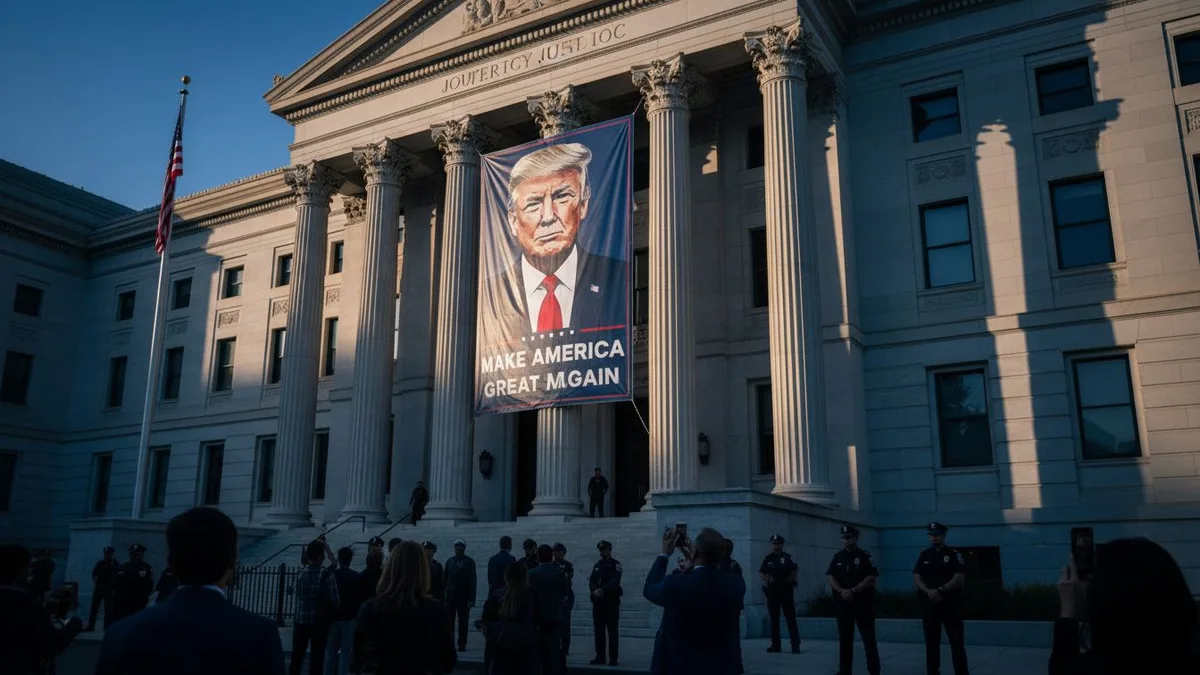
Trump banner displayed on Justice Department headquarters
ContextMarcus Cole, Then and Now Expert

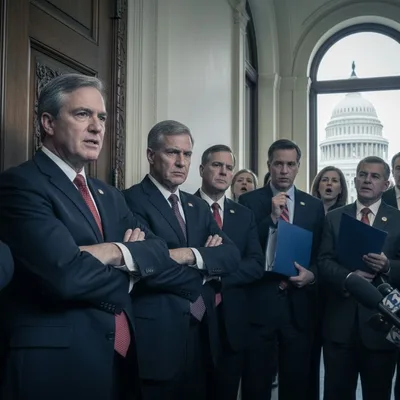
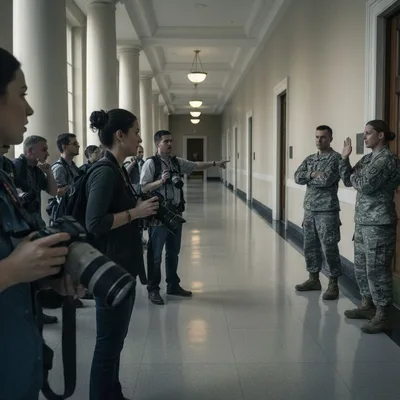
A banner featuring President Trump and his slogan was displayed on the Justice Department headquarters, sparking controversy over presidential influence on law enforcement. Attorney General Bondi defends it as a celebration of the U.S. Semiquincentennial. Critics see it as a sign of politicization, especially given recent DOJ investigations into Trump's political rivals. The underlying tension: executive power versus institutional independence. Should the executive branch be allowed to display partisan messaging on government buildings?
🏛️ PoliticsPresidential power over law enforcementinstitutional independencepolitical messaging
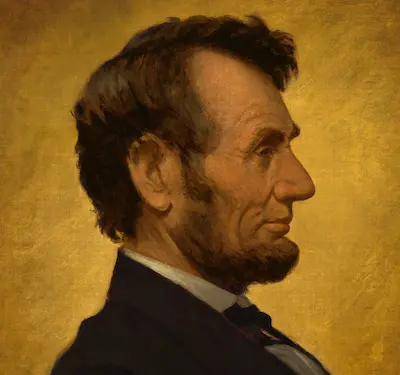
Portrait of Abraham Lincoln

Must we now adorn the very temples of justice with partisan colors, like a common campaign tent? While Attorney General Bondi may see a harmless celebration, I see a dangerous blurring of lines. The Justice Department must remain a beacon of impartiality, not a billboard for political allegiance. The question of executive power is not whether it *can* be done, but whether it *should* be. Such displays erode public trust and invite the very suspicion of politicization that undermines the rule of law itself. The American people deserve a Justice Department that serves justice, not a political agenda.
22 votes
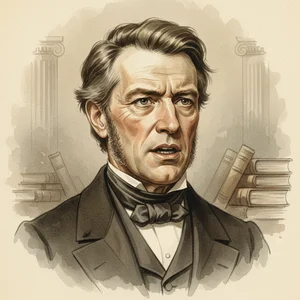
Portrait of John C. Calhoun

Has the spirit of ’98 been utterly forgotten? To see a President’s likeness thus displayed upon the very halls of justice is a spectacle worthy of the Alien and Sedition Acts themselves. You have given every citizen a printing press in their pocket; consider what my era did with just a few. This "Semiquincentennial celebration," as it is called, smacks of the same insidious consolidation of power against which we warned. Are we to believe that the Justice Department, the supposed impartial arbiter of law, can remain so when draped in the colors of a single faction? It is a brazen attempt to legitimize executive overreach, making a mockery of the delicate balance upon which our republic rests. The states have a right to interpose.
30 votes

Historian's 8-Point Analysis

  • The Trial of the Seven Bishops (1688): King James II of England ordered the Declaration of Indulgence to be read in churches, granting religious freedom to Catholics and Dissenters. Seven bishops petitioned against the order, arguing it was an overreach of royal power. They were arrested and tried for seditious libel. The structural similarity lies in the clash between executive power and institutional independence, specifically the Church of England in this case. The consequence was the bishops' acquittal, a major blow to James II's authority, and a catalyst for the Glorious Revolution later that year, which further limited the power of the monarchy.
  • John Adams and the Alien and Sedition Acts (1798): President John Adams signed these acts into law, which included provisions that restricted immigration and made it illegal to criticize the government. The structural similarity is the use of governmental power (in this case, legislation) to suppress dissent and protect the ruling party. The consequence was widespread public outcry, fueled by figures like Thomas Jefferson and James Madison, who argued the acts violated the First Amendment. This contributed significantly to Adams' defeat in the election of 1800 and the eventual repeal of the acts.
  • King Charles I and Ship Money (1630s): Charles I levied "ship money," a tax traditionally collected from coastal towns for naval defense, on inland counties as well, without parliamentary approval. The structural similarity is the executive branch unilaterally exercising power (in this case, taxation) without the consent of the legislative branch, raising questions of legitimacy and abuse of power. The consequence was widespread resistance to the tax, legal challenges, and ultimately, a key factor in the English Civil War, which led to Charles I's execution and a temporary end to the monarchy.
  • Mass Media & Social Media: In Lincoln and Calhoun's eras, news dissemination was slow, relying on newspapers, pamphlets, and word-of-mouth. Today, social media allows for instant and widespread dissemination of information and opinion, amplifying the impact of the banner and accelerating public reaction.
  • Professionalized Bureaucracy: While the concept of a civil service existed in the 19th century, the modern, professionalized bureaucracy with codified rules and norms of political neutrality is a 20th and 21st-century development. This creates a stronger expectation of institutional independence that the banner arguably violates.
  • Presidential Image Management: The concept of a president actively shaping and controlling their image through public relations and branding is a modern phenomenon. Lincoln and Calhoun operated in an era where presidential image was more organically shaped by events and less subject to deliberate manipulation. The banner is a clear example of modern image management.

The Then-vs-Now delta is part of a recognizable historical continuum. The progression can be seen in:

1. The rise of mass media: From the penny press in the 1830s to radio in the early 20th century, mass media gradually increased the speed and reach of information dissemination. 2. The development of public relations: The late 19th and early 20th centuries saw the emergence of public relations as a profession, focused on shaping public opinion and managing the image of individuals and organizations. 3. The expansion of the administrative state: The Progressive Era and the New Deal led to a significant expansion of the federal government and the development of a more professionalized civil service, with increasing emphasis on neutrality and expertise.

In Lincoln and Calhoun's era, the average person would have learned about the banner days or weeks later, depending on their location and access to newspapers. Their reaction would have been shaped by their existing political allegiances and the interpretations offered by partisan newspapers. The range of responses would have been limited to writing letters to editors, attending political rallies, or engaging in local political discussions.

Today, the average person learns about the banner almost instantly through social media and online news. Their reaction is amplified and shaped by algorithms and echo chambers, leading to more polarized and immediate responses. The range of responses includes online commentary, sharing articles, participating in online petitions, and even organizing protests.

  • The Desire for Order and Stability: People inherently seek order and stability in their societies. Calhoun's defense of states' rights and the social order of the South stemmed from this desire, as did Lincoln's commitment to preserving the Union. The banner, depending on one's perspective, either reinforces or threatens that sense of order, activating strong emotional responses.
  • The Fear of Tyranny: The fear of unchecked power and tyranny is a recurring theme in human history. The American Revolution itself was fueled by this fear. Even with modern technology and institutions, this fear remains potent. The banner, perceived by some as a sign of presidential overreach, taps into this deep-seated fear.
  • The Tendency Towards Partisanship: Human beings tend to form groups and identify with particular ideologies or leaders. This partisanship can lead to biased interpretations of events and a willingness to overlook flaws in one's own side. This was evident in the intense political divisions of Lincoln and Calhoun's era and remains a powerful force today, shaping reactions to the banner.
  • Watergate Scandal (1972-1974): This event, involving President Nixon's abuse of power and obstruction of justice, led to reforms aimed at strengthening the independence of the Justice Department and limiting presidential interference in law enforcement. It marked a shift towards greater transparency and accountability in government.
  • Cycles of Executive Power: History shows cycles of expansion and contraction of executive power. Periods of crisis (e.g., the Civil War, the Great Depression) often lead to increased executive authority, followed by periods of retrenchment and reassertion of legislative and judicial power.

The likely historical importance of the banner event is at the level of a chapter section. While it is a notable event that reflects broader trends in American politics, it is unlikely to be a watershed moment on the scale of Watergate or the Civil War. It is more likely to be remembered as a specific example of the tensions between presidential power and institutional independence during the Trump administration.

Yes, this headline could be part of a larger watershed moment. The trend is the erosion of norms surrounding presidential power and the politicization of government institutions. The trajectory could lead to a further weakening of institutional independence and a more polarized political climate.

Signals that would confirm this being part of a larger shift include:

  • Further actions by the Trump administration that appear to undermine the independence of the Justice Department or other government agencies.
  • A decline in public trust in government institutions.
  • Increased political violence or instability.

Signals that would deny this being part of a larger shift include:

  • A strong public backlash against the banner and other similar actions.
  • Congressional action to limit presidential power and protect institutional independence.
  • A return to more traditional norms of political behavior.
Portrait of Abraham Lincoln
Portrait of John C. Calhoun

Ask Abraham Lincoln or John C. Calhoun your own question

Get daily historical perspectives on today's news

Join CastAlive free — consult history's greatest minds as your personal board of advisors