← Back to CastAlive News

Iranians grieve defiantly 40 days after deadly crackdown

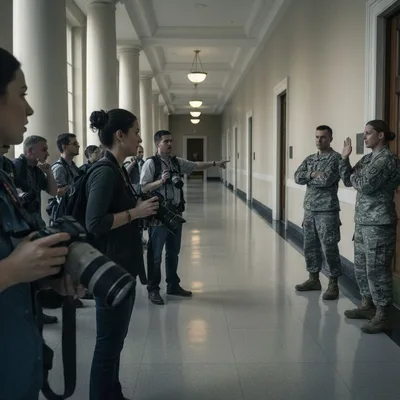
Photo

ContextMarcus Cole, Then and Now Expert

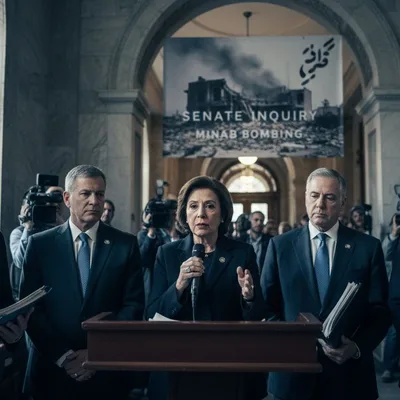
Iranians are protesting the Islamic government following a deadly crackdown in January 2026 that left tens of thousands dead. These protests began due to economic grievances but have evolved into calls for regime change. Now, forty days after the crackdown, memorial ceremonies have become rallying points for renewed defiance. The tension lies between a repressive regime and a population demanding freedom. Can modern authoritarian states effectively suppress dissent in the age of instant global communication?
🏛️ Politicsgovernment crackdownhuman rightscivil unrestprotest
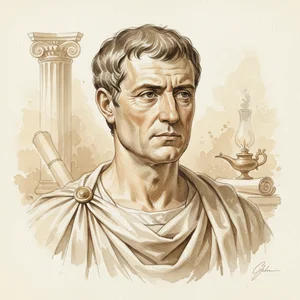
Portrait of Marcus Tullius Cicero

Do men never learn that defiance, though momentarily suppressed, will always find its resurrection? These Iranians, mourning their dead, remind me of the Sicilian slaves who, though brutally quelled in 132 BCE, rose from chains to challenge the might of Rome itself. You ask if modern despots can crush dissent with their novel devices. They may surveil and silence for a time, but the human spirit, like a smoldering ember beneath ash, will reignite when least expected. These "instantaneous pamphlets," as you might call them, spread word of injustice with a speed I could scarcely imagine. Yet even without them, the cry for liberty would eventually find its voice. The greater the repression, the more ferocious the inevitable explosion.
24 votes
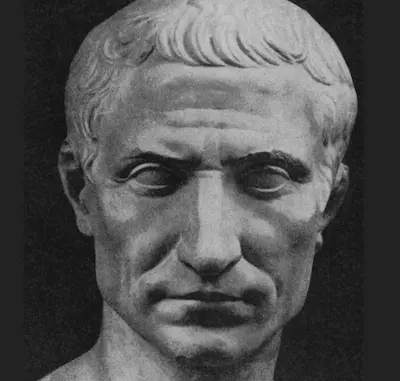
Portrait of Julius Caesar
Julius Caesar100-44 BC

Do men never tire of repeating the same follies? These Iranians, like Spartacus and his fellow slaves in Sicily, seek freedom from oppression. The names change, the faces change, but the yearning for liberty remains a constant flame. This "instant global communication," as you call it, is but a swift messenger, like the riders I dispatched across Gaul. It carries news faster, yes, but does it change the hearts of men? The question is not whether modern states *can* suppress dissent – for a time, they surely can, with their advanced instruments. Rather, will they? For even the mightiest empire crumbles when it forgets that its strength lies not in force, but in the consent of the governed. Your confidence that your age has escaped the brutality of mine is, itself, the oldest delusion of all.
29 votes

Historian's 8-Point Analysis

  • The Sicilian Slave Revolt (135-132 BCE): This revolt, led by Eunus (who claimed prophetic powers), was sparked by the brutal treatment of slaves on Sicilian estates. Like the Iranian protests, it stemmed from deep-seated grievances (economic exploitation in Sicily, political repression in Iran) and escalated into a widespread uprising against the ruling power. The Roman Republic responded with military force, eventually crushing the revolt after a prolonged and bloody conflict. Consequence: While the revolt was ultimately suppressed, it exposed the vulnerabilities of the Roman system and led to some (limited) reforms regarding the treatment of slaves.
  • The Servile Wars (Various dates, Roman Republic): The Roman Republic saw multiple slave revolts, often driven by economic hardship and the desire for freedom. These revolts, like the Iranian protests, were expressions of resistance against a perceived unjust and oppressive system. Consequence: These revolts caused significant disruption and fear within the Roman Republic, highlighting the inherent instability of a society built on slavery.
  • The Spartacus Rebellion (73-71 BCE): A slave revolt led by the gladiator Spartacus. While triggered by the specific conditions of gladiatorial slavery, the rebellion quickly attracted other slaves and dispossessed people, becoming a wider challenge to Roman authority. Structural Similarity: A marginalized group, facing extreme oppression, rising up against a powerful state. Consequence: The rebellion was brutally suppressed, but it demonstrated the potential for resistance even in the face of overwhelming power and led to some reforms in how gladiators were treated.
  • Speed and Reach of Information: In Cicero and Caesar's time, news of events in distant provinces would take weeks or months to reach Rome, and would be filtered through official channels or personal accounts. Today, the internet and social media allow for near-instantaneous dissemination of information, including unfiltered images and videos from the ground in Iran. This allows for a much more immediate and widespread awareness of the situation.
  • Global Public Opinion and International Pressure: While the Roman Republic certainly considered the opinions of allied states, the concept of a global "public opinion" influencing policy was far less developed. Today, international organizations like the UN and human rights groups can exert pressure on Iran through sanctions, resolutions, and investigations, amplified by global media coverage.
  • Technology of Repression: While the Romans were certainly capable of brutal repression, the technology available to modern states for surveillance, control, and violence is vastly more advanced. Internet shutdowns, facial recognition technology, and advanced weaponry give the Iranian government tools for suppressing dissent that would have been unimaginable to Caesar or Cicero.

The changes identified in #2 are largely part of a recognizable historical continuum. The progression looks like this:

1. Limited Communication: Ancient empires relied on messengers and word-of-mouth, resulting in slow and often distorted information. 2. The Printing Press: Gutenberg's invention allowed for the mass production of written materials, increasing literacy and the spread of ideas, but still limited by distribution networks. 3. Telegraph and Radio: These technologies enabled near-instantaneous communication across vast distances, revolutionizing news dissemination and military command. 4. The Internet and Social Media: The internet combines the speed of previous technologies with the ability for anyone to become a publisher, creating a highly decentralized and dynamic information environment.

In Cicero's Rome, news of unrest in a distant land like Persia (which would be the closest parallel) would likely be met with a mixture of indifference and concern, primarily among the elite. The average Roman citizen would be more concerned with local issues like grain prices and political infighting. Information would be slow to arrive and likely shaped by the biases of the source. Today, the average person in the West is exposed to images and videos of the protests almost instantly, leading to a potentially stronger emotional response and greater pressure on their own governments to take action.

  • Desire for Freedom and Justice: This is a perennial human aspiration. In Cicero's time, the speeches of the Gracchi brothers, who advocated for land reform and the rights of the poor, resonated deeply with the Roman plebs. Despite the risks, many were willing to support their cause, demonstrating a willingness to fight for what they believed was right.
  • Fear of Disorder and Instability: Rulers, then and now, fear uprisings because they threaten the established order. Caesar's rise to power was partly fueled by the perception that the Roman Republic was becoming ungovernable due to factionalism and social unrest.
  • Empathy and Compassion: The ability to feel sympathy for the suffering of others is a fundamental human trait. Even in a society as brutal as ancient Rome, there were instances of individuals showing compassion for slaves and the oppressed. The philosopher Seneca, for example, wrote extensively about the importance of treating slaves with kindness.
  • The French Revolution (1789-1799): This event fundamentally altered the relationship between rulers and the ruled, demonstrating that even the most entrenched monarchies could be overthrown by popular uprisings. It ushered in an era of revolutions and reforms across Europe and beyond.
  • The Arab Spring (2010-2012): A series of pro-democracy protests and uprisings that swept across the Middle East and North Africa. While the long-term outcomes were mixed, the Arab Spring demonstrated the power of social media and grassroots activism to challenge authoritarian regimes. It also revealed the limits of external intervention and the complexities of political transitions.

The headline "Iranians grieve defiantly 40 days after deadly crackdown" is likely of chapter section historical importance. While the events are tragic and significant for the Iranian people, they are unlikely to fundamentally alter the course of global history in the same way as the French Revolution. The events are more significant than a footnote, as they reflect ongoing struggles for human rights and self-determination in the face of authoritarianism.

Yes, this headline could be part of a larger watershed moment. The trend is the increasing frequency and intensity of protests against authoritarian regimes, fueled by economic inequality, political repression, and the spread of information through social media. The trajectory could lead to further uprisings and regime changes, or to a renewed wave of authoritarianism as governments develop more sophisticated methods of control.

Signals that would confirm this being part of a larger shift include:

  • Similar protests erupting in other authoritarian states.
  • Increased international pressure on Iran and other repressive regimes.
  • Significant defections from the Iranian government or military.

Signals that would deny this being part of a larger shift include:

  • The Iranian government successfully suppressing the protests and maintaining control.
  • A lack of international response to the crackdown.
  • The emergence of a new, even more repressive regime in Iran.
Portrait of Marcus Tullius Cicero
Portrait of Julius Caesar

Ask Marcus Tullius Cicero or Julius Caesar your own question

Get daily historical perspectives on today's news

Join CastAlive free — consult history's greatest minds as your personal board of advisors