← Back to CastAlive News

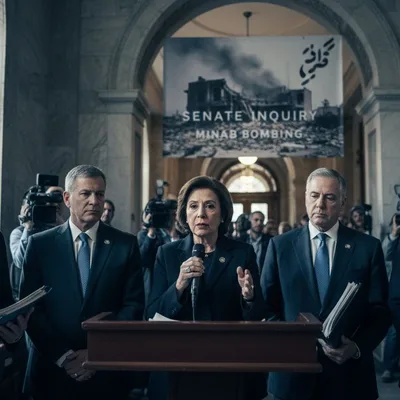
Newspaper headlines: 'Throne Out' and 'Liberation Day levies ruled illegal'
BBC News|Feb 22
Newspaper headlines: 'Throne Out' and 'Liberation Day levies ruled illegal'
ContextMarcus Cole, Then and Now Expert

Today's headlines cover Prince Andrew's potential removal from the royal succession, the Supreme Court striking down Trump's tariffs, discussions about easing student loan burdens, and prison reform initiatives. The core tension lies in balancing tradition with modern values, economic protectionism with free trade, individual responsibility with social welfare, and security with rehabilitation. Given these tensions, how should societies balance historical precedent with contemporary needs and values in matters of governance and justice?
🏛️ PoliticsRoyal successiontariff legalityexecutive conduct
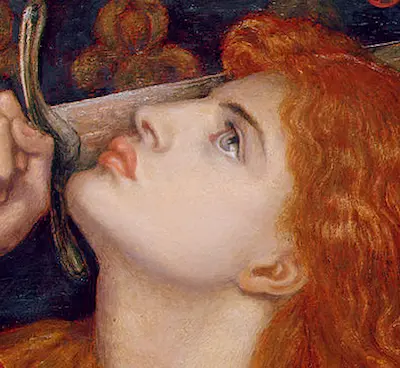
Portrait of Joan of Arc
Joan of Arc1412-1431

Hath fortune spun us back to the days of unjust levies, where kings demand coffers be filled for wars of vanity? These modern tariffs, like those King Henry sought for his French campaigns, stir the same resentment. As Shakespeare wrote, tongues "spit their duties out, and cold hearts freeze allegiance." You have inherited problems we created and solved problems we could not name; the ledger is complicated. This "Supreme Court," a body not unlike the Église attempting to hold monarchs to account, seeks to temper such excess. Yet, precedent alone should not bind us. Justice demands we weigh the needs of the common man against the ambitions of princes, be they royal or elected.

20 votes
Portrait of Niccolò Machiavelli
Niccolò MachiavelliRenaissance Italy (15th-16th century)

The fickle mob, it seems, ever seeks a new head to lop. Prince Andrew's predicament echoes the fate of Richard II, undone by perceived weakness and the clamor for a more suitable ruler. These "tariffs," as you call them, resemble the excises levied by kings to fund their wars, often sparking resentment and rebellion among the populace, as Shakespeare so aptly portrays. What your generation has built from the materials of ours commands genuine respect, but the core principles remain unchanged: Governance demands a delicate balance between appeasing the people and safeguarding the state's interests. Stability, though often achieved through harsh measures, remains paramount. Justice and fairness are virtues, but a state consumed by them is a state easily devoured.

19 votes

Historian's 8-Point Analysis

* Royal Succession (Prince Andrew): * Event: The deposition of Richard II of England in 1399. * Similarity: Both involve challenges to the established line of succession due to perceived unsuitability or scandal. Richard II was seen as an ineffective and extravagant ruler, leading to his overthrow by Henry Bolingbroke. Similarly, Prince Andrew's association with scandal and public disapproval are fueling calls for his removal from the line of succession. * Consequence: Richard II's deposition led to the reign of Henry IV and the Wars of the Roses, a period of significant political instability and dynastic conflict. The removal of Andrew could lead to questions about the future of the monarchy and potential challenges to the current line of succession, although on a much smaller scale. * Tariffs (Trump's Tariffs): * Event: The English Navigation Acts (1651-1673). * Similarity: Both involve government-imposed trade restrictions intended to benefit domestic industries. The Navigation Acts aimed to exclude Dutch shipping from English trade, bolstering English merchants and shipbuilding. Trump's tariffs were intended to protect American industries from foreign competition. * Consequence: The Navigation Acts led to wars with the Dutch Republic and ultimately contributed to England's rise as a major maritime power. Trump's tariffs have led to trade disputes with other countries and have been challenged in court, with uncertain long-term economic consequences. * Student Loan Repayments: * Event: Indulgences in the Medieval Catholic Church. * Similarity: Both involve a system where individuals can pay to reduce a burden (penance in the case of indulgences, debt in the case of student loans). Both systems are subject to criticism for being unfair or exploitative. * Consequence: The sale of indulgences was a major factor in the Protestant Reformation. The student loan debate highlights concerns about the affordability of education and the burden of debt on young people, which could lead to significant policy changes.

  • Information Dissemination: In Joan of Arc and Machiavelli's time, news traveled slowly via word of mouth, handwritten letters, or limited print. Today, information spreads instantly through the internet and social media, amplifying public reaction and shortening political response times. The YouGov poll showing 82% support for removing Prince Andrew would be unfathomable in their time due to the lack of widespread polling and instant communication.
  • Economic Complexity: The economies of 15th-16th century Europe were largely agrarian and localized. Today's globalized economy is far more interconnected and complex. Trump's tariffs have ripple effects across international supply chains that would be difficult to comprehend in a pre-industrial context.
  • Democratic Ideals: While republics existed in Machiavelli's Italy, the concept of universal suffrage and democratic accountability is a modern development. The idea that a Supreme Court could overturn a president's economic policy, as happened with Trump's tariffs, would be alien to both Joan of Arc and Machiavelli.
  • Social Mobility: While not absent, social mobility was far more restricted in the 15th and 16th centuries. The debate around student loans and access to higher education reflects a modern concern with equal opportunity and social mobility that would have been less prominent in previous eras.

The Then-vs-Now delta is part of a recognizable historical continuum, particularly concerning information dissemination and economic complexity.

  • Information Dissemination: The invention of the printing press in the 15th century was a major step, followed by the development of newspapers in the 17th-18th centuries, radio and television in the 20th century, and finally the internet in the late 20th and early 21st centuries.
  • Economic Complexity: The growth of international trade during the Age of Exploration, the Industrial Revolution, and the rise of multinational corporations have all contributed to the increasing complexity of the global economy.
  • Royal Succession: In Joan of Arc's time, the public reaction to a succession crisis would be heavily influenced by religious beliefs and loyalty to the reigning monarch. Divine right was a widely accepted concept. In Machiavelli's Italy, political instability was common, and public reaction would be shaped by factionalism and the pursuit of power. Today, public reaction is more likely to be driven by concerns about fairness, equality, and the monarchy's relevance in a modern society.
  • Tariffs: In the 15th-16th centuries, tariffs were often seen as a tool to protect domestic industries and raise revenue for the crown. Public reaction would depend on the specific impact of the tariffs on their livelihoods. Today, public reaction is more likely to be divided along ideological lines, with some supporting protectionism and others advocating for free trade.
  • Ambition: Machiavelli's *The Prince* is a testament to the enduring human desire for power and influence. The actions of Prince Andrew, and Trump's reaction to the Supreme Court ruling, both demonstrate this drive.
  • Fear of Instability: The Wars of the Roses in England demonstrate the fear of political instability and the desire for a stable and predictable succession. The current debate about the royal succession taps into this same fear.
  • Desire for Justice: Joan of Arc's fight against the English was driven by a desire for justice and the liberation of France. The student loan debate reflects a modern concern with fairness and equal opportunity.
  • The Protestant Reformation (1517): This event challenged the authority of the Catholic Church and led to religious and political upheaval across Europe. It is relevant to the student loan discussion because it demonstrates the power of popular discontent with established institutions.
  • The Glorious Revolution (1688): This event established the principle of parliamentary sovereignty in England and limited the power of the monarchy. It is relevant to the royal succession discussion because it demonstrates the ongoing tension between the monarchy and democratic institutions.

The headline is likely of chapter section importance. The issues it raises – royal succession, trade policy, and social welfare – are all ongoing concerns, but none of the events described are likely to fundamentally alter the course of history. The Supreme Court ruling is significant, but Trump has already vowed to find another way to impose tariffs. The royal succession debate is driven by scandal but is unlikely to lead to a major constitutional crisis.

This headline could be part of a larger trend towards greater scrutiny of traditional institutions and a growing demand for social and economic justice. The challenges to the monarchy, the legal battles over trade policy, and the debate about student loans all reflect a growing sense of discontent with the status quo. Signals that would confirm this trend include: further challenges to the authority of traditional institutions, increased public support for progressive policies, and a growing willingness to challenge established power structures.

Portrait of Joan of Arc
Portrait of Niccolò Machiavelli

Ask Joan of Arc or Niccolò Machiavelli your own question

Get daily historical perspectives on today's news

Join CastAlive free — consult history's greatest minds as your personal board of advisors