← Back to CastAlive News

Businesses face uncertainty as Supreme Court strikes down Trump tariffs
Businesses face uncertainty as Supreme Court strikes down Trump tariffs
ContextMarcus Cole, Then and Now Expert

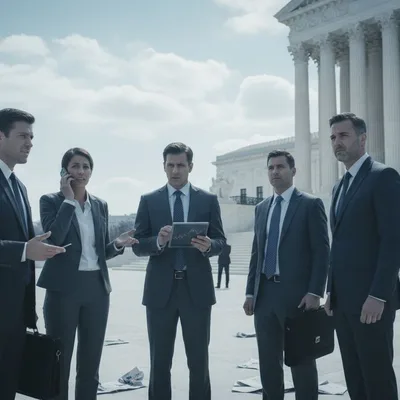
Today, the Supreme Court struck down tariffs imposed during the Trump administration, citing executive overreach.Businesses now face uncertainty as they adjust to the new trade landscape, potentially unwinding supply chains built around the tariffs.The ruling reignites the long-standing debate over the balance of power between the executive and legislative branches in setting trade policy.
🏛️ PoliticsSupreme Court tariff rulingexecutive power limitstrade policy uncertainty
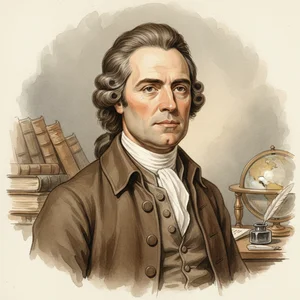
Portrait of John Locke
John Locke1632-1704

That the executive should possess the power to arbitrarily dictate the terms of trade strikes me as a dangerous innovation, reminiscent of the Stuart monarchs' attempts to circumvent Parliament through the levying of ship money. These "tariffs," as you call them, are akin to imposing a tax without the consent of the governed. As I argued in my *Two Treatises of Government*, the legislative power is supreme, particularly in matters of property. To allow the executive to unilaterally reshape the economic landscape is to invite tyranny. I confess I do not comprehend these modern "supply chains," but the underlying principle remains: the protection of individual rights, including the right to freely dispose of one's property through trade, must be paramount. Whether these novel tariffs were justified by security concerns or no, they should not have been imposed by the executive.

26 votes
Portrait of Jean-Jacques Rousseau

That the pursuit of self-interest, even cloaked in the garb of national security, should once again ignite such discord is hardly surprising. The English Navigation Acts, designed to benefit the mother country at the expense of her colonies, sowed the seeds of resentment and unrest; this ruling, striking down similar impositions, merely harvests the bitter fruit of such policies. Your "Supreme Court," a body I might liken to the Roman Senate in its function, has wisely checked this executive overreach. But the underlying question remains: does the allure of economic advantage justify trampling upon the principles of fairness and mutual benefit? I fear that these "tariffs," a form of tribute exacted under a different name, betray a dangerous disregard for the common good, and for the legislative process itself.

18 votes

Historian's 8-Point Analysis

  • The English Navigation Acts (1651-1673): These acts, passed under Oliver Cromwell and later Charles II, restricted colonial trade to English ships and ports. Structurally, this is similar to the Trump tariffs in that it represents a government intervention in trade aimed at benefiting domestic interests (English shipping and merchants then, American industries now). The consequence was increased resentment in the colonies, contributing to the conditions that eventually led to the American Revolution.
  • The Corn Laws (1815-1846) in Britain: These laws imposed tariffs on imported grain, protecting British landowners but raising food prices for the general population. The structural similarity lies in the use of tariffs to protect a specific domestic sector at the expense of broader economic interests. The consequence was significant social unrest and political debate, ultimately leading to the repeal of the Corn Laws and a shift towards free trade policies.
  • The Stamp Act (1765): While not a tariff *per se*, the Stamp Act imposed a direct tax on the American colonies, requiring that many printed materials be produced on stamped paper produced in London, and carrying an excise duty. The structural similarity lies in the imposition of a tax by a distant government without the consent of the governed, leading to widespread protest and resistance. The consequence was a significant escalation of tensions between Britain and its colonies, contributing to the American Revolution.
  • Speed and Scope of Information Dissemination: In Locke and Rousseau's time, news traveled slowly via printed pamphlets, word of mouth, and infrequent newspapers. Today, information spreads globally in seconds through the internet, social media, and 24/7 news cycles. This means that the public reaction to the Supreme Court ruling and its economic consequences will be far more immediate and widespread than reactions to similar events in the 17th and 18th centuries.
  • Complexity of Global Supply Chains: In the 17th and 18th centuries, trade relationships were generally simpler and more direct. Today, global supply chains are incredibly complex, with goods often crossing multiple borders before reaching their final destination. This means that the impact of tariffs is far more difficult to predict and can have unintended consequences for businesses and consumers.
  • The Rise of the Administrative State: Locke and Rousseau lived in an era before the modern administrative state, with its vast bureaucracy and regulatory powers. Today, government agencies have far greater power to implement and enforce trade policies, and the Supreme Court's decision will likely trigger a complex process of regulatory adjustments and legal challenges.
  • Democratic Ideals and Public Opinion: While both Locke and Rousseau wrote about the importance of popular sovereignty, the extent of democratic participation and the influence of public opinion on government policy were far more limited in their time. Today, public opinion plays a much larger role in shaping government policy, and the Supreme Court's decision will likely be subject to intense public scrutiny and debate.

The Then-vs-Now delta is part of a recognizable historical continuum. The increasing speed and scope of information dissemination can be traced through the invention of the printing press, the telegraph, and the radio. The increasing complexity of global supply chains can be traced through the Industrial Revolution, the rise of multinational corporations, and the development of container shipping. The rise of the administrative state can be traced through the growth of government bureaucracy in the 19th and 20th centuries.

Intermediate Steps: 1. The Telegraph (1840s): Enabled near-instantaneous communication across long distances, speeding up the flow of information about trade and economic events. 2. The General Agreement on Tariffs and Trade (GATT) (1947): Marked a significant step towards the creation of a global trade regime, laying the groundwork for the complex supply chains of today. 3. The rise of regulatory agencies (late 19th/early 20th century): The Interstate Commerce Commission (1887) and the Federal Trade Commission (1914) are examples of early regulatory agencies that expanded the role of government in the economy.

In Locke and Rousseau's era, the average person would have been largely unaware of the intricacies of trade policy. News of tariffs or trade disputes would have reached them slowly, if at all, and their range of responses would have been limited to local protests or petitions. Today, the average person is bombarded with information about trade policy from a variety of sources, and they can express their opinions through social media, online polls, and direct communication with elected officials. Public reaction today is likely to be far more polarized and immediate.

  • Self-Interest: The desire to protect one's own economic interests is a constant across eras. In Locke and Rousseau's time, merchants and landowners would have lobbied the government to protect their industries from foreign competition. Today, businesses and labor unions engage in similar lobbying efforts.
  • Xenophobia: The tendency to view foreigners with suspicion and distrust is another enduring aspect of human nature. In Locke and Rousseau's time, this could manifest as prejudice against foreign merchants or immigrants. Today, it can manifest as support for protectionist trade policies that are seen as protecting domestic jobs from foreign competition.
  • Desire for Stability: People crave stability and predictability in their economic lives. Uncertainty about trade policy can create anxiety and fear, leading people to demand government action to protect their livelihoods. This desire for stability is as strong today as it was in Locke and Rousseau's time.
  • The Repeal of the Corn Laws (1846): This event marked a major shift towards free trade in Britain and had a profound impact on global trade patterns. It redirected the course of British economic policy and paved the way for a period of unprecedented economic growth. This event highlights a cyclical pattern of protectionism followed by periods of liberalization.
  • The Smoot-Hawley Tariff Act (1930): This act raised tariffs on thousands of imported goods in the United States and is widely blamed for exacerbating the Great Depression. It serves as a cautionary tale about the dangers of protectionism and the importance of international cooperation in trade.

The Supreme Court's decision striking down the Trump tariffs is likely a chapter section event. While it has significant implications for businesses and trade policy, it is unlikely to fundamentally alter the course of history in the same way as the repeal of the Corn Laws or the Smoot-Hawley Tariff Act. It is more likely to be seen as a temporary setback for protectionist policies, with the long-term trend towards globalization likely to continue.

This headline could be part of a larger watershed moment if it signals a broader shift away from protectionist trade policies and towards a renewed commitment to free trade. The trend would be characterized by a decline in tariffs and other trade barriers, increased international cooperation on trade issues, and a renewed focus on the benefits of globalization. The potential impact would be increased economic growth, lower prices for consumers, and a more stable global economy. Signals that would confirm this being part of a larger shift include:

  • A decline in protectionist rhetoric from political leaders
  • Increased support for free trade agreements
  • A decrease in trade disputes between countries

If, however, the Trump administration finds ways to circumvent the Supreme Court ruling or if other countries retaliate with their own tariffs, then this is likely an isolated event.

Portrait of John Locke
Portrait of Jean-Jacques Rousseau

Ask John Locke or Jean-Jacques Rousseau your own question

Get daily historical perspectives on today's news

Join CastAlive free — consult history's greatest minds as your personal board of advisors