← Back to CastAlive News

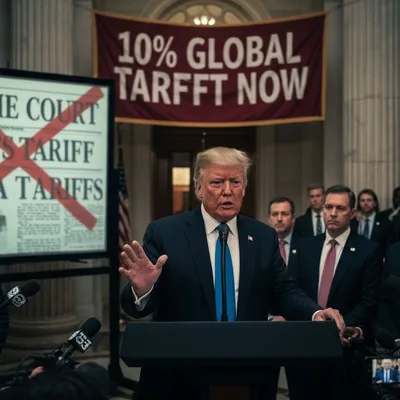
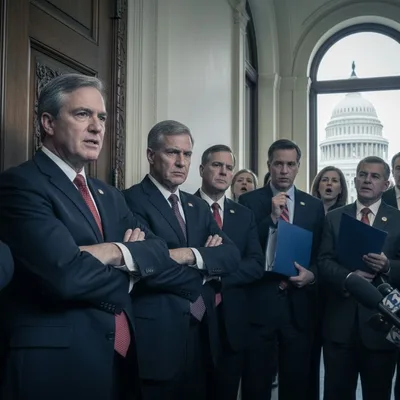
Trump brings in new 10% tariff as Supreme Court rejects his global import taxes
BBC News|Feb 22
Trump brings in new 10% tariff as Supreme Court rejects his global import taxes
ContextMarcus Cole, Then and Now Expert

The Supreme Court struck down President Trump's tariffs imposed under the IEEPA, stating he overstepped his authority.Trump immediately countered with a new 10% global tariff under Section 122, a rarely used law, now raised to 15%.Businesses seek refunds on the $130B already collected.The core tension lies in presidential power over trade and the economic fallout of tariffs.
🏛️ Politicstariffstrade policySupreme Court ruling
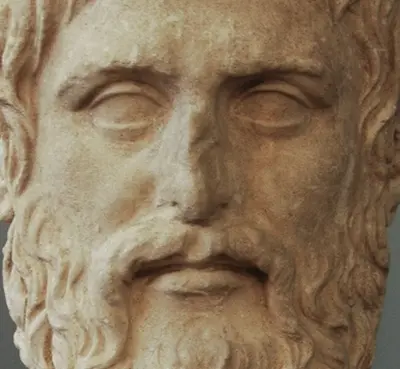
Portrait of Plato
Plato428-348 BCE

Do men never tire of chasing shadows, mistaking them for the Forms themselves? This "tariff," as you call it, reminds me of the Athenian decree against Megarian goods – a measure ostensibly for economic advantage, but in truth, a seed of discord that blossomed into devastating conflict. The tools have changed beyond recognition, yet the hands that wield them tremble for the same reasons. To believe national economic security justifies trampling upon established agreements is to misunderstand justice itself. As I wrote in *The Republic*, justice is harmony, both within the individual soul and within the state. Such unilateral action, driven by avarice, disrupts that harmony, leading to imbalance and, ultimately, to ruin.
23 votes
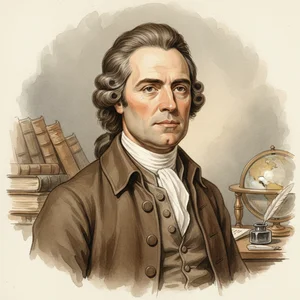
Portrait of John Locke
John Locke1632-1704

That rulers should so readily embrace the language of necessity is a perennial threat to liberty. This "President Trump," as you call him, revives an old struggle – the Crown's claim to revenue without the explicit consent of the legislative body. It calls to mind Charles I and his Ship Money levies, justified as essential for defense, yet employed to circumvent Parliament's authority. This power to tax by decree, even under the guise of national security, threatens the very foundation of legitimate government. As I wrote in *Two Treatises*, government exists to protect property, not to seize it by arbitrary means. The speed of this "global import tax" may bedazzle, but the principle at stake remains as old as tyranny itself. Is the pursuit of economic security sufficient cause to erode the safeguards against unchecked power? I think not.

25 votes

Historian's 8-Point Analysis

  • The English Ship Money Levies (1634-1640): Charles I of England, facing financial difficulties and seeking to avoid Parliament, levied "ship money," a tax traditionally collected from coastal communities for naval defense, on the entire country. This is structurally similar to Trump's tariffs in that both involve executive action to raise revenue without explicit legislative approval, circumventing the traditional balance of power. The consequence was widespread resentment, legal challenges (most famously by John Hampden), and ultimately, the English Civil War, fueled by perceptions of royal overreach.
  • The Corn Laws in Great Britain (1815-1846): These laws imposed tariffs on imported grain, protecting domestic producers but raising food prices for consumers. While these laws were legislated by Parliament, the intent to protect domestic industry at the expense of broader economic well-being mirrors the protectionist rationale behind Trump's tariffs. The Corn Laws led to significant social unrest, the rise of the Anti-Corn Law League, and eventually, their repeal in 1846, signaling a shift towards free trade.
  • The Embargo Act of 1807: Passed under President Thomas Jefferson, this act prohibited American ships from trading in foreign ports. Jefferson hoped to pressure Britain and France to respect American neutrality during the Napoleonic Wars. While not technically a tariff, the Embargo Act represents a similar use of executive power to regulate trade for political purposes. The consequences were disastrous for the American economy, leading to widespread smuggling, economic hardship, and ultimately, the Act's repeal in 1809.
  • Speed and Scope of Information Dissemination: In Plato's time, news of tariffs or trade disputes would have spread slowly, primarily through word of mouth and limited written communication. Locke's era saw the rise of printed pamphlets and newspapers, but information still traveled relatively slowly compared to today. Now, news of Trump's tariffs and the Supreme Court ruling spreads globally within minutes via social media, news websites, and instant financial data feeds. This speed amplifies the immediate market reaction and allows for rapid political mobilization.
  • Complexity of Global Supply Chains: Plato's world involved relatively simple trade routes and localized production. Locke's era saw the beginnings of more complex colonial trade networks. Today, global supply chains are incredibly intricate, with goods crossing borders multiple times during production. Tariffs disrupt these complex chains, creating ripple effects that are difficult to predict and manage. This makes the economic consequences of tariffs far more significant and harder to control than in previous eras.
  • The Role of International Institutions: Neither Plato nor Locke lived in a world with established international institutions like the World Trade Organization (WTO) or formalized trade agreements like USMCA. These institutions provide frameworks for resolving trade disputes and setting rules for international commerce. Trump's actions, particularly the imposition of tariffs outside of these frameworks, challenge the established international order in a way that was not possible in earlier eras.
  • Judicial Review: While the concept of law existed in both Plato's and Locke's time, the power of a court to strike down executive action as unconstitutional is a more modern development. The Supreme Court's ruling itself is a product of a constitutional system with checks and balances, a system that did not exist in either Plato's Athens or Locke's England.

The Then-vs-Now delta is part of a recognizable historical continuum, particularly regarding the evolution of trade regulation and information dissemination.

  • Mercantilism to Free Trade Debates: From the mercantilist policies of Locke's era, which emphasized government control over trade, to the rise of classical economics advocating for free trade, there's a clear progression of thought on trade policy. The Corn Laws represent a key point in this debate, ultimately leading to the triumph of free trade principles in the 19th century. Trump's tariffs represent a potential reversal of this trend.
  • Printing Press to Internet: The invention of the printing press in the 15th century revolutionized the spread of information, but it was a slow process compared to the telegraph, radio, television, and finally, the internet. Each of these technologies accelerated the speed and reach of news, culminating in the instant global communication we have today.
  • Rise of International Law: From early treaties and diplomatic agreements to the creation of international organizations like the League of Nations and the United Nations, the development of international law and institutions has been a gradual process. The WTO represents a high point in this development, but Trump's actions demonstrate the fragility of this system.

In Plato's Athens, news of a tariff imposed by a rival city-state would likely have been met with a mixture of concern and acceptance, particularly among merchants and those reliant on trade. Information would have spread through the agora and public assemblies, with debate focused on the immediate impact on specific goods and industries. The average Athenian would have had limited means to influence policy, relying on persuasion and political maneuvering within the existing power structures.

In Locke's England, the public reaction would have been more varied, fueled by the rise of newspapers and pamphlets. Merchants and landowners would have been particularly vocal, with debates centering on the impact of tariffs on trade and prices. While the public had some avenues for expressing their opinions through petitions and political clubs, the franchise was limited, and the government was less responsive to public opinion than it is today.

Today, the public reaction is immediate, fragmented, and amplified by social media. Consumers, businesses, and political activists can express their opinions instantly and globally. The Supreme Court ruling and Trump's response are likely to be met with strong reactions from both supporters and opponents, with debates focusing on the constitutional implications, economic consequences, and political motivations. The range of responses is much wider, from online petitions and boycotts to legal challenges and political protests.

  • Self-Interest: The desire to protect one's own economic interests remains a constant. In Plato's time, merchants would have lobbied for policies that benefited their trade. Similarly, today, businesses and industries are actively lobbying for or against Trump's tariffs, depending on their perceived impact.
  • Us vs. Them Mentality: The tendency to view the world in terms of "us" (domestic producers) versus "them" (foreign competitors) is a recurring theme. In Locke's era, this was evident in the mercantilist policies that favored domestic industries over foreign ones. Trump's rhetoric about protecting American jobs and industries taps into this same fundamental impulse.
  • Desire for Justice/Fairness: People have always sought fairness and justice, even if their definitions vary. The legal challenges to Trump's tariffs reflect a desire to ensure that executive power is exercised within legal boundaries. Similarly, in Locke's time, individuals challenged unjust laws and taxes, seeking redress through legal and political means.
  • The Repeal of the Corn Laws (1846): This event marked a major shift towards free trade in Great Britain and influenced trade policy globally. It demonstrated the power of public opinion and the potential for economic arguments to overcome protectionist interests. This event redirected the course of trade policy towards greater liberalization.
  • The Smoot-Hawley Tariff Act (1930): Enacted during the Great Depression, this act raised tariffs on thousands of imported goods, aiming to protect American industries. However, it backfired, leading to retaliatory tariffs from other countries and a sharp decline in international trade, exacerbating the economic crisis. This event serves as a cautionary tale about the dangers of protectionism. It shows a cyclical pattern of protectionism rising during times of economic hardship.

The headline's likely historical importance is a chapter section. While the Supreme Court ruling and Trump's response are significant events, they are unlikely to be book-defining in the long run. The events are more impactful than a footnote, but less impactful than a full chapter. They represent a potential shift in trade policy and a challenge to the established international order, but whether this shift will be sustained remains to be seen. The historical parallels, such as the Ship Money levies and the Corn Laws, suggest that such actions can have significant consequences, but they rarely fundamentally alter the course of history. The Smoot-Hawley Tariff Act is a watershed moment, but the current situation is not yet comparable in scale or impact.

This headline could be part of a larger watershed moment, signaling a broader shift towards protectionism and a retreat from globalization. The trend is towards greater economic nationalism, driven by concerns about job losses, trade deficits, and national security. The potential impact could be a fragmentation of the global economy, with increased trade barriers, reduced economic growth, and heightened geopolitical tensions.

Signals that would confirm this being part of a larger shift include:

  • Continued imposition of tariffs and other trade barriers by the US and other countries.
  • Weakening of international institutions like the WTO.
  • Increased focus on domestic production and supply chains.
  • Rising political support for protectionist policies.

Signals that would deny this being part of a larger shift include:

  • Reversal of tariffs and a return to free trade agreements.
  • Stre
Portrait of Plato
Portrait of John Locke

Ask Plato or John Locke your own question

Get daily historical perspectives on today's news

Join CastAlive free — consult history's greatest minds as your personal board of advisors