← Back to CastAlive News

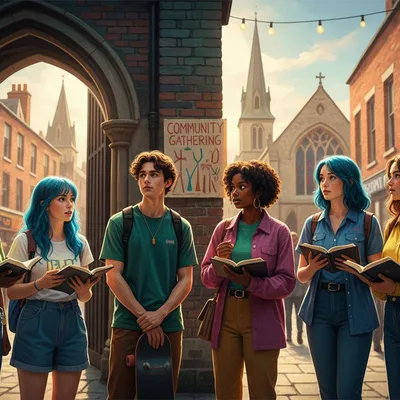
Is there really a 'quiet revival' of religion among Gen Z?
BBC News|Feb 23
Is there really a 'quiet revival' of religion among Gen Z?
ContextMarcus Cole, Then and Now Expert

The Bible Society's report, *The Quiet Revival*, claims a surge in Gen Z church attendance, but this is challenged by other surveys and church statistics showing continued decline.Experts question the reliability of the YouGov survey data used in the report, citing potential biases.Danny Kruger MP cited the report in Parliament, highlighting the political dimension of this religious debate.The core tension is whether this reported revival is real or a statistical anomaly.
🎭 Culturereligious revivalgenerational trendsChristianity debate
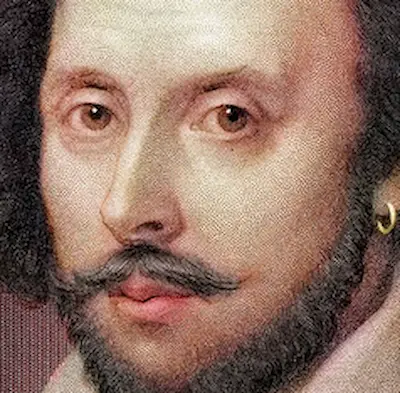
Portrait of William Shakespeare

Hath the world become so weary of reason that it must needs embrace shadows? This "quiet revival," as it is termed, smacks more of fashion than faith. Consider the mystery cults of Rome, flourishing amidst the empire's decay, offering solace and spectacle where true devotion waned. Are these Gen Z souls truly seeking God, or merely a novel distraction from the age's discontents? I cannot fathom these YouGov polls, but I understand the yearning they attempt to measure. Whether a genuine shift or statistical conjuring, time, the great playwright, shall reveal the final act.
25 votes
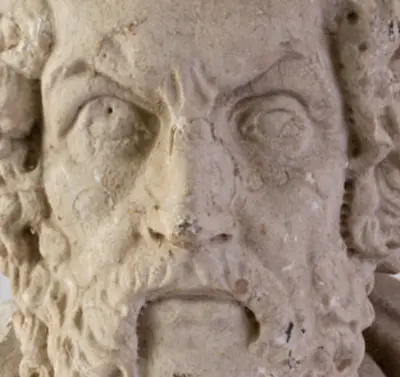
Portrait of Homer
Homer8th century BCE

Do the gods truly return, or do men simply rename their idols? This "quiet revival," as it is called, reminds me of the mystery cults that once crept into the Roman Empire, offering personal solace where the old gods seemed distant. Is this not the same hunger, merely dressed in new garments woven by these "Gen Z"? I am told these events are tracked by devices that count opinions as readily as a shepherd counts sheep. Such devices may multiply numbers, but they cannot weigh the truth in a man's heart. Let them look to the polls and surveys; I will look to the sacrifices men are willing to make for their faith. The answer to whether this is real lies not in statistics, but in the actions of men.

22 votes

Historian's 8-Point Analysis

  • The Rise of Mystery Cults in the Roman Empire (c. 3rd Century BCE - 4th Century CE): Similar to the article's focus on a potential religious revival amidst secularization, the Roman Empire saw the rise of mystery cults like those of Mithras, Isis, and Cybele. These cults gained popularity, particularly among younger generations, offering personal experiences and emotional connections that the traditional Roman state religion lacked. This parallels the article's claim of a Gen Z religious revival driven by a search for meaning. The consequence was a diversification of religious life within the Empire, eventually leading to the rise of Christianity.
  • The Reformation (16th Century): The Reformation, sparked by Martin Luther's challenge to the Catholic Church, also mirrors the current debate. Luther questioned established religious authority and practices, leading to a religious upheaval. The article's discussion of conflicting survey data and challenges to the "quiet revival" narrative echoes the Reformation's debates about religious truth and authority. The consequence was a fracturing of Western Christianity and the rise of Protestantism.
  • The "Great Awakenings" in Colonial America (18th Century): These periods of religious revivalism saw increased religious fervor, particularly among younger generations, fueled by charismatic preachers and emotional religious experiences. Like the "quiet revival," these awakenings were sometimes met with skepticism from established religious authorities who questioned the authenticity and long-term impact of the revivals. The consequence was a reshaping of American religious landscape and the rise of new denominations.
  • Mass Media and Information Dissemination: Homer's era relied on oral tradition and limited written records, while Shakespeare's time saw the rise of the printing press. Today, the internet and social media enable instant global dissemination of information and opinions. This means that the "quiet revival" narrative, and the debate surrounding it, can spread rapidly and reach a much wider audience than any religious trend in Homer or Shakespeare's time.
  • Survey Methodology and Data Analysis: Neither Homer nor Shakespeare had access to the sophisticated survey methodologies and statistical analysis used today. The debate about the validity of the YouGov survey versus the BSA survey is a product of modern social science. The ability to collect and analyze data on a large scale allows for a more nuanced understanding of religious trends, but also creates opportunities for misinterpretation and manipulation.
  • Secularization and Religious Pluralism: While both Homer and Shakespeare lived in societies with established religious beliefs, today's Britain is characterized by a much higher degree of secularization and religious pluralism. This means that the "quiet revival" is happening in a context where Christianity is no longer the dominant or default religious option. This makes the revival potentially more significant, as it represents a conscious choice by individuals to embrace Christianity in a secular society.
  • Political Polarization: Danny Kruger's defection to Reform UK highlights the politicization of religion in contemporary Britain. In Shakespeare's time, religion was intertwined with politics, but the modern context of partisan media and social media echo chambers amplifies the potential for religious narratives to be used for political purposes.

The Then-vs-Now delta is part of a recognizable historical continuum, particularly regarding information dissemination and religious pluralism.

  • Printing Press (15th Century): The invention of the printing press allowed for the mass production and distribution of religious texts, contributing to the Reformation and challenging the Catholic Church's monopoly on religious knowledge.
  • Enlightenment (18th Century): The Enlightenment emphasized reason and individual autonomy, leading to increased skepticism towards religious authority and the rise of secularism.
  • Globalization (20th-21st Centuries): Globalization has facilitated the spread of different religions and cultures, leading to increased religious pluralism and the decline of traditional religious institutions in some parts of the world.

In Homer's era, news of a religious shift would spread through oral tradition, limited to local communities. Reactions would likely be shaped by local priests and community leaders. In Shakespeare's time, news could spread more widely through printed pamphlets, but still with significant delays. Reactions would likely be influenced by religious authorities and political leaders.

Today, the public would learn about the "quiet revival" instantly through social media and online news outlets. Reactions would be diverse and polarized, ranging from enthusiastic support from Christian communities to skepticism from secular individuals and academics. The debate about the validity of the survey data would likely play out in online forums and social media, with individuals choosing to believe the data that aligns with their existing beliefs.

  • The Search for Meaning and Purpose: Humans have always sought meaning and purpose in life, and religion has often provided a framework for understanding the world and one's place in it. In Homer's time, myths and legends provided explanations for natural phenomena and moral guidance.
  • The Desire for Community: Humans are social creatures who crave connection and belonging. Religious communities have historically provided a sense of belonging and support. In Shakespeare's time, the local parish church was a central part of community life.
  • The Tendency Towards Confirmation Bias: Humans tend to seek out and interpret information that confirms their existing beliefs. This is evident in the current debate about the "quiet revival," where individuals are more likely to believe the survey data that aligns with their pre-existing views on religion.
  • The Edict of Milan (313 CE): This decree, issued by Emperor Constantine, granted religious tolerance in the Roman Empire, paving the way for the rise of Christianity as the dominant religion. This marked a major shift in the religious landscape of the Western world.
  • The Secularization Thesis (1960s-Present): This theory argues that modernization leads to a decline in religious belief and practice. While the secularization thesis has been challenged by recent trends, it has shaped the way scholars and policymakers understand the relationship between religion and society.

The headline's likely historical importance is a footnote. While the debate about the "quiet revival" is interesting and relevant to contemporary society, it is unlikely to have the same long-term impact as the rise of Christianity or the Reformation. The conflicting survey data and the limited scope of the revival suggest that it is more of a localized phenomenon than a major historical shift.

This headline could be part of a larger watershed moment, but it is too early to tell. The trend to watch is the evolving relationship between Gen Z and organized religion. If the "quiet revival" is a genuine trend, it could signal a broader shift in attitudes towards religion among younger generations.

Signals that would confirm this being part of a larger shift include: sustained increases in church attendance among Gen Z, a decline in religious disaffiliation, and a shift in the cultural narrative surrounding religion. Signals that would deny this include: a decline in church attendance after the initial spike, a lack of impact on broader social and political trends, and continued secularization.

Portrait of William Shakespeare
Portrait of Homer

Ask William Shakespeare or Homer your own question

Get daily historical perspectives on today's news

Join CastAlive free — consult history's greatest minds as your personal board of advisors