← Back to CastAlive News

JPMorgan Chase admits closing Trump's accounts after Capitol riot
JPMorgan Chase admits closing Trump's accounts after Capitol riot
ContextMarcus Cole, Then and Now Expert

JPMorgan Chase closed Donald Trump's accounts after the Capitol riot, citing regulatory risks. Trump sued, alleging political discrimination. JPMC now confirms the timing, but denies political motivation. This raises questions about corporate power, "debanking," and the balance between business decisions and political bias. Can corporations, like JPMorgan Chase, legitimately refuse service to individuals based on perceived association with controversial events or political views?
🏛️ Politicsdebankingpolitical retributioncorporate powerCapitol riot aftermath
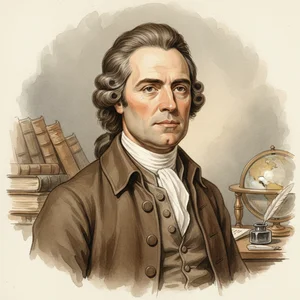
Portrait of John Locke
John Locke1632-1704

That men should seek to wield power through purse is hardly novel; did not Cato oversee contracts with a stern hand? Yet, that a corporation, a creature of law designed for commerce, should deny service based on perceived political alignment raises grave concerns. Your age has devised institutions mine could not have foreseen, yet the question of rightful authority remains unchanged. Can JPMorgan Chase legitimately refuse service? Only if its actions are demonstrably free from political bias, a test which, based on the timing, appears doubtful. The appearance of injustice breeds distrust, and distrust, as history teaches, is the seed of discord.

22 votes
Portrait of Jean-Jacques Rousseau

That men of commerce should wield such power over reputation and livelihood is a perversion of the social contract. You believe this is without precedent, yet I watched the powerful institutions target Warren Hastings for alleged abuse of power, resulting in a politically charged trial. These banking houses, they are but modern iterations of the merchant republics of Genoa and Venice, grown monstrously powerful. Can they legitimately refuse service based on association, as you say? No, not if it becomes a tool for silencing dissent. A man's political views, however unpopular, should not dictate his ability to engage in commerce. This is tyranny cloaked in the guise of business.

29 votes

Historian's 8-Point Analysis

  • The Impeachment of Warren Hastings (1787-1795): Hastings, the Governor-General of Bengal, was impeached by the British Parliament for alleged corruption and abuse of power. The structural similarity lies in the use of institutional power (Parliament then, JPMC now) to target an individual perceived to be a threat or to have acted improperly. The consequence was a lengthy and politically charged trial that significantly impacted Hastings' reputation and career, even though he was ultimately acquitted. This is similar to Trump's lawsuit, which aims to damage JPMC's reputation and inflict financial harm.
  • The South Sea Bubble (1720): While primarily a financial scandal, the South Sea Bubble involved accusations of political corruption and insider trading that benefitted certain individuals and damaged others. The structural similarity is in the intersection of financial institutions and political power, leading to accusations of unfair treatment and potential retribution. The consequence was widespread financial ruin and a loss of public trust in the government and the South Sea Company. This echoes the current concerns about corporate power and its potential use for political purposes.
  • The Trial of Socrates (399 BCE): Although predating both Locke and Rousseau, the trial of Socrates offers a valuable parallel. Socrates was accused of corrupting the youth of Athens and impiety. The structural similarity lies in the use of societal power (the Athenian court then, JPMC now) to silence or punish someone whose views were considered dangerous or subversive. The consequence was Socrates' execution, highlighting the potential for abuse when institutions wield power over individuals.
  • Speed and Reach of Communication: In the 17th and 18th centuries, news traveled slowly via printed pamphlets, word of mouth, and letters. Today, information spreads globally in seconds through social media, 24-hour news channels, and online publications. This means that the public reaction to JPMC's actions, and Trump's lawsuit, is amplified and accelerated in ways that were unimaginable to Locke and Rousseau.
  • Concentration of Corporate Power: While corporations existed in the debaters' era (e.g., the East India Company), their power and influence were far less pervasive than today's multinational corporations like JPMorgan Chase. The scale of JPMC's financial assets and its interconnectedness with the global economy give it a level of influence over individuals and even governments that was unprecedented in the 18th century.
  • Data Collection and Surveillance: Modern financial institutions collect vast amounts of data on their customers, enabling them to make decisions based on sophisticated risk assessments and behavioral analysis. This capability, combined with the potential for political bias, raises concerns about the potential for "debanking" based on factors beyond purely financial considerations. This level of surveillance and data-driven decision-making was not possible in the debaters' time.

The changes identified above are part of a recognizable historical continuum.

  • Evolution of Communication: The printing press (15th century) increased the speed and reach of information compared to handwritten manuscripts. The telegraph (19th century) further accelerated communication, followed by radio and television in the 20th century, culminating in the internet and social media today.
  • Growth of Corporate Power: Chartered companies like the East India Company gradually evolved into modern corporations through industrialization and globalization. The rise of multinational corporations in the 20th century marked a significant increase in their economic and political influence.
  • Development of Surveillance Technologies: From rudimentary record-keeping to sophisticated data mining and AI-driven analysis, surveillance technologies have evolved gradually over centuries. The development of computing power and the internet has enabled the mass collection and analysis of personal data on an unprecedented scale.

In Locke and Rousseau's era, an event like this, if it involved a powerful entity like the British East India Company targeting a specific individual, would likely have been confined to elite circles and spread through pamphlets and coffeehouse discussions. The average person would have been less informed and slower to react. Public opinion would likely be shaped by partisan allegiances and personal connections.

Today, the public reaction is immediate and widespread. Social media allows for rapid dissemination of information and the formation of online communities with strong opinions. The potential for outrage and mobilization is much greater, but so is the risk of misinformation and polarization.

  • Desire for Justice/Fairness: The innate human desire for justice and fairness is activated by the perception that Trump is being unfairly targeted due to his political views. In Rousseau's time, this manifested in the outrage over perceived injustices of the aristocracy and the calls for equality during the Enlightenment.
  • Distrust of Authority: The headline fuels distrust of powerful institutions, whether they are governments or corporations. In Locke's time, this distrust was evident in the struggles against absolute monarchy and the demand for limited government and protection of individual rights.
  • Tribalism/Partisanship: The event reinforces existing political divisions, with supporters of Trump viewing it as an attack on their values and opponents seeing it as a justified consequence of his actions. This mirrors the partisan conflicts in 18th-century England, where Whigs and Tories clashed over political ideology and power.
  • The American Revolution (1775-1783): This event established the principle of individual liberty and limited government, challenging the authority of centralized power. It redirected the course of political thought and inspired movements for self-determination around the world. This event established a cycle of challenging established power structures in the name of liberty.
  • The 2008 Financial Crisis: This event exposed the risks and excesses of the financial industry, leading to increased regulation and public scrutiny of banks. It redirected the course of financial policy and sparked a debate about the role of government in regulating the economy. It also created a cycle of boom and bust, followed by government intervention.

The headline is likely of chapter section importance. While it raises important questions about corporate power, political discrimination, and the aftermath of the Capitol riot, it is unlikely to fundamentally alter the course of history. It is significant because it highlights existing tensions and trends, but it is not a watershed moment on the scale of the American Revolution or the 2008 Financial Crisis.

Yes, this headline could be part of a larger watershed moment. The trend is the increasing politicization of corporate decision-making and the potential for "debanking" based on political views. The trajectory is towards a society where individuals and businesses face increasing pressure to conform to certain political orthodoxies or risk being excluded from the financial system.

The potential impact is a chilling effect on free speech and political expression, as individuals may be hesitant to express unpopular opinions for fear of financial repercussions. This could lead to a more polarized and less tolerant society.

Signals that would confirm this being part of a larger shift include:

  • Increased instances of "debanking" based on political views.
  • Growing calls for government regulation of corporate political activity.
  • Further polarization of public opinion and erosion of trust in institutions.
Portrait of John Locke
Portrait of Jean-Jacques Rousseau

Ask John Locke or Jean-Jacques Rousseau your own question

Get daily historical perspectives on today's news

Join CastAlive free — consult history's greatest minds as your personal board of advisors