← Back to CastAlive News

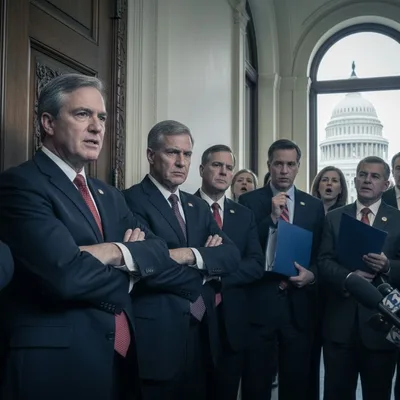
Trump announces increase of new global tariffs from 10% to 15%
BBC News|Feb 23
Trump announces increase of new global tariffs from 10% to 15%
ContextMarcus Cole, Then and Now Expert

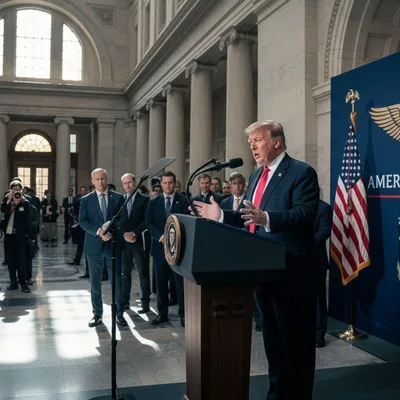
President Trump, after the Supreme Court rejected his earlier tariffs imposed under IEEPA, has announced new 15% global tariffs under Section 122 of the 1974 Trade Act.Intended as temporary, they aim to address the $1.2 trillion trade deficit, impacting nations with existing trade deals.Businesses seek refunds on the invalidated tariffs, fueling debate over executive power and economic protectionism.
🏛️ Politicstariff policylegal challengesexecutive overreach
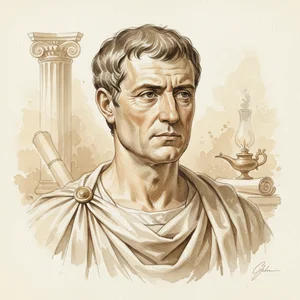
Portrait of Marcus Tullius Cicero

Has the folly of Diocletian returned to haunt the world? To fix prices by decree, as that emperor attempted with his Edictum de Pretiis, is to misunderstand the very nature of commerce. Now, tariffs are proclaimed by this Trump, seeking to command plenty. You have multiplied messengers as never before; voices leap across oceans, carried on machines. Yet the ancient error persists: that wealth can be seized rather than earned. The question is whether these measures benefit or harm. I fear a protection that smothers enterprise, and a short-term gain purchased with long-term stability. Let justice and fairness guide your commerce, not the fleeting advantage of a strong hand.
21 votes
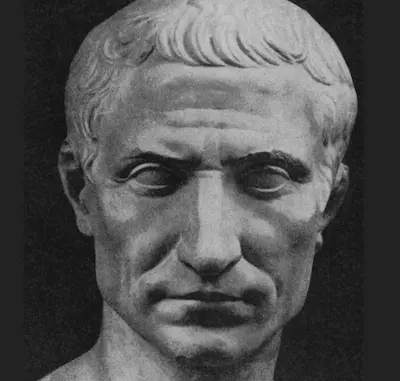
Portrait of Julius Caesar
Julius Caesar100-44 BC

Is it not ever thus, that those who grasp at power believe they can control the tides of commerce with a flick of the wrist? Diocletian, in his folly, attempted to dictate prices, and what did it achieve but resentment and shortages? This modern Caesar, with his "tariffs," believes he can mend a "deficit" by diktat. The distance between my world and yours is in the speed with which folly travels. Where once news crept slowly by courier, now pronouncements leap across the world in an instant, magnifying their impact. Whether pursuing national economic interests through such measures ultimately benefits or harms, only time shall reveal. But I wager it breeds only discord and short-sighted gains.

32 votes

Historian's 8-Point Analysis

  • The Edictum de Pretiis (Edict on Maximum Prices), 301 AD: Roman Emperor Diocletian, facing inflation and economic instability, issued an edict fixing maximum prices for goods and services throughout the Roman Empire. Like Trump's tariffs, this was a top-down intervention intended to address economic problems. The structural similarity lies in the attempt to use state power to control market forces. Consequence: The edict was largely unenforceable and ultimately failed, leading to black markets and further economic disruption.
  • The English Navigation Acts (1651-1673): These acts restricted colonial trade to English ships and ports, aiming to benefit English merchants and industries. This is similar to Trump's tariffs in that it prioritized domestic economic interests through protectionist measures. Consequence: While initially beneficial to England, the Navigation Acts created resentment in the colonies and were a contributing factor to the American Revolution.
  • The Corn Laws (1815-1846): These tariffs on imported grain in Britain were designed to protect domestic agricultural producers. This mirrors Trump's stated goal of protecting American industries. Consequence: The Corn Laws led to higher food prices, social unrest, and ultimately their repeal, marking a victory for free trade advocates.
  • Information Dissemination: In Cicero and Caesar's time, news traveled slowly via messengers and word of mouth. An announcement like Trump's tariff increase, disseminated instantly via social media (Truth Social) and global news networks, would have been unimaginable. The speed and reach of modern communication amplify the immediate impact and potential for public reaction.
  • Economic Interdependence: The Roman economy, while extensive, was less globally integrated than today's. Modern supply chains are highly complex and interconnected. Tariffs on a wide range of goods would have far-reaching consequences for businesses and consumers, impacting prices and availability in ways that the Roman economy was less susceptible to.
  • Legal and Institutional Constraints: While Roman law existed, the concept of judicial review by a supreme court striking down executive actions was absent. The Supreme Court's ruling against Trump's previous tariffs highlights a significant difference in the checks and balances on executive power.
  • Financial Instruments: The level of sophisticated financial instruments and markets that exist today did not exist in the time of Caesar and Cicero. Today, there is the ability to hedge against the effects of tariffs and the ability to speculate on the effects of tariffs.

The changes outlined above are part of a recognizable historical continuum.

  • Information Dissemination: The progression from word-of-mouth to the printing press (Gutenberg, 1440), then to the telegraph (Morse, 1830s), and finally to the internet demonstrates a continuous acceleration of information flow.
  • Economic Interdependence: The growth of trade routes from the Silk Road to the Hanseatic League (13th-17th centuries), and then to the age of colonialism and globalization, shows a gradual increase in economic interconnectedness.
  • Legal and Institutional Constraints: The evolution of legal systems from Roman law to the Magna Carta (1215) and the development of constitutionalism and judicial review represent a continuous trend towards limiting executive power.

In Cicero and Caesar's era, news of a similar economic decree (e.g., a tax increase or currency devaluation) would have spread slowly, primarily affecting merchants and landowners initially. The average Roman citizen would likely learn about it through public announcements or local gossip, with limited ability to voice dissent beyond local protests or grumbling. Today, the public reaction would be immediate and widespread, fueled by social media, 24-hour news cycles, and online forums. People could express their opinions instantly, organize protests, and directly contact elected officials.

  • Self-Interest: The desire to protect one's economic interests remains constant. In Cicero's time, wealthy landowners would have lobbied for policies that benefited their estates, just as businesses today lobby for or against tariffs.
  • Fear of Economic Uncertainty: The anxiety caused by economic instability is a timeless human emotion. Roman citizens worried about food prices and employment, just as people today fear job losses and inflation due to tariffs.
  • Resentment of Perceived Injustice: People react negatively to policies they perceive as unfair or discriminatory. Roman subjects resented heavy taxation, just as businesses today protest tariffs that disadvantage them compared to their competitors.
  • The Repeal of the Corn Laws (1846): This event marked a turning point in British economic policy, signaling a shift towards free trade and away from protectionism. It redirected the course of trade policy and influenced global economic thought.
  • The Smoot-Hawley Tariff Act (1930): Enacted during the Great Depression, this act raised tariffs on thousands of imported goods in the United States. It is widely considered to have worsened the Depression by reducing international trade. This event highlights the cyclical nature of protectionist policies, often enacted during economic downturns.

The headline regarding Trump's new tariffs is likely a *chapter section*-defining event. While it has immediate economic and political consequences, it does not represent a fundamental shift in the long-term trajectory of global trade. It is more significant than a footnote but less impactful than the repeal of the Corn Laws or the Smoot-Hawley Tariff Act, which had more profound and lasting effects. The current situation is a continuation of an existing trend of trade tensions, rather than a completely new paradigm.

This headline could be part of a larger watershed moment if it signals a sustained shift towards protectionism and deglobalization. The trend to watch is whether other countries retaliate with their own tariffs, leading to a trade war that significantly disrupts global supply chains and economic growth. Confirmation would come from a series of similar protectionist measures enacted by major economies, a decline in global trade volumes, and a decoupling of economic relationships. If, however, the tariffs remain temporary and do not trigger widespread retaliation, it is more likely to be an isolated event.

Portrait of Marcus Tullius Cicero
Portrait of Julius Caesar

Ask Marcus Tullius Cicero or Julius Caesar your own question

Get daily historical perspectives on today's news

Join CastAlive free — consult history's greatest minds as your personal board of advisors