← Back to CastAlive News

Russia soldiers tell BBC they saw fellow troops in Ukraine war executed on commanders' orders
BBC News|Feb 25
Russia soldiers tell BBC they saw fellow troops in Ukraine war executed on commanders' orders
ContextMarcus Cole, Then and Now Expert

A BBC report reveals Russian soldiers alleging executions of their own troops by commanders for refusing orders in Ukraine.Soldiers also describe "meat storm" tactics leading to massive casualties, and torture of those who disobey.These accounts contradict the official Russian narrative of restrained military conduct.The stakes involve potential war crimes, military morale, and the credibility of battlefield reports.Given historical precedents for such brutality, should the international community prioritize investigation and prosecution, or focus on de-escalation.
🏛️ PoliticsMilitary command brutalityexecutionswar crimesUkraine conflict
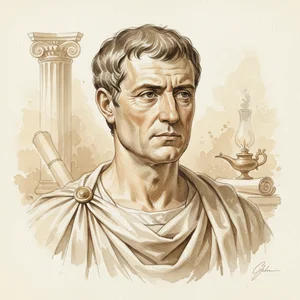
Portrait of Marcus Tullius Cicero

By Jupiter, do these moderns never learn that cruelty begets only cruelty? The allegations against these Russian commanders echo the barbarity of Antony, who decimated his own legions to enforce obedience. Rome asked this question and answered it badly; I am curious whether you will do better. These instantaneous proclamations – what you call news reports – spread word of horrors unseen in my time. Yet the heart of the matter remains unchanged: unchecked power corrupts, and fear breeds desperation. Investigate, by all means, but remember that justice delayed is justice denied. Let the pursuit of accountability not become another instrument of war, lest we find ourselves consumed by the very flames we seek to extinguish.
25 votes
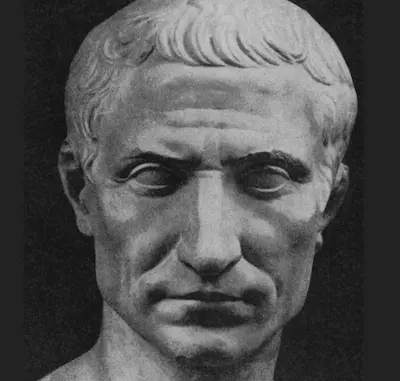
Portrait of Julius Caesar
Julius Caesar100-44 BC

That commanders, in desperation, resort to butchery to enforce obedience is a tale as old as war itself. I recall Antony's decimation of his troops in 36 BCE, a savage act born of failing morale. Yet, even then, such measures breed resentment, not resolve. This "international community" you speak of, with its courts and laws, is a novel concept, a grand arena for rhetoric. But whether their judgments hold sway on the battlefield is another matter. Still, some things remain unchanged. The soldier fears death more than dishonor. Investigation is warranted, but de-escalation must be the priority. Justice delayed is justice denied, but justice pursued at the cost of greater bloodshed is a fool's errand.
26 votes

Historian's 8-Point Analysis

  • The Decimation of Antony's Troops (36 BCE): Following a disastrous campaign against the Parthians, Antony, as described by Plutarch, faced a demoralized and panicked army. After some troops deserted their post, Antony resorted to decimation – executing one in ten soldiers by lot. This event shares a structural similarity with the modern headline in that it reveals a Roman commander resorting to extreme measures (lethal punishment) to maintain order and discipline within his ranks, demonstrating a breakdown of trust and morale. The consequence was further demoralization and resentment within the army, although it likely also deterred further desertions.
  • Roman Military Mutinies During the Republic (Various): Throughout the Roman Republic, mutinies were not uncommon, often stemming from issues of pay, conditions, or perceived injustice from commanders. While not always involving executions, these mutinies highlight the potential for internal conflict and breakdown of order within the Roman military. A specific example is the mutiny of Roman legions in Pannonia after the death of Augustus in 14 AD, as recorded by Tacitus. Soldiers protested their harsh conditions and demanded better treatment. The structural similarity lies in the soldiers' discontent with their leadership and the system, leading to a challenge of authority. The consequence was often negotiation and concessions from the leadership to quell the unrest, though sometimes violence was used to suppress the mutiny.
  • Information Dissemination: In Cicero and Caesar's time, news of military actions and internal discipline would spread primarily through word of mouth, letters, and public announcements (often controlled by the state). Today, the BBC's reporting, amplified by the internet and social media, allows for near-instantaneous global dissemination of information, bypassing official channels and potentially shaping public opinion more rapidly and widely.
  • International Law and War Crimes Tribunals: The concept of codified international law and war crimes tribunals did not exist in the Roman Republic. Commanders were largely accountable to the Roman state and its laws, but the idea of an international body holding them accountable for actions against their own troops was absent. Today, the International Criminal Court (ICC) and other organizations could potentially investigate and prosecute alleged war crimes, including the execution of soldiers.
  • Military Technology and Tactics: The "meat storm" tactics described in the article are a product of modern warfare, combining mass mobilization with advanced weaponry. Roman warfare, while brutal, relied more on formations, training, and individual combat skills. The scale of casualties and the impersonal nature of modern warfare contribute to a different psychological impact on soldiers.

The changes described above represent a mix of continuous and discontinuous developments:

  • Information Dissemination: This is a continuum. From word of mouth to written correspondence, the invention of the printing press, the telegraph, radio, television, and finally the internet, each step has increased the speed and reach of information.
  • International Law: This is more of a discontinuous shift. While concepts of just war existed in antiquity, the codification of international law and the establishment of institutions like the ICC represent a significant break from the past. The gradual development of international agreements like the Geneva Conventions represents a more continuous element within this discontinuity.

In Cicero and Caesar's era, news of such brutality might have sparked outrage among certain segments of the population, particularly if it involved Roman citizens being mistreated. However, the information would likely be filtered through political channels, and the public's response would be influenced by their allegiance to specific leaders or factions. There would be limited means for independent verification or widespread public debate.

Today, the public reaction would likely be more immediate and widespread, fueled by social media and 24-hour news cycles. There would be calls for international investigations, sanctions, and potentially even military intervention. Public opinion could be significantly swayed by the graphic nature of the reports and the emotional impact of firsthand accounts from soldiers.

  • Self-Preservation: The instinct to avoid death and injury is fundamental. Roman soldiers, like modern soldiers, would naturally seek to avoid dangerous situations. The threat of execution for refusing orders highlights this conflict between self-preservation and obedience to authority. For example, during the Roman civil wars, soldiers often deserted or switched sides to avoid fighting against their friends or family.
  • Moral Outrage: The sense of injustice and moral outrage at the mistreatment of fellow soldiers is a recurring theme throughout history. Roman soldiers were known to mutiny or rebel against commanders who were perceived as cruel or unfair. This moral outrage is clearly on display in the modern article.
  • Desire for Justice: The desire for justice and accountability is another constant. Roman citizens, including soldiers, expected their leaders to uphold the law and protect their rights. The lack of accountability for commanders who commit atrocities would likely provoke anger and resentment, just as it does today.
  • The Nuremberg Trials (1945-1946): This event established the principle of individual accountability for war crimes, even when committed under orders. This redirected the course of international law and set a precedent for future war crimes tribunals.
  • The Rise of Nationalism: The rise of nationalism in the 19th and 20th centuries created a cycle of conflict and violence, as nations competed for power and resources. This cycle has contributed to the conditions in which war crimes and atrocities are more likely to occur.

The headline is likely of chapter section importance. While the specific allegations are shocking and contribute to the broader narrative of the Ukraine conflict, they are not entirely unprecedented in the history of warfare. The decimation of Antony's troops and other instances of military brutality demonstrate that such events have occurred throughout history. However, the modern context of international law and instant global communication gives this headline greater potential to influence public opinion and trigger international action.

This headline could be part of a larger watershed moment if it contributes to a growing movement for greater accountability for war crimes and human rights violations in armed conflicts. The trend would be towards increased scrutiny of military actions, greater pressure on governments to investigate and prosecute alleged war crimes, and potentially the development of new international legal mechanisms to address these issues.

Signals that would confirm this trend include:

  • Increased investigations and prosecutions of war crimes by international and national courts.
  • Greater public awareness and activism on issues of war crimes and human rights violations.
  • Strengthening of international legal norms and institutions related to war crimes.
Portrait of Marcus Tullius Cicero
Portrait of Julius Caesar

Ask Marcus Tullius Cicero or Julius Caesar your own question

Get daily historical perspectives on today's news

Join CastAlive free — consult history's greatest minds as your personal board of advisors