← Back to CastAlive News

CIA offers tips to potential informants in Iran
CIA offers tips to potential informants in Iran
ContextMarcus Cole, Then and Now Expert

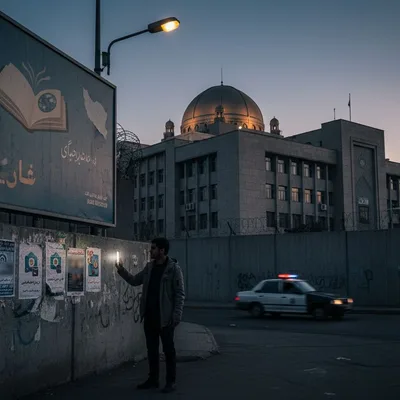
Amidst escalating tensions, the CIA is actively seeking informants within Iran, publishing Farsi-language guides on circumventing internet censorship and safely contacting the agency. This bold move highlights the ongoing intelligence war between the US and Iran, fueled by nuclear ambitions and regional proxy conflicts. The stakes are high: potential regime destabilization versus Iranian sovereignty. Given the fraught history, should the US be actively recruiting informants within Iran?

🏛️ PoliticsCIA intelligence recruitmentIran relationsmilitary intervention
Portrait of Joan of Arc
Joan of Arc1412-1431

Is it not enough that nations clash on the field of battle, but must they now skirmish in the shadows of men's hearts? This "CIA," as you call it, acting as a modern-day procurer of secrets, reminds me of the spies employed by the English against France, men who sought to undermine the rightful King and prolong our suffering. While I confess I do not understand this "internet" by which these messages travel, the principle remains the same: to sow discord and reap advantage. The question is not whether the US *can* recruit informants, but whether such actions are just before God. Such destabilization is rarely worth the cost in human souls.

19 votes
Portrait of Niccolò Machiavelli
Niccolò MachiavelliRenaissance Italy (15th-16th century)

That the Florentine should be asked to comment on the affairs of Persia and America is a jest worthy of the stage. Yet, I shall play my part. This "CIA," as you call it, reminds me of the secret agents employed by the Venetian Council of Ten, ever watchful, ever scheming. Whether the US ought to recruit informants in Iran is a question of prudence, not morality. If such actions serve to strengthen the state and preserve its interests, then I say, proceed with caution and cunning. Remember, the fox and the lion are both necessary in statecraft. The ends justify the means.
20 votes

Historian's 8-Point Analysis

  • The Sforza Family and Milanese Politics (15th Century): A structural similarity exists between the CIA's efforts to recruit informants in Iran and the strategies employed by the Sforza family in 15th-century Milan. The Sforza, initially condottieri (mercenary military leaders), rose to power by exploiting internal divisions and cultivating relationships with key individuals within Milanese society. They used bribery, promises of patronage, and even threats to gain influence and gather intelligence, ultimately seizing control of the Duchy. The consequence was a period of relative stability and prosperity under Sforza rule, but also resentment from those who felt betrayed or marginalized. The CIA's actions mirror this in seeking to exploit internal dissent within Iran to gather information and potentially influence events.
  • English Spymaster Francis Walsingham and the Babington Plot (1586): Walsingham, Queen Elizabeth I's principal secretary and spymaster, famously used a network of informants to uncover the Babington Plot, a conspiracy to assassinate Elizabeth and replace her with Mary, Queen of Scots. He intercepted coded letters between the conspirators, ultimately leading to their arrest and execution. The structural similarity lies in the use of clandestine communication and human intelligence to thwart perceived threats to national security. The consequence was the execution of Mary, Queen of Scots, and the strengthening of Elizabeth's position. The CIA's current actions can be seen as a modern version of Walsingham's intelligence gathering, albeit using digital means.
  • Communication Speed and Reach: In Joan of Arc and Machiavelli's time, information dissemination was slow and limited, relying on word of mouth, handwritten letters, and occasional printed pamphlets. Today, social media platforms like X, Instagram, and YouTube allow the CIA to reach millions of Iranians instantly with Farsi-language instructions. This speed and reach significantly amplify the potential impact of the CIA's recruitment efforts.
  • Technological Surveillance: The level of surveillance technology available today is vastly different. In the 15th and 16th centuries, surveillance was primarily conducted through human observation and rudimentary methods of interception. Now, governments possess sophisticated digital surveillance capabilities, allowing them to monitor internet activity, track communications, and identify individuals who may be communicating with foreign intelligence agencies. This creates both opportunities and risks for potential informants, as highlighted by the CIA's tips on circumventing surveillance.
  • Public Opinion Formation: Public opinion in the debaters' era was largely shaped by local authorities, religious leaders, and limited access to news. Today, public opinion is influenced by a global network of media outlets, social media, and online information sources. The CIA's message will be subject to intense scrutiny and debate, both within Iran and internationally, potentially shaping perceptions of U.S. foreign policy and Iranian internal affairs.

The changes identified above are part of a recognizable historical continuum.

  • Printing Press (15th Century): The invention of the printing press marked a significant step in the democratization of information, allowing for wider dissemination of ideas and news.
  • Telegraph and Radio (19th-20th Centuries): These inventions revolutionized communication, enabling near-instantaneous transmission of information across vast distances.
  • Internet and Social Media (Late 20th-21st Centuries): The internet and social media have further accelerated the speed and reach of communication, creating a global network of interconnected individuals and communities. The CIA's use of social media is a direct continuation of this trend, leveraging technology to reach potential informants in Iran.

In Joan of Arc and Machiavelli's era, an equivalent event – say, a foreign power attempting to recruit informants within a rival kingdom – would have been communicated primarily through rumors and official pronouncements. The average person would likely have limited information, relying on the interpretations provided by local authorities and religious leaders. Reactions would likely range from fear and suspicion of the foreign power to potential support for those willing to challenge the existing regime.

Today, the public reaction is far more complex and immediate. The CIA's message is instantly accessible to millions of Iranians, sparking debate and discussion on social media and in the press. Reactions are likely to be polarized, with some supporting the CIA's efforts as a means of challenging the Iranian government, while others condemn it as foreign interference. Global audiences will also weigh in, potentially shaping international perceptions of the U.S. and Iran.

  • Self-Preservation: The desire to protect oneself and one's family is a fundamental human instinct. In Machiavelli's time, individuals faced significant risks when challenging established authority. Similarly, in Iran today, potential informants face severe consequences if caught collaborating with the CIA. Despite technological advancements, the fear of reprisal remains a powerful deterrent.
  • Desire for Power/Influence: The allure of power and influence has always motivated human behavior. In the Renaissance, individuals sought to gain favor with powerful rulers through loyalty and service. Today, some Iranians may be tempted to provide information to the CIA in exchange for potential benefits, such as financial rewards or asylum.
  • Distrust of Outsiders: Suspicion and distrust of foreigners is a recurring theme throughout history. In Joan of Arc's time, the English were viewed as invaders and enemies of France. Similarly, in Iran today, the U.S. is often perceived as a hostile power seeking to undermine the Islamic Republic. This deep-seated distrust can complicate the CIA's efforts to recruit informants.
  • The Iranian Revolution (1979): This event fundamentally altered the relationship between the U.S. and Iran, transforming a close alliance into a hostile rivalry. The revolution led to the establishment of an Islamic Republic that viewed the U.S. as a primary adversary, setting the stage for decades of tension and conflict.
  • The Iran-Contra Affair (1985-1987): This scandal revealed a secret U.S. arms deal with Iran in exchange for the release of American hostages, further damaging relations between the two countries. The affair highlighted the complex and often contradictory nature of U.S. foreign policy in the Middle East.

The CIA's actions are likely to be of *chapter section* historical importance. While the event is not on par with the Iranian Revolution, it is a notable development in the ongoing U.S.-Iran rivalry. It underscores the continued use of intelligence operations as a tool of statecraft and highlights the challenges of navigating complex geopolitical relationships in the digital age.

Yes, this headline could be part of a larger watershed moment. The trend is the increasing use of digital platforms for intelligence gathering and influence operations. The potential impact is a further blurring of the lines between traditional espionage and information warfare, with states increasingly relying on social media and online networks to achieve their strategic objectives.

Signals that would confirm this being part of a larger shift include: increased frequency of similar operations by other intelligence agencies, greater public awareness of digital espionage tactics, and the development of new legal and ethical frameworks to govern online intelligence activities.

Portrait of Joan of Arc
Portrait of Niccolò Machiavelli

Ask Joan of Arc or Niccolò Machiavelli your own question

Get daily historical perspectives on today's news

Join CastAlive free — consult history's greatest minds as your personal board of advisors