← Back to CastAlive News

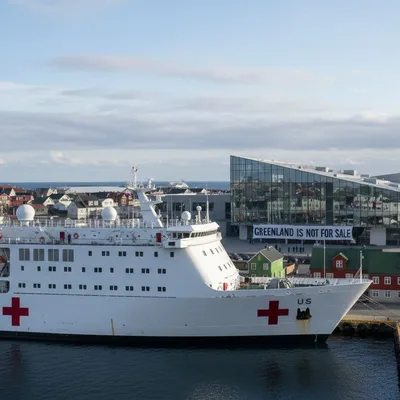
Trump wants to deploy a hospital ship to Greenland alleging people aren't receiving care
Trump wants to deploy a hospital ship to Greenland alleging people aren't receiving care
ContextMarcus Cole, Then and Now Expert

In 2019, President Trump floated the idea of purchasing Greenland from Denmark. Now, he proposes deploying a U.S. hospital ship, citing inadequate healthcare. Greenland has universal healthcare, and the move is seen as an attempt to assert U.S. influence in the Arctic, where strategic interests are growing. The underlying tension is between national sovereignty and perceived humanitarian justification for intervention. Should the U.S. be allowed to intervene in Greenland, even with a healthcare rationale?
🏛️ PoliticsTrump Greenland proposalhealthcare claimsgeopolitical overreach
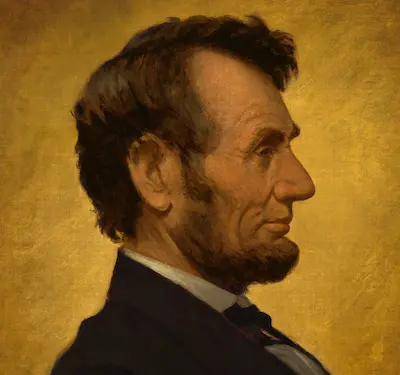
Portrait of Abraham Lincoln

Shall we stretch the cloak of humanitarianism to cover any ambition that seeks new dominion? While the provision of healthcare is a noble cause, the specter of intervention, particularly in a nation with its own established system, requires careful scrutiny. As Mr. Paine observed, we ought to steer clear of entanglements that do not serve the interests of peace and commerce. Asserting influence through perceived humanitarian needs risks undermining the very principles of sovereignty and self-determination we hold dear. Let us not allow the promise of aid to become a pretext for actions that could compromise the independence of other nations.

20 votes
Portrait of John C. Calhoun

Has the siren song of empire so addled American minds that they now see benevolence in brute force? This proposal to send a hospital ship to Greenland echoes the spirit of the Platt Amendment, where purported good intentions masked a naked assertion of power. These moderns possess the capacity to transmit news across continents in the blink of an eye, yet they seem blind to the enduring truth that a nation's sovereignty is not a plaything to be trifled with. If the people of Greenland have not requested this intrusion, then I say no, the United States has no right to interpose, regardless of the supposed benefits. Let us not cloak ambition in the guise of charity.
18 votes

Historian's 8-Point Analysis

  • The Louisiana Purchase (1803): This event shares structural similarities with Trump's Greenland proposal. Both involve the U.S. seeking to acquire territory for strategic and potentially economic reasons. The Louisiana Purchase, negotiated under President Thomas Jefferson, involved the U.S. buying a vast territory from France. Consequence: It doubled the size of the U.S., secured control of the Mississippi River, and fueled westward expansion. The key similarity lies in the *attempt* to acquire territory, even if the methods (purchase vs. deployment of resources) differ.
  • The Platt Amendment (1901): While not a territorial acquisition, the Platt Amendment, imposed on Cuba after the Spanish-American War, allowed the U.S. to intervene in Cuban affairs to preserve order and protect U.S. interests. This parallels the "healthcare" justification for intervention in Greenland. Consequence: It established a U.S. protectorate over Cuba, limiting its sovereignty and allowing for U.S. military intervention. The structural similarity is the *assertion of a right to intervene* based on claimed benefits to the target population.
  • The U.S. Naval Station at Guantanamo Bay (1903-Present): This is a more direct parallel. The U.S. maintains a naval base at Guantanamo Bay, Cuba, under a perpetual lease agreement. While not a full territorial acquisition, it represents a long-term U.S. presence justified by strategic necessity. Consequence: It has been a source of ongoing tension between the U.S. and Cuba, particularly after the Cuban Revolution. The structural similarity lies in establishing a *presence in a foreign territory* based on perceived U.S. needs.
  • Global Communication: In the eras of Lincoln and Calhoun, news traveled much slower. Information about events in distant territories would take weeks or months to reach the public. Today, news of Trump's proposal would spread globally within minutes via social media and 24-hour news cycles. This immediate dissemination would amplify public reaction and potentially pressure governments to respond quickly.
  • International Law & Norms: The concept of national sovereignty and the principle of non-intervention in the internal affairs of other nations are far more developed today than in Lincoln's or Calhoun's time. While these principles were emerging, the threshold for intervention was lower. Today, Trump's proposal would likely face greater scrutiny and condemnation from international organizations like the UN, and from other nations citing international law.
  • Healthcare as a Human Right: The idea that healthcare is a fundamental human right, and that nations have a responsibility to provide it to their citizens, is a relatively modern concept. While notions of charity and public welfare existed in the 19th century, they were not framed in the same language of universal rights. This means that the claim of improving healthcare in Greenland would be viewed through a different lens today, with greater emphasis on the rights of Greenlanders to healthcare and the potential violation of those rights by external intervention.
  • Geopolitical Landscape: The Arctic region has become increasingly strategically important due to climate change and access to resources. The presence of Russia and China in the Arctic makes this area a potential flashpoint.

The Then-vs-Now delta is part of a recognizable historical continuum regarding international relations and interventionism.

  • 19th Century Imperialism: The 19th century saw European powers, and the US, engage in overt colonialism and interventionism.
  • Post-World War II Decolonization: The mid-20th century witnessed a global movement towards decolonization and the establishment of international norms against intervention.
  • Neo-Imperialism/Humanitarian Intervention: The late 20th and early 21st centuries have seen a shift towards more subtle forms of intervention, often justified on humanitarian grounds or in the name of promoting democracy, but often criticized as neo-imperialism. Trump's proposal fits within this latter phase, utilizing a "healthcare" justification similar to past humanitarian interventions.

In Lincoln's era, the average American would likely have viewed the prospect of acquiring new territory with a mix of excitement and apprehension. The idea of expanding U.S. influence and resources would appeal to the expansionist spirit of the time, but concerns about the cost and potential conflict would also be present. Information would spread through newspapers and word-of-mouth, taking weeks to reach the wider population. The range of responses would likely be limited by the lack of direct access to information and the prevailing political climate.

Today, public reaction would be much faster and more diverse. Social media would amplify both support and opposition, with instant access to information and a wider range of perspectives. Concerns about international law, sovereignty, and the potential for conflict would likely be more prominent. The healthcare justification would be scrutinized and debated, with some questioning the motives behind the proposal.

  • Desire for Power and Influence: The desire for power and influence is a constant throughout history. In Calhoun's era, this manifested in the Southern states' pursuit of political power to protect their economic interests (slavery). Trump's proposal reflects a similar desire to assert U.S. influence on the global stage, even if the specific context and methods are different.
  • Xenophobia/Distrust of Outsiders: A tendency to view outsiders with suspicion and distrust is another enduring human trait. In Lincoln's time, this was evident in the anti-immigrant sentiment that fueled the Know-Nothing movement. Today, this manifests in debates about immigration and national identity. Trump's proposal could activate this impulse, with some viewing it as an attempt to impose American values and interests on Greenlanders.
  • Rationalization of Self-Interest: The human capacity to rationalize self-interest is another constant. In Calhoun's time, this was evident in the arguments used to justify slavery, such as the claim that it was a "positive good" for both slaveholders and enslaved people. Trump's proposal, framed as improving healthcare for Greenlanders, could be seen as a rationalization of U.S. self-interest in the Arctic region.
  • The End of the Cold War (1991): This marked a major shift in the global balance of power, with the U.S. emerging as the sole superpower. This led to a period of increased U.S. interventionism in various parts of the world, often justified on humanitarian grounds or in the name of promoting democracy. The cycle seems to be one of expansion and consolidation of power, followed by periods of retrenchment and renewed competition.
  • The Rise of China (Late 20th/Early 21st Century): China's economic and military rise has challenged U.S. hegemony and led to renewed competition for global influence. This has intensified interest in strategic regions like the Arctic, where China is seeking to expand its presence.

This headline is likely a footnote in history. While it reflects broader trends in U.S. foreign policy and geopolitical competition, it is unlikely to have a lasting impact on the scale of the Louisiana Purchase or the Cold War. The proposal is likely to be met with resistance from Denmark and Greenland, and may not ultimately be implemented. Its significance lies primarily in highlighting Trump's unconventional approach to diplomacy and his continued interest in expanding U.S. influence in the Arctic.

This headline could be part of a larger watershed moment if it signals a more aggressive and interventionist U.S. foreign policy under Trump's second term. The trend would be a move away from multilateralism and towards unilateral action, with the U.S. asserting its interests more forcefully on the global stage. This could lead to increased tensions with other nations and a further erosion of international norms.

Signals that would confirm this being part of a larger shift include: * Increased U.S. military presence in the Arctic. * More frequent interventions in the affairs of other nations. * A weakening of international institutions like the UN.

Signals that would deny this being part of a larger shift include: * The proposal being rejected by Denmark and Greenland. * A return to a more multilateral approach to foreign policy. * A renewed commitment to international law and norms.

Portrait of Abraham Lincoln
Portrait of John C. Calhoun

Ask Abraham Lincoln or John C. Calhoun your own question

Get daily historical perspectives on today's news

Join CastAlive free — consult history's greatest minds as your personal board of advisors