← Back to CastAlive News

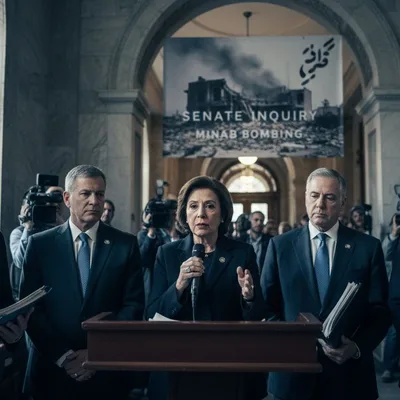
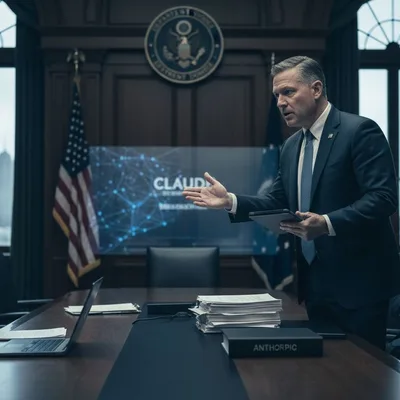
Hegseth pressures Anthropic to give military broader access to its AI tech, AP source says
Hegseth pressures Anthropic to give military broader access to its AI tech, AP source says
ContextMarcus Cole, Then and Now Expert

Defense Secretary Hegseth is demanding Anthropic, an AI developer, grant the military full access to its AI model, Claude, by week's end. Anthropic, despite a $200 million Pentagon contract, resists allowing its AI for mass surveillance or autonomous weapons, unlike some competitors. The underlying tension is balancing national security with ethical AI development and corporate autonomy. Should private tech companies be compelled to provide unrestricted access to AI for military purposes?

🏛️ PoliticsMilitary AI accessdefense contractor pressuretech policy
Portrait of John Locke
John Locke1632-1704

That men should seek to wield new instruments of power is no surprise; the question is whether they wield them justly. Hegseth's demands upon Anthropic remind me of the Crown's pressure on the East India Company, a struggle for control over resources under the guise of national interest. I confess I do not comprehend these "AI models," yet I understand the impulse to control them. Should private entities be compelled? Only insofar as their actions demonstrably threaten the natural rights of citizens. But the specter of unchecked military power, even veiled as security, demands vigilance. Let reason, not fear, guide your decisions.

21 votes
Portrait of Jean-Jacques Rousseau

Has man's ingenuity truly outstripped his capacity for virtue? This "AI," as you call it, sounds a most formidable engine, yet I fear it is but a new mask for the same old lust for dominion. The Crown's pressure upon the East India Company echoes in this Hegseth's demands. Then, as now, the question is whether the pursuit of national interest justifies trampling upon individual liberty and the integrity of enterprise. I shudder to think of the consequences were such a potent force to be wielded without restraint. I say, no, private tech companies should not be compelled to provide unrestricted access to AI for military purposes.
22 votes

Historian's 8-Point Analysis

  • The English Crown and the East India Company (17th-18th Centuries): This situation mirrors the relationship between the English Crown and the East India Company. The Company, initially a private trading entity, gained immense power and influence, including military capabilities, and was increasingly pressured by the Crown to serve national interests. The structural similarity lies in a powerful entity (Anthropic/East India Company) possessing capabilities desired by the government (US Military/English Crown) and the resulting tension over control and access. Consequence: The East India Company eventually became a de facto arm of the British government, blurring the lines between corporate and state power, leading to exploitation and ultimately, the Sepoy Mutiny of 1857.
  • The Gunpowder Plot (1605): While seemingly unrelated, the Gunpowder Plot shares the element of fear regarding internal threats and the potential for technology (gunpowder then, AI now) to be used against the state. The pressure on Anthropic to grant access to its AI could be seen as a preemptive measure against potential future threats, similar to the paranoia that fueled the response to the Gunpowder Plot. Consequence: Led to increased surveillance and restrictions on religious freedom in England.
  • The Statute of Labourers (1351): Enacted in response to the labor shortage caused by the Black Death, this statute attempted to control wages and force laborers to work for pre-plague rates. The structural similarity is the government using its power to control a resource (labor then, AI technology now) to serve its interests, even if it infringes on the autonomy of those who control that resource. Consequence: The Statute of Labourers ultimately failed to suppress wages and led to increased social unrest.
  • Speed of Information Dissemination: In Locke and Rousseau's time, news traveled slowly via letters, pamphlets, and word of mouth. Today, information spreads globally in seconds through the internet and social media. This means public reaction to Hegseth's pressure on Anthropic would be immediate and widespread, unlike in the 17th/18th centuries.
  • Technological Complexity: AI is far more complex and opaque than any technology of the Enlightenment era. The average citizen today, let alone in Locke's or Rousseau's time, has limited understanding of AI's capabilities and potential risks. This makes it harder for the public to form informed opinions and hold those in power accountable.
  • Scale of Potential Impact: The potential impact of AI, particularly in military applications, is orders of magnitude greater than anything imaginable in the 17th and 18th centuries. Autonomous weapons systems and mass surveillance capabilities raise existential questions about human control and the future of warfare, issues that were not conceivable in the era of muskets and limited communication.
  • Corporate Power: The rise of powerful multinational corporations like Anthropic is a relatively recent phenomenon. In Locke and Rousseau's time, corporations were primarily chartered by governments and were subject to greater state control. Today, corporations wield immense economic and political power, allowing them to resist government pressure more effectively.

The Then-vs-Now delta is part of a recognizable historical continuum. The increasing speed of information dissemination and the growing complexity of technology have been ongoing processes.

  • 19th Century: The telegraph and the printing press dramatically increased the speed and reach of information.
  • Early 20th Century: Radio and television further accelerated information dissemination and created mass media.
  • Late 20th Century: The internet and mobile technology revolutionized communication and created a truly global information network.

In Locke and Rousseau's era, an equivalent event (e.g., the Crown pressuring a trading company to provide resources for military purposes) would have been limited to the educated elite and those directly involved. Information would have spread slowly through pamphlets and word of mouth. Public reaction would likely have been confined to philosophical debates about the balance of power between the state and private enterprise.

Today, the public reaction would be immediate and widespread, fueled by social media and 24-hour news cycles. There would be outrage from privacy advocates, concerns about the ethics of AI warfare, and calls for government regulation. Public opinion would be heavily influenced by partisan politics and misinformation.

  • Fear of Concentrated Power: The impulse to resist concentrated power, whether in the hands of the state or private entities, is a constant throughout history. In Locke's era, this manifested in resistance to absolute monarchy and calls for limited government. The current concerns about Hegseth pressuring Anthropic reflect this same fear.
  • Desire for Security: The desire for security and protection from threats is a fundamental human need. In Rousseau's time, this led to the social contract, where individuals surrendered some freedoms in exchange for collective security. Today, this desire can be exploited to justify government overreach and the erosion of civil liberties in the name of national security.
  • Susceptibility to Propaganda: The tendency for people to be swayed by propaganda and misinformation is a recurring theme in history. In the 18th century, governments used pamphlets and newspapers to shape public opinion. Today, social media and sophisticated disinformation campaigns amplify this tendency, making it harder for citizens to discern truth from falsehood.
  • World War II (1939-1945): This event fundamentally reshaped the relationship between science, technology, and the state. The development of the atomic bomb demonstrated the immense power of scientific innovation in warfare and led to a massive increase in government funding for research and development.
  • The Cold War (1947-1991): This period of intense geopolitical rivalry between the US and the Soviet Union spurred a technological arms race, with both sides investing heavily in new weapons systems and surveillance technologies. This established a pattern of government-driven technological innovation for military purposes.

The headline's likely historical importance is at the chapter level. While not as transformative as WWII or the Cold War, it represents a significant escalation in the integration of AI into the military and raises fundamental questions about the future of warfare and the role of private companies in national security. It's a key development in the ongoing AI arms race.

Yes, this headline could be part of a larger watershed moment.

  • Trend: The increasing integration of AI into all aspects of society, including the military, is a clear trend. This is driven by the potential for AI to enhance efficiency, productivity, and security.
  • Trajectory: If this trend continues, we could see a future where AI plays an increasingly autonomous role in warfare, with potentially catastrophic consequences. The line between human control and machine decision-making could become blurred, leading to unintended escalations and ethical dilemmas.
  • Potential Impact: This could lead to a new era of warfare characterized by speed, precision, and a reduced role for human soldiers. It could also lead to a destabilizing arms race, as countries compete to develop the most advanced AI weapons systems.

Signals that would confirm this being part of a larger shift include: further consolidation of power within the AI industry, increased government funding for AI research and development, and a growing acceptance of autonomous weapons systems. Conversely, increased public awareness of the risks of AI and stronger regulatory frameworks could slow or reverse this trend.

Portrait of John Locke
Portrait of Jean-Jacques Rousseau

Ask John Locke or Jean-Jacques Rousseau your own question

Get daily historical perspectives on today's news

Join CastAlive free — consult history's greatest minds as your personal board of advisors