← Back to CastAlive News

Chloe Hayman's mum hugs her drug-driver killer in jail

BBC News|Feb 28
Chloe Hayman's mum hugs her drug-driver killer in jail
ContextMarcus Cole, Then and Now Expert

The headline reflects Danielle O'Halloran's extraordinary act of forgiving Keilan Roberts, who killed her daughter Chloe while driving under the influence.This meeting occurred as part of a restorative justice process, with O'Halloran hoping to collaborate with Roberts to educate young people.The underlying tension is whether forgiveness is appropriate, or even possible, in the face of such a devastating loss caused by criminal negligence.Should society prioritize forgiveness and restorative justice, or retribution and punishment.
🎭 Culturevehicular manslaughtervictim's family forgivenesscriminal accountability
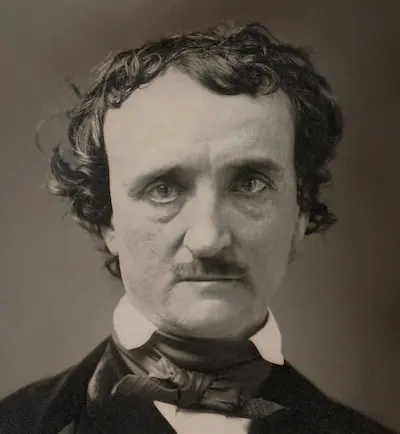
Portrait of Edgar Allan Poe

Can such an act be deemed justice, or is it merely a grotesque parody of Christian forgiveness? This "restorative justice," as it is termed, strikes me as a dangerous sentimentality, a weakening of the moral fiber that binds society. The mother's embrace, however heartfelt, cannot erase the deed, nor can it restore what has been irrevocably lost. As Wordsworth wrote of the convict, "His crime, through the pains that o’erwhelm him, descried, Still blackens and grows on his view." The implements of justice may have evolved—your "forensic toxicology" a far cry from the physician's diagnosis of my time—but the fundamental truth remains: accountability must be exacted. True justice demands retribution, lest we descend into a chaos where individual conscience alone dictates the price of transgression.

12 votes
Portrait of Charles Dickens
Charles DickensVictorian Era

That a mother, in her grief, should seek some solace, however unconventional, speaks to the enduring mystery of the human heart. I confess I find myself torn. As I depicted in *Oliver Twist*, the law, though necessary, often fails to mend the spirit broken by crime. Yet, can true justice truly reside in forgiveness alone? We are told that forensic science offers a certainty unknown in my day – a precise measure of Roberts' culpability. Though, I fought for the right to a fair trial, I cannot help but question whether this modern technology has truly changed the question. Can any measure of guilt truly balance the scales of such profound loss? The enduring power of grief, I fear, knows no era. I rather admire the mother for finding a way to find peace.


16 votes

Historian's 8-Point Analysis

  • The Case of the Pardoner's Tale (c. 1387-1400): In Chaucer's *The Canterbury Tales*, the Pardoner tells a story about three rioters who seek to kill Death after one of their friends dies. They find a pile of gold and, consumed by greed, kill each other. This is structurally similar to the Hayman case in that a death leads to reflection on morality, justice, and the consequences of vices (greed in the tale, drug use in the modern case). The consequence in the tale is a moral lesson about the dangers of avarice, whereas in the Hayman case, it leads to forgiveness and a potential collaboration to educate others.
  • The Story of the Prodigal Son (New Testament): This parable shares a structural similarity in that it focuses on forgiveness and reconciliation. The son squanders his inheritance and returns home, where his father welcomes him back with open arms. This mirrors Danielle O'Halloran's forgiveness of Keilan Roberts. The consequence in the biblical story is a celebration of repentance and divine grace. In the modern case, it's a potential for restorative justice and education.
  • The Murder of Thomas Becket (1170): While not directly about forgiveness from the victim's family, the assassination of Archbishop Thomas Becket by knights loyal to King Henry II highlights the complexities of justice, accountability, and the role of the perpetrator in society. The knights acted rashly, believing they were serving the King, similar to Roberts' reckless behavior under the influence. The consequence was widespread outrage, Becket's canonization, and Henry II's public penance, demonstrating the powerful societal need for atonement.
  • Forensic Science: In the Victorian era, determining the exact substances in Roberts' system would have been impossible. The lack of forensic toxicology significantly impacts the understanding of culpability and the basis for sentencing. Now, precise blood alcohol and drug levels can be measured, providing a clearer picture of Roberts' state of mind and the degree of his impairment.
  • Mass Media and Instant Communication: News of Chloe Hayman's death and the subsequent restorative justice meeting spread rapidly through online news outlets and social media. In Dickens' time, news would have traveled much slower, primarily through newspapers and word of mouth, limiting the scope and speed of public reaction. The immediate and widespread dissemination of information today amplifies the emotional impact and allows for broader public debate.
  • Restorative Justice Movement: The concept of restorative justice, while having roots in ancient practices, is a relatively modern development in the criminal justice system. In Poe's time, the focus was primarily on punishment and retribution. The emergence of restorative justice programs provides a framework for victims and offenders to engage in dialogue, facilitating forgiveness and reconciliation, which was less formalized in earlier eras.
  • Transportation Technology: The sheer volume and speed of modern transportation compared to horse-drawn carriages or early trains increases the potential for accidents and related deaths. This creates a higher probability of incidents like Chloe Hayman's death occurring in the first place.

The Then-vs-Now delta is part of a recognizable historical continuum related to the evolution of justice and societal responses to crime.

  • Early Justice Systems: Initially focused on retribution and blood feuds, with little emphasis on rehabilitation or victim support.
  • Rise of Formal Legal Systems: The development of codified laws and court systems aimed to provide more structured and impartial justice, moving away from purely personal vengeance.
  • Penal Reform Movements: The emergence of movements advocating for prison reform, rehabilitation, and alternatives to harsh punishment, laying the groundwork for restorative justice. The Victorian era saw significant developments in prison reform, influenced by thinkers like Jeremy Bentham.

In Poe's or Dickens' era, an equivalent event (perhaps a fatal accident caused by a drunk coachman) would have likely elicited a strong emphasis on punishment and retribution. Information would have spread more slowly, allowing for a more localized and potentially less emotionally charged reaction. The concept of a mother forgiving the perpetrator and seeking to collaborate with them would likely have been viewed with skepticism or even outrage by many, considered an unusual departure from societal norms. Today, while some would still advocate for strict punishment, the possibility of forgiveness and restorative justice is more widely accepted, although still controversial, leading to a more diverse range of public reactions.

  • Grief and Loss: The profound pain and emotional turmoil experienced by Danielle O'Halloran after losing her daughter is a universal human experience that transcends time and culture. In Poe's era, his own personal losses, particularly the death of his young wife Virginia, fueled his dark and melancholic writing, reflecting the enduring power of grief.
  • The Desire for Justice: The innate human need to see justice served, whether through punishment, accountability, or restorative measures, remains constant. In Dickens' novels, characters often seek justice for themselves or others, highlighting the enduring human desire for fairness and retribution.
  • The Capacity for Forgiveness: While not always easy or readily given, the capacity for forgiveness is a fundamental aspect of human nature. The biblical parables, known in both eras, illustrate the potential for forgiveness and reconciliation, demonstrating its enduring relevance.
  • The Enlightenment (18th Century): This intellectual and philosophical movement emphasized reason, individualism, and human rights, challenging traditional notions of authority and justice. It laid the groundwork for penal reform movements and the development of more humane approaches to crime and punishment.
  • The Rise of Victim's Rights Movements (Late 20th Century): This movement advocated for greater recognition and support for victims of crime, including the right to participate in the criminal justice process and receive restitution. This movement helped pave the way for restorative justice practices that prioritize the needs and perspectives of victims.

The headline is likely of *chapter section* historical importance. While the specific details of the case are unlikely to be remembered in the long term, it exemplifies the ongoing evolution of criminal justice and societal attitudes toward forgiveness and reconciliation. It reflects broader trends in restorative justice and the increasing recognition of victims' needs, making it a significant, though not defining, moment in the history of these movements.

Yes, this headline could be part of a larger watershed moment.

  • Trend: The increasing adoption of restorative justice practices in various jurisdictions, driven by a growing recognition of the limitations of traditional punishment-based approaches.
  • Trajectory: A continued shift toward more holistic and victim-centered approaches to crime, with a greater emphasis on rehabilitation, reconciliation, and community healing.
  • Potential Impact: A transformation of the criminal justice system, leading to reduced recidivism rates, improved victim satisfaction, and a more just and equitable society.

Signals that would confirm this being part of a larger shift include increased funding for restorative justice programs, legislative reforms that promote their use, and positive evaluations of their effectiveness. Conversely, a decline in funding, negative evaluations, or a backlash against restorative justice principles would suggest that this is an isolated event.

Portrait of Edgar Allan Poe
Portrait of Charles Dickens

Ask Edgar Allan Poe or Charles Dickens your own question

Get daily historical perspectives on today's news

Join CastAlive free — consult history's greatest minds as your personal board of advisors