← Back to CastAlive News

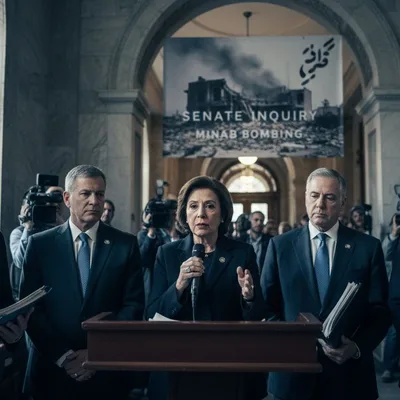
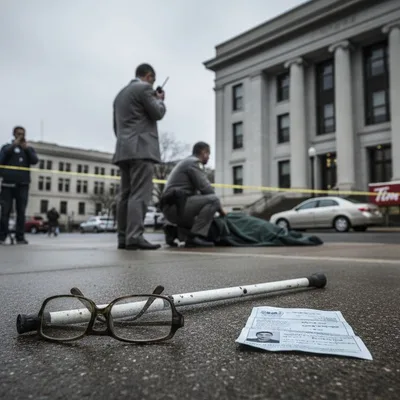
Police investigate the death of nearly blind refugee in New York state
Police investigate the death of nearly blind refugee in New York state
ContextMarcus Cole, Then and Now Expert

A nearly blind refugee from Myanmar, Nurul Amin Shah Alam, was found dead in Buffalo after being released from custody by U.S.Customs and Border Protection.He was left alone at a Tim Horton’s coffee shop despite his disabilities and lack of local connections.The investigation focuses on potential negligence by CBP.This incident highlights the tension between border security and humane treatment of vulnerable individuals.
🏛️ PoliticsBorder Patrol conductrefugee treatmentgovernment accountability
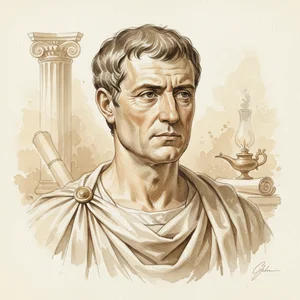
Portrait of Marcus Tullius Cicero

Is this the price of empire, that even the most wretched are deemed a threat? The fate of this Nurul Amin Shah Alam echoes, in a lesser key, the betrayals visited upon Mithridates after his defeat. To abandon a vulnerable man, nearly blind, in a foreign land after holding him in custody smacks of a cruelty Rome, at its worst, might have displayed. You have institutions now – these “humanitarian organizations” – meant to temper such actions. Are they but masks upon the face of indifference? I wrote in *De Officiis* that justice must extend even to those we conquer. This new “border security” seems to have conquered humanity itself.
14 votes
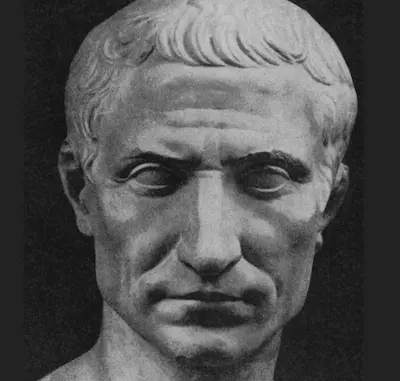
Portrait of Julius Caesar
Julius Caesar100-44 BC

That a man, blind and foreign, should perish alone in a strange land speaks more to our shared humanity than to any novel failing of governance. Rome, too, knew refugees. Mithridates, defeated and exiled, was ultimately betrayed by his own son. What separates my time from yours is not the presence of cruelty, but the *expectation* of compassion. You possess powerful instruments to identify and aid the vulnerable. That this man was abandoned suggests not a flaw in your machines, but a failure of your will. The question is not whether your state is *capable* of more humane treatment, but whether it *chooses* to be.

15 votes

Historian's 8-Point Analysis

  • The Treatment of Mithridates VI after Defeat (c. 63 BCE): After being defeated by Pompey, Mithridates VI of Pontus was essentially a refugee, seeking support from various rulers. His plight, though involving a king rather than a commoner, shares a structural similarity with Shah Alam's case. Both involve a vulnerable individual displaced from their homeland and subject to the whims of powerful authorities. The consequence for Mithridates was eventual betrayal and death, highlighting the precariousness of the refugee status.
  • The Spartacus Slave Revolt (73-71 BCE): While not refugees in the traditional sense, the rebelling slaves under Spartacus, many of whom were of foreign origin, faced extreme vulnerability and were treated brutally by the Roman state. The structural similarity lies in the dehumanization of a group perceived as "other" and the state's willingness to inflict harsh treatment upon them. The consequence was a brutal suppression of the revolt, showcasing the Roman Republic's ruthlessness toward those deemed outside the social order.
  • The Catiline Conspiracy (63 BCE): While focused on Roman citizens, the Catiline Conspiracy involved individuals deemed enemies of the state, some of whom were driven to desperation by debt and political marginalization. The structural similarity lies in the state's response to perceived threats, which could include extrajudicial actions and the suppression of dissent. The consequence was the execution of several conspirators without trial, a controversial decision that highlighted the tensions between security and due process in the Roman Republic.
  • Information Dissemination: In Cicero and Caesar's time, news of an event like this would spread primarily through word of mouth, letters, and public announcements. Now, the internet and 24-hour news cycle would ensure near-instantaneous global awareness. This speed and reach amplify public outcry and pressure on authorities to investigate.
  • Bureaucracy and Legal Frameworks: The Roman Republic had a less formalized bureaucratic structure than modern nation-states. While legal principles existed, their application was often subject to political influence and the discretion of powerful individuals. Today, there are (in theory) more robust legal frameworks for refugee protection and government accountability, although these frameworks are clearly being challenged in this case.
  • Humanitarian Organizations: The concept of organized, international humanitarian organizations dedicated to refugee assistance is largely absent in the Roman era. While individuals might offer aid, there was no institutional equivalent to the UNHCR or NGOs that advocate for refugee rights and provide support services.
  • Forensic Science: The Erie County Medical Examiner determining the cause of death is a modern concept. While Romans could perform autopsies, they lacked the scientific knowledge and technology to determine cause of death with the same level of precision. This means that determining whether neglect or mistreatment contributed to Shah Alam's death is far more possible today.

The changes described above are part of a recognizable historical continuum.

  • Development of Legal Codes: From early Roman law (the Twelve Tables) to Justinian's Code to modern international law, there's a clear progression toward more formalized legal systems.
  • Expansion of Communication Networks: From messengers and roads to the printing press to the internet, the speed and reach of communication have steadily increased.
  • Emergence of Philanthropic Institutions: From individual acts of charity in antiquity to the development of religious charities in the Middle Ages to the rise of secular NGOs in the modern era, there's a clear trend toward more organized and institutionalized forms of aid.

In Cicero and Caesar's time, the average Roman citizen's reaction to the death of a foreign refugee would likely have been muted, unless the individual was of high status or the death had direct political implications. Information would spread slowly, and the range of responses would be limited by social hierarchies and political realities. There would be little expectation of government accountability for the treatment of foreigners.

Today, the public reaction is likely to be much stronger, driven by widespread media coverage, social media activism, and a greater awareness of human rights. There would be demands for a thorough investigation, calls for policy changes, and potentially protests or other forms of public demonstration.

  • Xenophobia/Fear of the Other: The tendency to view foreigners with suspicion or hostility is a recurring theme throughout history. In Cicero's time, Romans often looked down upon "barbarians" and viewed them as uncivilized. This same impulse can be seen today in anti-immigrant sentiment and discriminatory practices.
  • Empathy/Compassion: While xenophobia exists, so does the capacity for empathy and compassion, especially when confronted with individual suffering. Plutarch's account of the Roman citizen who helped Philip bury Pompey demonstrates this. Similarly, today, many people are outraged by the mistreatment of refugees and are motivated to help.
  • Power Corrupts: The abuse of power by those in authority is a constant throughout history. Caesar's own rise to power and disregard for senatorial norms exemplify this. The headline activates concerns about potential abuses of power by border patrol agents and the government's treatment of vulnerable individuals.
  • The Refugee Convention of 1951: This UN convention established the legal definition of a refugee and outlined the rights and responsibilities of states toward refugees. It was a watershed moment in international law and humanitarianism, creating a framework for refugee protection that did not exist in Cicero and Caesar's time.
  • The rise of populism and nationalism in the 21st century: This trend, exemplified by Brexit, the election of Donald Trump, and the rise of right-wing parties in Europe, has led to increased restrictions on immigration and refugee resettlement, challenging the principles of the 1951 Refugee Convention. This could be viewed as a cyclical pattern, with periods of greater openness followed by periods of restriction and xenophobia.

The headline's likely historical importance is at the footnote / chapter section level. While tragic and indicative of broader trends, it is unlikely to be a major turning point in history. The events surrounding World War II and the creation of the UN Refugee Convention were book-defining. The rise of modern populism is potentially chapter-defining. This headline, while disturbing, is more likely to be a footnote illustrating the challenges of refugee protection in the 21st century.

Yes, this headline could be part of a larger watershed moment.

  • Trend: The increasing restrictions on immigration and refugee resettlement in many Western countries, coupled with reports of mistreatment and neglect of refugees and immigrants in detention.
  • Trajectory: If this trend continues, it could lead to a dismantling of the international refugee protection regime and a normalization of inhumane treatment of vulnerable populations.
  • Potential Impact: This could have devastating consequences for refugees and asylum seekers, leading to increased suffering and potentially fueling further instability and conflict.

Signals that would confirm this being part of a larger shift:

  • Further restrictions on immigration and asylum laws.
  • Increased reports of mistreatment and abuse of refugees and immigrants.
  • Decreasing funding for refugee resettlement programs.
  • Erosion of public support for refugee protection.

Signals that would deny this being part of a larger shift:

  • A reversal of restrictive immigration policies.
  • Increased funding for refugee resettlement programs.
  • Strong public condemnation of mistreatment of refugees and immigrants.
  • Renewed commitment to the principles of the 1951 Refugee Convention.
Portrait of Marcus Tullius Cicero
Portrait of Julius Caesar

Ask Marcus Tullius Cicero or Julius Caesar your own question

Get daily historical perspectives on today's news

Join CastAlive free — consult history's greatest minds as your personal board of advisors