← Back to CastAlive News

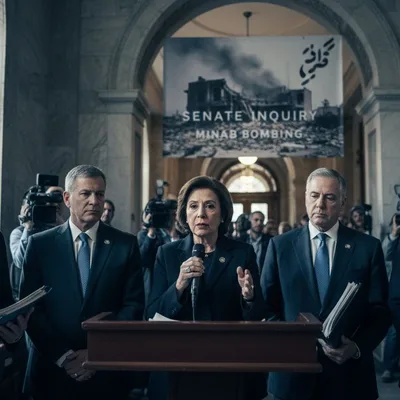
Hillary Clinton testifies in House Epstein investigation

Hillary Clinton testifies in House Epstein investigation
ContextMarcus Cole, Then and Now Expert

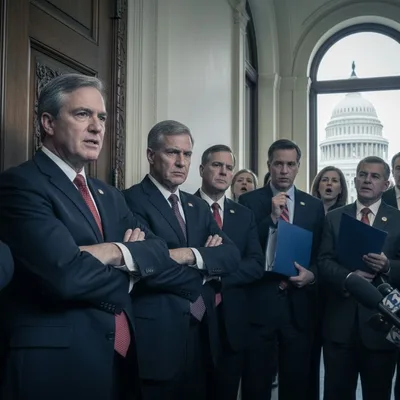
Hillary Clinton testified before the House regarding the Epstein investigation, following the release of millions of documents.She denies knowledge of his crimes, but the investigation seeks to uncover the extent of connections between powerful figures and Epstein's network.The stakes involve accountability for past abuses and potential political fallout.Given the historical context of power and influence, is public testimony truly effective in achieving justice and uncovering the truth, or is it primarily a political spectacle.
🏛️ PoliticsCongressional testimonyEpstein investigationpublic accountability
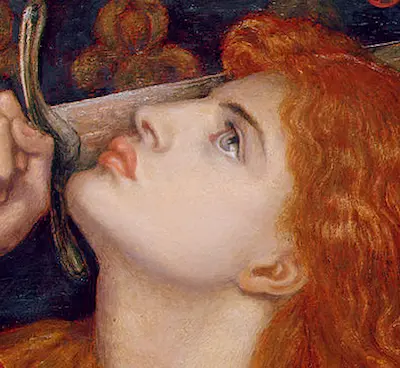
Portrait of Joan of Arc
Joan of Arc1412-1431

Must the powerful always be believed when they claim ignorance of evil done in their name? The release of these documents, this "Epstein Files Transparency Act," reminds me of the trial of the Knights Templar. Accusations flew, confessions were extracted, and the powerful implicated or exonerated as suited the King's purpose. You have multiplied the pamphlets of accusation a thousandfold with your printing presses, yet the question remains: does this testimony serve justice, or merely provide a spectacle for the masses? Like Cicero forced to testify against Clodius at the insistence of his wife, one wonders if truth or political expediency guides these pronouncements. Your confidence that you have outgrown the failures of my time is itself the oldest failure of all.
12 votes
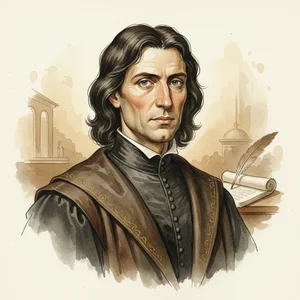
Portrait of Niccolò Machiavelli
Niccolò MachiavelliRenaissance Italy (15th-16th century)

The stench of scandal, it seems, transcends the centuries. This "Epstein investigation," as you call it, brings to mind the trial of the Knights Templar. Accusations fly, motives are questioned, and the powerful scramble to distance themselves. You speak of transparency, a concept foreign to my time, yet the human heart remains constant. Whether scribbled on parchment or broadcast through these... amplified voices, the pursuit of justice is often shadowed by the pursuit of political advantage. Public testimony? A stage for theatrics, perhaps, where truths are obscured by carefully crafted performances. The appetite for power has not evolved; only its instruments have. Is this testimony about justice or political advantage? Both, I suspect, as always.

17 votes

Historian's 8-Point Analysis

  • The Trial of the Knights Templar (1307-1312): This event shares structural similarities with the Clinton testimony. The Knights Templar, a powerful and wealthy religious order, were accused of heresy, blasphemy, and various other crimes. King Philip IV of France, deeply in debt to the Templars and seeking to consolidate power, orchestrated their arrest and trial. The accusations, likely fabricated or exaggerated for political gain, led to public outcry and the suppression of the order. Similarly, the Epstein investigation, while dealing with very different crimes, involves powerful figures, accusations of wrongdoing, and potential political motivations. The consequence was the dissolution of a powerful order and the redistribution of its wealth.
  • The Impeachment of Warren Hastings (1787-1795): Warren Hastings, the first Governor-General of Bengal, was impeached by the British Parliament on charges of corruption and abuse of power. The impeachment trial, driven by figures like Edmund Burke, lasted for years and became a major political spectacle. Hastings was eventually acquitted, but the process significantly damaged his reputation and set a precedent for holding high-ranking officials accountable for their actions. The Clinton testimony, like the Hastings impeachment, involves a high-profile figure facing scrutiny for past actions and potential wrongdoing, with the proceedings becoming a public spectacle. The consequence was a long and politically charged process that ultimately resulted in acquittal but damaged reputation.
  • The Dreyfus Affair (1894-1906): Alfred Dreyfus, a Jewish officer in the French army, was falsely accused of treason and convicted based on flimsy evidence. The case became a major political scandal, dividing French society and exposing deep-seated anti-Semitism. The Dreyfus Affair, like the Epstein investigation, highlights the potential for powerful institutions to be used for political purposes and the importance of due process and accountability. The consequence was a deep societal division and, eventually, Dreyfus's exoneration.
  • Mass Media and Information Dissemination: In the eras of Joan of Arc and Machiavelli, information spread slowly through word of mouth, handwritten documents, and, later, the printing press. Today, mass media, the internet, and social media allow for instant global dissemination of information and opinions. This means that Hillary Clinton's testimony and the surrounding controversy are immediately accessible to a vast audience, amplifying public reaction and scrutiny far beyond what would have been possible in earlier eras.
  • Rise of Investigative Journalism and Government Transparency: While some historical accounts existed, modern investigative journalism, with its focus on uncovering hidden truths and holding power accountable, is a relatively recent phenomenon. The Epstein Files Transparency Act, signed into law in 2025, reflects a modern emphasis on government transparency and public access to information. This level of scrutiny and access to information would have been unimaginable in the 15th and 16th centuries.
  • Political Polarization: Political landscapes in the past were often defined by dynastic power struggles, religious conflicts, or regional rivalries. Today, in the United States, political polarization is a dominant force, with deep divisions between parties and ideologies. This polarization shapes the way the public interprets events like the Clinton testimony, with reactions often falling along partisan lines. This would influence how the testimony is perceived and used for political gain.

The Then-vs-Now delta is part of a recognizable historical continuum of increasing information access and accountability.

  • Gutenberg's Printing Press (1440s): This invention marked a significant step in the democratization of knowledge, allowing for the mass production of books and pamphlets.
  • The Rise of Newspapers (17th-18th Centuries): Newspapers provided a regular source of information to a wider audience, contributing to the development of public opinion and political discourse.
  • The Advent of Radio and Television (20th Century): These technologies further expanded the reach of information and entertainment, creating a shared national experience and shaping public perceptions of events.

In Joan of Arc's time, news of a similar event involving a powerful figure would have spread slowly, primarily through word of mouth and limited written accounts. Public reaction would have been localized and influenced by religious beliefs and feudal loyalties. In Machiavelli's era, the printing press would have allowed for wider dissemination of information, but access would still have been limited to the educated elite. Public reaction would have been shaped by political factions and the interests of powerful families. Today, the public has instant access to information and a wide range of opinions through mass media and social media. Reactions are amplified by political polarization and shaped by partisan loyalties.

  • Schadenfreude: The impulse to derive pleasure from the misfortune of others. Example: During Machiavelli's time, the downfall of a rival ruling family would have been met with glee by their enemies.
  • Desire for Justice: The inherent human need for fairness and accountability. Example: Joan of Arc's belief in divine justice fueled her campaign to drive the English out of France.
  • Suspicion of Power: The tendency to distrust those in positions of authority. Example: Machiavelli's writings reflect a deep understanding of the corrupting influence of power and the need for rulers to maintain control through any means necessary.
  • Watergate Scandal (1972-1974): This event, involving President Richard Nixon's administration's cover-up of a break-in at the Democratic National Committee headquarters, led to Nixon's resignation and a significant increase in public distrust of government. It also strengthened investigative journalism and government transparency.
  • #MeToo Movement (2017-Present): This social movement, which exposed widespread sexual harassment and assault, has led to greater awareness of these issues and increased accountability for perpetrators. It has also sparked a broader conversation about power dynamics and gender inequality.

The headline "Hillary Clinton testifies in House Epstein investigation" is likely a *chapter section*-defining event. While it is a significant development in the ongoing Epstein investigation and reflects broader trends in political polarization and accountability, it is unlikely to have the same lasting impact as the Watergate Scandal or the #MeToo movement. The event will likely be remembered as a notable moment in the investigation and a reflection of the current political climate.

This headline could be part of a larger watershed moment related to accountability for powerful figures and the ongoing reckoning with past abuses of power. The trend is toward greater transparency and scrutiny of those in positions of authority, driven by social media, investigative journalism, and a growing demand for justice. If more high-profile figures are implicated in the Epstein case or other similar scandals, and if these revelations lead to significant institutional reforms, then this could be a sign of a larger shift. Signals that would deny this being part of a larger shift would include a lack of further revelations, a decline in public interest, and a failure to implement meaningful reforms.

Portrait of Joan of Arc
Portrait of Niccolò Machiavelli

Ask Joan of Arc or Niccolò Machiavelli your own question

Get daily historical perspectives on today's news

Join CastAlive free — consult history's greatest minds as your personal board of advisors