← Back to CastAlive News

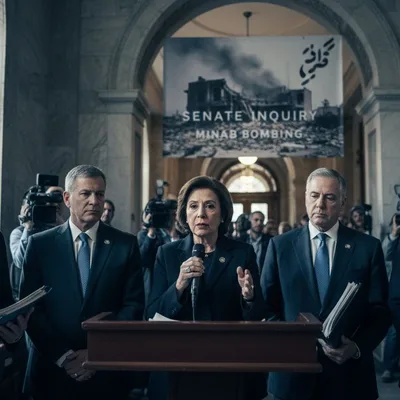
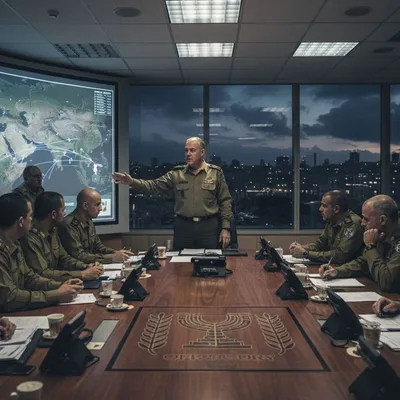
Israel's defense minister says his country has attacked Iran and declares a state of emergency
Israel's defense minister says his country has attacked Iran and declares a state of emergency
ContextMarcus Cole, Then and Now Expert

Today's headline reflects a major escalation: Israel, with US participation, launched a pre-emptive strike against Iran, codenamed "Roaring Lion" and "Operation Epic Fury", citing existential threats.Iran retaliated with missile strikes.The death of Supreme Leader Khamenei further inflames the situation.UN Secretary General condemned the strikes, while President Trump warned Iran against retaliation.The underlying tension is the potential for a wider regional war.Given these events, should a nation ever initiate a pre-emptive military strike.

🏛️ PoliticsMilitary conflictinternational relationsregional security
Portrait of John Locke
John Locke1632-1704

That the passions of men so easily overwhelm reason is a truth writ large across the ages. This pre-emptive strike by Israel, mirroring in some ways their actions in the Six-Day War, speaks to a primal fear—a fear, I suspect, that will never be overcome. Yet, it is a dangerous precedent to strike first based on the *anticipation* of aggression. You possess instruments of destruction far exceeding those of my time. Your instantaneous pamphlets, what you call "social media," spread alarm and misinformation with terrifying speed. Nevertheless, the core question remains: Can security truly be achieved through preemptive violence, or does it merely invite further escalation and instability? As I wrote in *Two Treatises of Government*, legitimate power rests upon the consent of the governed, not upon the sword.

8 votes
Portrait of Jean-Jacques Rousseau

Has the fever of princes truly not abated in these intervening years? This pre-emptive strike, reminiscent of the aggressions that ignited countless wars in my own time, raises the specter of endless conflict. Your instruments would have astonished my generation; your use of them, less so. The defense minister declares an emergency. But is it truly defense, or a desperate gamble for dominance? As I wrote in *The Social Contract*, "Man is born free, and everywhere he is in chains." These chains are forged not only by overt oppression, but by the insidious temptations of power. No, a nation is never justified in initiating pre-emptive military action, for it only perpetuates a cycle of violence and distrust. The consequences, as history has repeatedly shown, far outweigh any perceived gain.
7 votes

Historian's 8-Point Analysis

  • The Franco-Prussian War (1870-1871): This war, initiated by Otto von Bismarck's calculated manipulation of tensions between France and Prussia, bears structural similarities to the current situation. Bismarck provoked France into declaring war, creating a pretext for Prussian aggression and unifying the German states under Prussian leadership. Similarly, Israel's "pre-emptive strike" and declaration of a state of emergency, with the US participating, can be seen as a calculated move to alter the regional power balance. The consequence of the Franco-Prussian War was the unification of Germany and a shift in the European balance of power, with long-lasting repercussions. This is similar to the potential shift in the Middle East's power dynamic depending on the outcome of the current conflict.
  • The Bombing of Copenhagen (1807): During the Napoleonic Wars, Britain, fearing that Denmark's fleet would fall into Napoleon's hands, launched a pre-emptive attack on Copenhagen, bombarding the city and seizing the Danish fleet. This mirrors Israel's justification for attacking Iran – a pre-emptive measure to neutralize a perceived threat. The consequence was Denmark's alliance with Napoleon and further destabilization of Europe.
  • The Six-Day War (1967): Israel launched a pre-emptive strike against Egypt, Syria, and Jordan, fearing an imminent attack. The structural similarity lies in the perceived existential threat and the decision to initiate hostilities to gain a strategic advantage. The consequence was a significant shift in the regional map, with Israel occupying the West Bank, Gaza Strip, Golan Heights, and Sinai Peninsula.
  • Information Dissemination: In Locke and Rousseau's time, news traveled slowly via printed pamphlets, word of mouth, and infrequent newspapers. Today, information spreads instantaneously through social media, 24-hour news cycles, and global communication networks. This rapid dissemination can fuel public opinion and international pressure much faster than in the 17th and 18th centuries.
  • Military Technology: The weaponry available to states today is vastly different. Nuclear weapons, ballistic missiles, and precision-guided munitions create a far greater capacity for destruction and escalation than the muskets and cannons of Locke and Rousseau's era. The potential for a regional conflict to escalate into a global catastrophe is significantly higher.
  • International Organizations: The United Nations, and other international bodies, did not exist in Locke and Rousseau's time. These organizations provide a forum for diplomatic intervention and condemnation, which can influence the actions of states, as evidenced by the UN Secretary General's condemnation of the attacks.
  • Globalized Economy: The interconnectedness of the global economy means that conflict in one region can have immediate and widespread economic consequences, such as disruptions to oil supplies and financial markets. This economic interdependence creates a greater incentive for international actors to intervene and de-escalate conflicts.

The changes described above are part of a recognizable historical continuum.

  • Printing Press (15th Century): This invention began the shift from limited, elite-controlled information to wider dissemination, albeit still relatively slow.
  • Telegraph and Radio (19th-20th Centuries): These technologies dramatically accelerated the speed of communication, allowing news to travel across continents in hours rather than weeks.
  • Internet (Late 20th Century): This created a truly global and instantaneous communication network, transforming the way information is shared and consumed.

In Locke and Rousseau's era, the average person would have learned about the attack on Iran weeks or months later, filtered through official channels and limited news sources. Their range of responses would have been limited to local discussions and perhaps writing letters to political figures. Today, people around the world are witnessing the conflict unfold in real-time through social media and news outlets. Public reactions are immediate, diverse, and amplified through online platforms, ranging from expressions of outrage and fear to calls for peace and intervention.

  • Fear of Death and Destruction: The instinct for self-preservation and the fear of violence remain constant. During the War of the Spanish Succession (1701-1714), people feared the spread of conflict and the impact on their lives, just as people today fear the potential for escalation and widespread destruction.
  • Desire for Security: The need for safety and security is a fundamental human desire. In Rousseau's time, people sought protection from their rulers and the state. Today, people look to their governments and international organizations to provide security from external threats.
  • Us vs. Them Mentality: The tendency to divide the world into opposing groups and to favor one's own group is a persistent aspect of human nature. During the religious wars of the 17th century, people identified strongly with their religious affiliations and viewed those of other faiths with suspicion and hostility. This same "us vs. them" mentality can be seen in the current conflict, with strong divisions along national, religious, and ideological lines.
  • The Treaty of Westphalia (1648): This treaty, which ended the Thirty Years' War, established the modern state system based on the principles of sovereignty and non-interference. It redirected the course of international relations away from religious wars and towards a system of competing nation-states.
  • The Iranian Revolution (1979): This event marked a significant shift in the Middle East, establishing an Islamic Republic in Iran and challenging the existing regional order. It led to increased tensions between Iran and the United States and Israel, setting the stage for future conflicts.

The current headline, while significant, is likely to be a *chapter section* in history books. While it represents a major escalation of tensions in the Middle East and could potentially lead to a wider conflict, it does not fundamentally alter the international system in the same way as the Treaty of Westphalia or the Iranian Revolution. The parallels to the Franco-Prussian War and the Six-Day War suggest that this event is part of a recurring pattern of conflict and power struggles in the region.

Yes, this headline could be part of a larger watershed moment. The trend is towards increasing instability and conflict in the Middle East, driven by factors such as sectarian tensions, competition for resources, and the rise of non-state actors. The trajectory could lead to a wider regional war, with potentially devastating consequences.

Signals that would confirm this being part of a larger shift include:

  • Further escalation of the conflict, involving more countries and non-state actors.
  • Collapse of existing international agreements and institutions.
  • Widespread humanitarian crisis and displacement of populations.

Signals that would deny this being part of a larger shift include:

  • Successful diplomatic intervention leading to a ceasefire and de-escalation.
  • A renewed commitment to international cooperation and multilateralism.
  • Addressing the underlying causes of conflict and instability in the region.
Portrait of John Locke
Portrait of Jean-Jacques Rousseau

Ask John Locke or Jean-Jacques Rousseau your own question

Get daily historical perspectives on today's news

Join CastAlive free — consult history's greatest minds as your personal board of advisors