← Back to CastAlive News

Live updates: Israel confirms attack on Iran as explosions are heard in Tehran
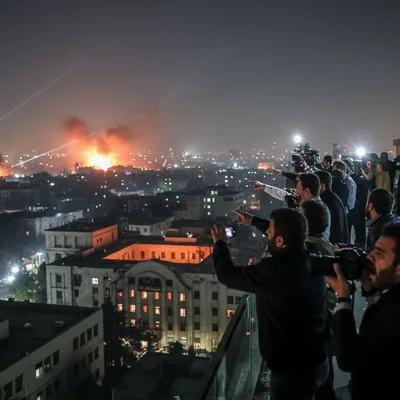
Live updates: Israel confirms attack on Iran as explosions are heard in Tehran
ContextMarcus Cole, Then and Now Expert

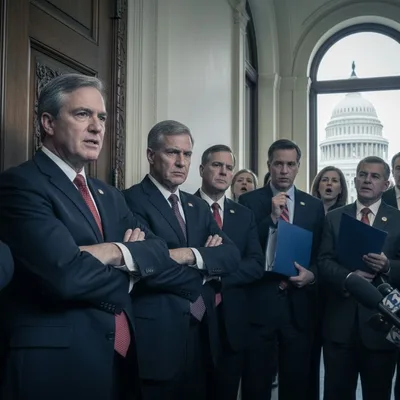
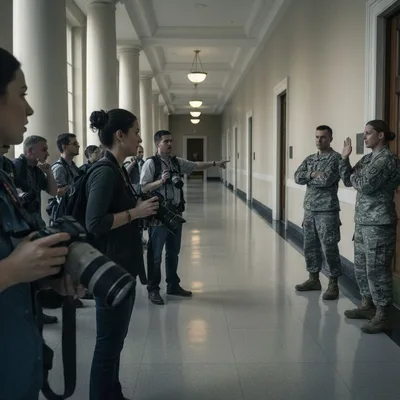
Israel confirms a military strike on Tehran, Iran, following escalating tensions. Explosions rock the capital. The attack, part of a broader, undeclared conflict aimed at toppling the regime, has drawn international condemnation and support, with fears of regional escalation. The stakes are immense: regional stability, global security, and the future of Iran. Given the potential for widespread conflict, is military intervention the most effective solution to long-standing geopolitical tensions?
🏛️ PoliticsMilitary conflictIran-Israel tensionsregional escalation
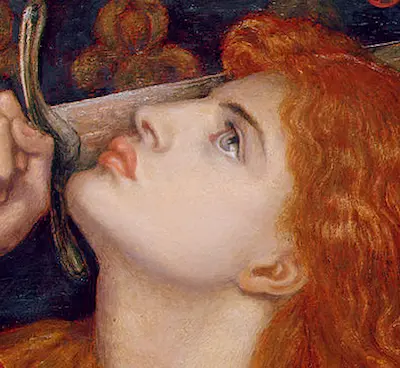
Portrait of Joan of Arc
Joan of Arc1412-1431

Hath the world learned naught from the ashes of Rome? This strike upon Tehran echoes the sack of that city, where ambition and greed masqueraded as righteous fury. You have fashioned devices that unleash destruction from the sky, a power undreamt of in my time, yet the spirit that drives such acts remains unchanged: a lust for dominion cloaked in piety. Is this "regime change" worth the risk of engulfing the region in flames? I say, nay. As the prophet Ezekiel declared, "I the LORD have kindled it: it shall not be quenched." Surely, there must be another path than the sword.
6 votes
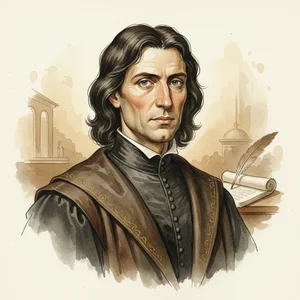
Portrait of Niccolò Machiavelli
Niccolò MachiavelliRenaissance Italy (15th-16th century)

That the dogs of war are once again unleashed surprises only the naive. Regime change, you call it? It is the oldest game, merely played with new tokens. I recall the chaos following the Sack of Rome – a city ravaged, its power diminished, and new players vying for dominance. The speed alone would have undone us; you appear merely inconvenienced. Whether military intervention is the *most* effective solution is a question for philosophers, not princes. It is *a* solution, and often the only one that truly shifts the balance. The alternative is to allow weakness to fester, inviting further aggression. Fear, not love, keeps men in line, and nations are no different.
11 votes

Historian's 8-Point Analysis

  • The Sack of Rome (1527): This event, occurring shortly after Machiavelli's death, shares structural similarities with the current headline. The Sack of Rome involved a military conflict between the Holy Roman Empire and the Papal States, leading to the occupation and devastation of a major city. Similarly, the Israeli attack on Tehran represents a military conflict between two states, with reports of explosions in the capital city. The consequence of the Sack of Rome was a significant weakening of papal authority and a shift in the balance of power in Italy. A similar consequence could be a shift in the regional power dynamics in the Middle East.
  • The Battle of Agincourt (1415): While geographically distinct, Agincourt, occurring during Joan of Arc's lifetime, offers a parallel in terms of a smaller force (English) achieving a decisive victory against a larger one (French). The Israeli attack, if successful in its objectives, could be seen as a similar David-and-Goliath scenario. The consequence of Agincourt was a temporary shift in the Hundred Years' War in favor of the English, leading to further conflict and political instability. Similarly, the Israeli attack could lead to a period of increased instability and further conflict in the Middle East.
  • Information Dissemination: In Joan of Arc and Machiavelli's time, news of conflict would spread slowly, primarily through word of mouth, letters, and official proclamations. Today, the headline is instantly disseminated globally through digital media, creating immediate public awareness and pressure on governments to respond.
  • Military Technology: The weaponry used in the 15th and 16th centuries was vastly different. The use of gunpowder was relatively new, and conflicts were often decided by hand-to-hand combat. Today, the use of advanced missile technology, air power, and cyber warfare capabilities makes conflict far more destructive and potentially escalatory. The potential for nuclear proliferation adds another layer of complexity absent in the debaters' era.
  • International Institutions: There were no international bodies like the UN Security Council to mediate conflicts in the 15th and 16th centuries. Today, international organizations, while often limited in their effectiveness, provide a framework for diplomacy and potential intervention. The existence of these institutions influences the way states respond to conflict and the potential for international pressure to be applied.

The changes in information dissemination represent a recognizable historical continuum. The progression can be seen through these intermediate steps:

1. The Printing Press (mid-15th century): Allowed for the mass production of written materials, accelerating the spread of information compared to handwritten manuscripts. 2. The Telegraph (19th century): Enabled near-instantaneous communication across long distances, revolutionizing news reporting and military command. 3. Radio and Television (20th century): Brought news and images directly into homes, creating a more immediate and visceral connection to events.

In Joan of Arc's era, the average person would likely have learned about the conflict days or weeks after it occurred, filtered through the biases of local authorities and religious figures. Reactions would be largely shaped by religious beliefs and loyalty to their local lord or king. Today, the public would have immediate access to multiple perspectives, including government statements, news reports, and social media commentary. Reactions would be more diverse, ranging from support for military action to calls for peace and humanitarian aid, influenced by political ideology, personal experiences, and global awareness.

  • Fear of Strangers/Outgroups: The tendency to distrust and fear those perceived as different or belonging to rival groups remains constant. In Machiavelli's Italy, city-states were constantly at war, fueled by deep-seated rivalries and suspicion of neighboring populations. This fear is still present today, manifesting in xenophobia, nationalism, and religious intolerance.
  • Desire for Security: The fundamental human need for safety and security drives individuals and nations to seek power and protect themselves from perceived threats. Joan of Arc's mission was driven by a desire to liberate France from English occupation and restore security to the French people. This desire for security continues to motivate states to build up their military capabilities and engage in alliances.
  • The Lure of Power: The desire for power and influence remains a strong motivator for individuals and states. Machiavelli's "The Prince" is a testament to the enduring appeal of power and the strategies used to acquire and maintain it. Today, states continue to compete for power and influence on the global stage, driven by economic, political, and military ambitions.
  • The Iranian Revolution (1979): This event marked a fundamental shift in the Middle East, leading to the establishment of an Islamic Republic in Iran and a period of heightened tensions with the United States and Israel. The revolution redirected the course of Iranian history and had a profound impact on regional politics.
  • The Arab Spring (2011): This series of uprisings across the Arab world demonstrated the potential for popular movements to challenge authoritarian regimes. While the long-term consequences of the Arab Spring are still unfolding, it highlighted the fragility of existing power structures and the potential for rapid political change in the region.

The headline "Live updates: Israel confirms attack on Iran as explosions are heard in Tehran" likely represents a chapter-defining event. While not on the scale of a world war, this attack has the potential to significantly alter the political landscape of the Middle East and trigger a wider conflict. The attack follows decades of tension and proxy wars between Iran and Israel, and could represent a major escalation in their rivalry.

This headline could be part of a larger watershed moment, marking a shift towards a more unstable and multipolar world order. The trend is towards increasing geopolitical competition between major powers, the rise of regional conflicts, and the erosion of international norms. Signals that would confirm this shift include further escalation in the Middle East, increased military spending by major powers, and a breakdown of international cooperation on key issues like climate change and nuclear proliferation. Conversely, a return to diplomacy, a de-escalation of tensions, and a renewed commitment to international cooperation would suggest that this is an isolated event.

Portrait of Joan of Arc
Portrait of Niccolò Machiavelli

Ask Joan of Arc or Niccolò Machiavelli your own question

Get daily historical perspectives on today's news

Join CastAlive free — consult history's greatest minds as your personal board of advisors