← Back to CastAlive News

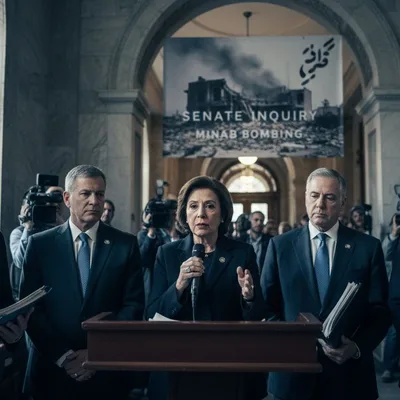
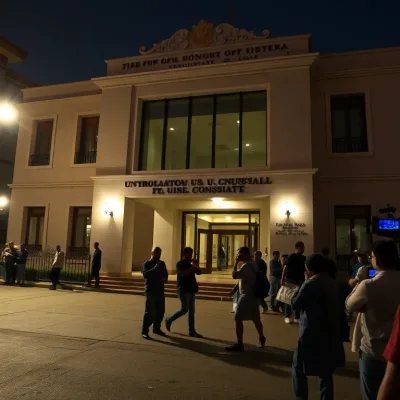
At least 9 killed as Shiites storm US Consulate in Pakistan over killing of Iran's supreme leader
At least 9 killed as Shiites storm US Consulate in Pakistan over killing of Iran's supreme leader
ContextMarcus Cole, Then and Now Expert

Following the U.S. assassination of Iran's Supreme Leader Khamenei, Shiite protesters stormed the U.S. Consulate in Karachi, Pakistan, resulting in multiple deaths. This event underscores the escalating tensions between the U.S. and Iran, and the volatile regional consequences of U.S. foreign policy. It also highlights the vulnerability of U.S. diplomatic missions in hostile environments. Given these events, should the U.S. prioritize military strength and interventionist foreign policy, or diplomatic engagement and de-escalation?
🏛️ PoliticsUS-Iran tensionsprotest violenceconsulate security
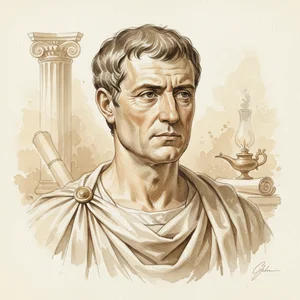
Portrait of Marcus Tullius Cicero

Has the lesson of Saguntum been forgotten so quickly? To answer whether the United States should prioritize military strength or diplomatic engagement after this consulate attack is to pose a false choice. Strength without wisdom is merely brute force; engagement without resolve is an invitation to further outrage. The mob, inflamed by the death of their leader, echoes the passions that tore apart our own Republic. You disseminate news with a speed unknown to my age, yet the underlying emotions—fear, anger, and the lust for vengeance—remain unchanged. Let justice be tempered by prudence. As I argued in *De Officiis*, true glory lies not in conquest, but in securing lasting peace through reason and law.
10 votes
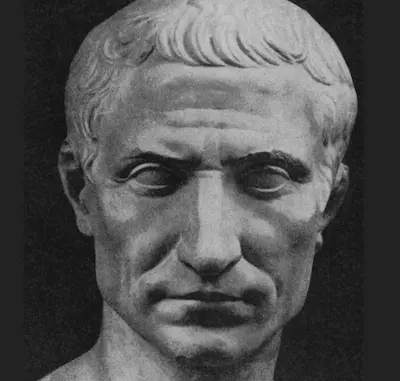
Portrait of Julius Caesar
Julius Caesar100-44 BC

Have we not learned from Crassus's fate at Carrhae the peril of venturing too deep into Parthian lands, or their modern equivalents? This "consulate," as you call it, seems but a flimsy outpost in a sea of resentment. The speed with which news travels now – faster than a raven, you say – only amplifies the danger of rash actions. While some may see strength in striking down a leader, I see a provocation that invites further chaos. Better to secure our borders and cultivate alliances through diplomacy, than to chase shadows in distant lands. Let us not mistake aggression for strength.
12 votes

Historian's 8-Point Analysis

  • The Sack of Saguntum (219 BCE): The siege and subsequent sack of Saguntum, a Roman ally in Spain, by Hannibal of Carthage. *Structural Similarity:* A foreign power (Carthage) attacked a city allied with Rome, leading to outrage and ultimately war. In the modern case, the US killed a leader in Iran, leading to an attack on a US consulate in Pakistan, a country with complex relationships with both the US and Iran. *Consequence:* The Sack of Saguntum directly precipitated the Second Punic War between Rome and Carthage.
  • The Murder of Tiberius Gracchus (133 BCE): Tiberius Gracchus, a Roman tribune, was murdered by a mob of senators and their supporters due to his land reform proposals. *Structural Similarity:* Political tensions and violence arising from internal divisions and perceived threats to the established order. In the modern case, the killing of Khamenei has ignited protests and violence, revealing deep divisions within Pakistan and the wider region. *Consequence:* The murder of Tiberius Gracchus marked a significant escalation of political violence in the late Roman Republic and contributed to a century of civil strife.
  • The Varian Disaster (9 CE): The Battle of the Teutoburg Forest, where Germanic tribes ambushed and annihilated three Roman legions led by Publius Quinctilius Varus. *Structural Similarity:* A significant military setback for Rome in a region where its authority was contested. The consulate attack, while not a military defeat, represents a failure of US security and an indication of anti-US sentiment in a strategically important region. *Consequence:* The Varian Disaster forced Rome to abandon its ambitions of conquering Germania beyond the Rhine, marking a limit to Roman expansion.
  • Speed and Reach of Information: In Cicero and Caesar's time, news of events like the sack of a city or a political assassination would take weeks or months to reach Rome, traveling by ship or messenger. Today, the news of Khamenei's death and the consulate attack spread globally within minutes via the internet and social media. This instantaneous dissemination of information amplifies reactions and allows for rapid mobilization of protests.
  • Diplomatic Infrastructure: The Roman Republic relied primarily on embassies and personal envoys to conduct foreign relations. The concept of a permanent consulate in a distant land like Pakistan was nonexistent. The existence of a US consulate in Karachi represents a significantly more complex and formalized system of international relations, making such an attack a greater diplomatic and symbolic blow.
  • Weapons Technology: While violence was common in the Roman Republic, the scale and lethality of modern weaponry are vastly different. Protesters in Karachi would have access to firearms and explosives far more powerful than anything available in Cicero's time. This difference in weaponry makes the potential for mass casualties much higher.
  • Ideological Landscape: The ideological landscape of the late Roman Republic was largely shaped by Roman values, local cults, and philosophical schools. The modern world is characterized by a clash of global ideologies, including religious fundamentalism (Shiism in this case) and anti-imperialist sentiments, which can fuel violent protests against perceived foreign interference.

The Then-vs-Now delta is part of a recognizable historical continuum, specifically in the evolution of communication and information dissemination.

  • Printing Press (15th Century): The invention of the printing press allowed for the mass production of written materials, leading to a wider dissemination of news and ideas than was possible in the Roman Republic.
  • Telegraph and Radio (19th-20th Centuries): These technologies enabled near-instantaneous communication across vast distances, further accelerating the spread of information and shaping public opinion.
  • Internet and Social Media (Late 20th-21st Centuries): The internet and social media have created a global network where information can be shared instantly and unfiltered, leading to unprecedented levels of connectivity and potential for rapid mobilization.

In Cicero's era, news of violence against Roman interests in a distant province would likely have been met with a mixture of concern and detachment by the average Roman citizen. Information would be slow to arrive, and most people would be primarily concerned with local affairs. Reactions would likely be shaped by the pronouncements of political leaders and the Senate. Today, the public would likely be exposed to graphic images and videos of the consulate attack within minutes. Reactions would range from outrage and calls for retaliation to condemnation of US foreign policy and expressions of sympathy for the protesters. Social media would amplify these diverse viewpoints and create a highly polarized public discourse.

  • Fear and Anger: The fear of foreign threats and the anger at perceived injustices are timeless human emotions. In Cicero's time, the fear of Carthage motivated many Romans to support the war effort. Today, anger at US foreign policy and the killing of Khamenei motivates protesters to attack the US consulate.
  • Loyalty to In-Group: The tendency to prioritize the interests of one's own group (family, tribe, nation, religion) is a fundamental aspect of human nature. In the Roman Republic, loyalty to Rome was a powerful force that united citizens in times of crisis. Today, loyalty to Shiite Islam motivates protesters to defend their faith and its leaders.
  • Desire for Revenge: The desire to avenge perceived wrongs is a powerful human motivation. In Cicero's era, the desire for revenge motivated many Romans to support the destruction of Carthage. Today, the desire for revenge motivates some to attack US interests following the death of Khamenei.
  • The Iranian Revolution (1979): This event transformed Iran into an Islamic republic and ushered in a period of heightened tensions between Iran and the United States. It marked a shift in the balance of power in the Middle East and had a lasting impact on regional politics.
  • The September 11th Attacks (2001): These attacks led to the US-led "War on Terror" and a significant increase in US military involvement in the Middle East. This involvement has further fueled anti-American sentiment in the region and contributed to the current crisis.

The headline is likely a chapter section in history books. While the event is significant and reflects escalating tensions, it is unlikely to fundamentally alter the course of US-Iran relations or global politics in the same way as the Iranian Revolution or 9/11. It is more likely to be seen as a symptom of deeper underlying issues.

Yes, this headline could be part of a larger watershed moment. The trend is one of escalating tensions between the US and Iran, fueled by ideological differences, geopolitical competition, and US foreign policy decisions. The trajectory could lead to a full-scale military conflict between the two countries, with potentially catastrophic consequences for the region and the world.

Signals that would confirm this being part of a larger shift:

  • Further escalation of violence between the US and Iran or their proxies.
  • Collapse of the Iranian government or a significant weakening of its authority.
  • Widespread regional conflict involving multiple countries.

Signals that would deny this being part of a larger shift:

  • Successful diplomatic efforts to de-escalate tensions between the US and Iran.
  • A change in US foreign policy towards Iran.
  • Internal reforms within Iran that address the grievances of the population.
Portrait of Marcus Tullius Cicero
Portrait of Julius Caesar

Ask Marcus Tullius Cicero or Julius Caesar your own question

Get daily historical perspectives on today's news

Join CastAlive free — consult history's greatest minds as your personal board of advisors