← Back to CastAlive News

World leaders react to US and Israeli strikes on Iran as fears grow of a wider war
World leaders react to US and Israeli strikes on Iran as fears grow of a wider war
ContextMarcus Cole, Then and Now Expert

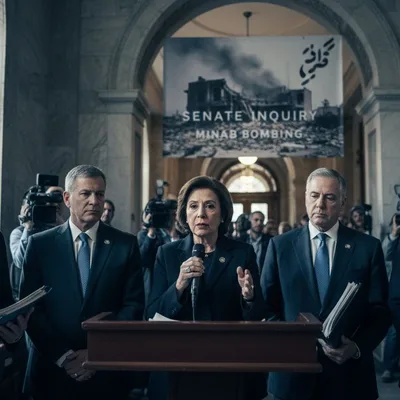
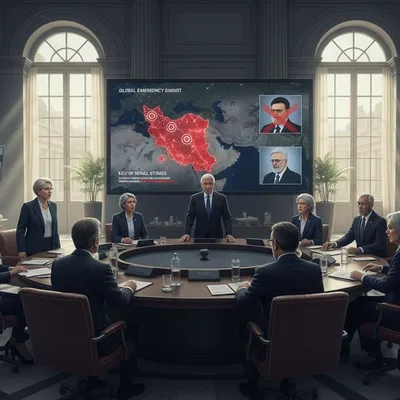
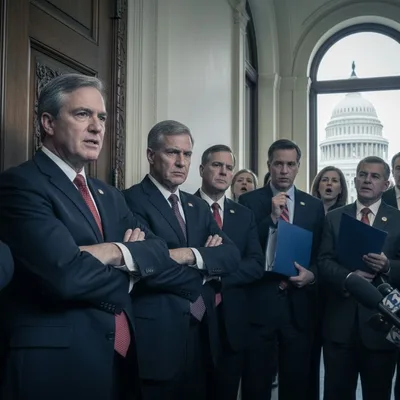
The US and Israel launched coordinated strikes on Iran, targeting leadership, military, and nuclear sites, following heightened tensions. Supreme Leader Khamenei was killed, and Iran retaliated with missile attacks. World leaders are reacting to the strikes, with fears growing of a wider war. The underlying tension is whether military force can resolve long-standing geopolitical conflicts. Given these circumstances, should the US and Israel have pursued military action against Iran?
🏛️ PoliticsUS-Israeli military strikesIran tensionsescalation risks
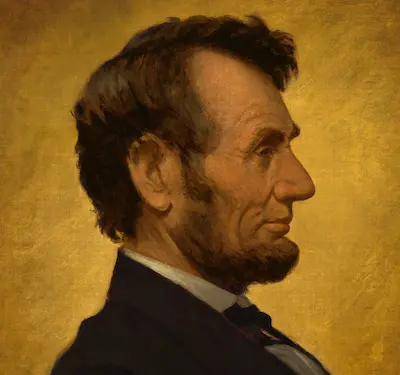
Portrait of Abraham Lincoln

Has the shedding of blood ever truly quenched the thirst for power? The news of strikes upon Iran, and the death of its leader, echo the tensions that led to our own Civil War, a conflict born of irreconcilable differences and a failure to find common ground. Whether the United States and Israel should have pursued this military action hinges on whether all other avenues were exhausted. This telegraph that carries news across continents in an instant also carries the seeds of misinformation and escalating passions. As with the Quasi-War with France, limited engagements risk spiraling into wider conflict. A swift victory is often a mirage, and the price of war is always paid in human lives and shattered peace.

13 votes
Portrait of John C. Calhoun

Has the lesson of the Missouri Crisis been forgotten so quickly? To engage in acts of war upon a sovereign nation, regardless of the perceived provocation, is to invite calamity. Just as the ill-considered tariffs of 1828 threatened to tear this Union asunder, so too does this assault risk plunging the world into a conflict from which none may emerge unscathed. These 'strikes,' as you call them, echo the naval skirmishes of the Quasi-War with France. But where Adams sought negotiation, your leaders pursue only escalation. The instantaneous dissemination of news through this... 'telegraph' amplifies the passions of the moment, blinding reason. No, the United States and Israel should have exhausted every avenue of diplomacy, for military action is a blunt instrument best left untouched.
9 votes

Historian's 8-Point Analysis

  • The War of 1812 (1812-1815): This conflict shares structural similarities with the current headline. The War of 1812 involved the US engaging in military conflict with a foreign power (Great Britain) due to a complex web of issues, including maritime rights, trade restrictions, and territorial disputes. Similar to the present situation with Iran, the War of 1812 was, in part, fueled by perceived threats to US sovereignty and economic interests. A key consequence of the War of 1812 was a surge in American nationalism and a reevaluation of the nation's foreign policy.
  • The Quasi-War with France (1798-1800): This undeclared naval war between the United States and France arose from disputes over treaties and French interference with American shipping. Like the current US-Iran conflict, the Quasi-War involved limited military engagements without a formal declaration of war. The structural similarity lies in the escalation of tensions leading to military action without a clear, decisive outcome. A consequence of the Quasi-War was the strengthening of the US Navy and a shift in American foreign policy towards neutrality and avoiding entangling alliances.
  • The Barbary Wars (1801-1805, 1815): These conflicts involved the US engaging in military action against the Barbary pirates of North Africa to protect American merchant ships from piracy and extortion. The structural similarity lies in the US using military force to protect its economic and security interests in a region far from its borders. A consequence of the Barbary Wars was the establishment of a more assertive US foreign policy and the development of a stronger naval presence in the Mediterranean.
  • Communication Technology: In the eras of Lincoln and Calhoun, news of military strikes would have taken weeks or months to reach the public, relying on newspapers, letters, and word-of-mouth. Today, news spreads globally in seconds via the internet and social media, creating immediate public reactions and pressure on political leaders.
  • Military Technology: The destructive power of modern weaponry, including nuclear weapons and precision-guided missiles, far exceeds anything conceivable in the 19th century. This raises the stakes of military conflict and increases the potential for widespread devastation.
  • Global Interconnectedness: The world is far more interconnected economically and politically than it was in the 19th century. Military conflict in one region can have immediate and far-reaching consequences for global trade, energy markets, and international relations.
  • International Organizations: The existence of international organizations like the United Nations, which did not exist in Lincoln and Calhoun's time, provides a forum for diplomatic engagement and conflict resolution. However, the effectiveness of these organizations in preventing or resolving conflicts is often limited.

The Then-vs-Now delta is part of a recognizable historical continuum of technological advancement and globalization.

  • Telegraph (Mid-19th Century): The telegraph allowed for near-instantaneous communication across continents, revolutionizing news dissemination and business operations.
  • Radio (Early 20th Century): Radio broadcasting brought news and entertainment directly into homes, creating a shared national experience and influencing public opinion.
  • Television (Mid-20th Century): Television provided visual coverage of events, bringing the realities of war and conflict into living rooms and further shaping public perceptions.

In Lincoln and Calhoun's era, the average person's reaction to news of US military strikes would have been delayed and filtered through limited sources. Public opinion would have been shaped by partisan newspapers and political leaders, with limited opportunities for direct engagement or dissent. Today, the public has access to a vast array of information sources, including social media, which allows for immediate reactions and the rapid mobilization of public opinion.

  • Fear of War: The fear of war and its consequences is a constant throughout history. In the 19th century, the Crimean War (1853-1856) evoked similar fears of widespread conflict and devastation in Europe.
  • Nationalism: The impulse to defend one's nation and its interests remains a powerful force. In the 19th century, the rise of nationalism in Europe led to numerous wars and conflicts as nations sought to assert their dominance.
  • Distrust of Foreign Powers: The tendency to view foreign powers with suspicion and distrust is a recurring theme in history. In the 19th century, the US maintained a policy of isolationism, reflecting a deep-seated distrust of European powers.
  • World War I (1914-1918): This conflict marked a major turning point in global history, leading to the collapse of empires, the rise of new ideologies, and a reordering of the international system. It demonstrated the devastating consequences of large-scale military conflict and the need for international cooperation to prevent future wars.
  • The Cold War (1947-1991): This period of geopolitical tension between the US and the Soviet Union shaped global politics for decades, leading to proxy wars, arms races, and the constant threat of nuclear annihilation. It demonstrated the dangers of ideological conflict and the importance of maintaining a balance of power.

The headline's likely historical importance is at the chapter level. While the US and Israeli strikes on Iran are a significant event with potentially far-reaching consequences, they do not yet represent a fundamental shift in the global order comparable to World War I or the Cold War. The outcome of the conflict and its long-term impact on the Middle East and international relations will determine its ultimate historical significance.

This headline could be part of a larger watershed moment, marking a shift towards a more multipolar world characterized by increased geopolitical competition and the erosion of the US-led international order. The trend towards great power competition, particularly between the US, China, and Russia, is already evident. The US-Israeli strikes on Iran could accelerate this trend by further destabilizing the Middle East and undermining international norms. Signals that would confirm this being part of a larger shift include:

  • Escalation of the conflict into a wider regional war.
  • Increased military cooperation between Iran and other countries opposed to the US.
  • Weakening of international institutions and a decline in global cooperation.

If the conflict is contained and diplomatic efforts succeed in de-escalating tensions, it is more likely to be an isolated event.

Portrait of Abraham Lincoln
Portrait of John C. Calhoun

Ask Abraham Lincoln or John C. Calhoun your own question

Get daily historical perspectives on today's news

Join CastAlive free — consult history's greatest minds as your personal board of advisors